Gwalior Traditions & Culture Guide
Table of Contents
Gwalior Traditions & Culture: Show Up Right
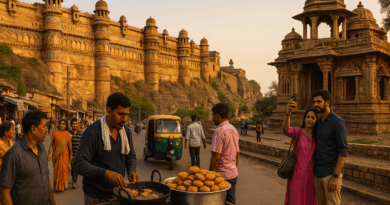
Gwalior hums with music and memory. A fort glows above the city, lanes rush towards Maharaj Bada, and evening aarti echoes from neighborhood mandirs. Locals move with an easy rhythm—हाथ जोड़कर “Namaste,” shoes neatly at the rack, right hand forward for प्रasad (prasād: sanctified offering). First-timers often forget the small things: when to arrive, what to carry, how to ask. This guide keeps it simple and very local—so you can participate confidently, whether you live in Thatipur or you’re visiting from Indore for a long weekend.
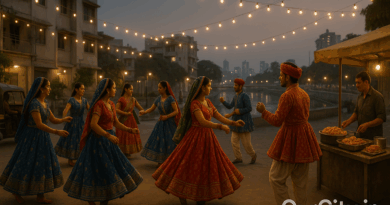
From early-morning darshan at Lashkar temples to qawwali evenings near Hazira, from langar seva at the fort gurdwara to late-December classical music nights at Tansen’s tomb—Gwalior is generous if you show up right. Let’s get you there.
🪔 Why This Culture Guide Works for Gwalior
You’ll find what most people actually need:
-
Month-wise “what happens when,” plus when to reach (e.g., “be there by 05:45 for first aarti” or “avoid 18:00–20:00 surge”).
-
Etiquette by tradition (temples, gurdwaras, dargahs/mosques, churches, ghats/waterfronts).
-
Micro-scripts in Hinglish/Hindi to ask politely, anywhere.
-
Seasonal playbooks for heat, monsoon, winter-smog weeks.
-
Price bands (₹) and carry-lists for a fuss-free day out.
-
Neighborhood name-drops so locals feel seen (Lashkar, Morar, Hazira, Tansen Nagar, Kampoo, Gole Ka Mandir, City Centre, Janakganj, Phalka Bazar, Maharaj Bada/Jayaji Chowk, Bahodapur, Darpan Colony, Shinde Ki Chhawani, DD Nagar, Govindpuri, Padav/Station area, Phool Bagh, Thatipur, Sirol).
Here’s the thing: keep the phone down during aarti/qawwālī, ask before photographing, and treat sacred food and spaces with care. The city will meet you halfway.
🪔 Festival Calendar: What Happens When (Jan–Dec)
City Highlights Month by Month
January–February
-
Gwalior Trade Fair (Vyāpar Mela) at the Mela Ground near Race Course Road—one of MP’s biggest trade-culture fairs, typically late December into January/February. Expect handloom, craft stalls, food courts, rides, and live stages. Plan an early evening visit on weekdays for thinner crowds. Holidify
-
Makar Sankranti: Til-gur sweets (try gajak from stalls in Lashkar/Hazira), kite-flying pockets in Tansen Nagar and Thatipur terraces.
March–April
-
Mahashivratri: Pre-dawn queues at neighborhood Shiv temples; carry socks for cool floors at 05:00–07:00.
-
Holi: Family-first mornings; respect consent for gulal. Avoid dyed water near lanes of Phalka Bazar and busy Maharaj Bada.
Ramzan & Eid (shifts by lunar calendar)
-
Iftar around maghrib (post-sunset). In old-city pockets near Jami Masjid (Lashkar/Hazira side), small vendors offer kebabs, fruit chaat, sharbat. Keep it discreet near prayer times; buy respectfully and step aside to eat.
-
Eid mornings: namaz at local idgah/masjid; dress modestly, women carry a light scarf/dupatta.
April–June (Heat picks up)
-
Hanuman Jayanti: Morning prasad lines; keep a cap, water, and a small cloth bag.
-
Ganga Dashami-style snan at local tanks/baoris is limited; in Gwalior, water bodies like Baija Taal draw evening strollers rather than ritual baths. Tripadvisor
July–September (Monsoon window)
-
Muharram: If you watch processions, stand at pavement edges; avoid blocking the tazia path.
-
Janmashtami: Midnight aarti; reach by 22:30 if you want a comfortable spot near inner courtyards.
-
Ganesh Chaturthi (smaller than Mumbai, but lively in colonies like Darpan Colony, Govindpuri, DD Nagar): immersion days bring traffic diversions—use auto/e-rickshaw from City Centre.
October–November
-
Navratri & Durga Puja: Cultural programs at colony pandals—Thatipur, Sirol, Gole Ka Mandir sides. Aarti around 19:00–20:00; quieter darshan 17:00–18:00.
-
Bandi Chhor Divas/Diwali at Gurudwara Data Bandi Chhod Sahib in the Fort complex—linked to Guru Hargobind’s historic release from Gwalior Fort; lamps, kirtan, and sangat. Reach by twilight; be ready for security checks and leave firecrackers at home. Wikipedia+1
-
Dīpāwali: Families light diyas on balconies around Lashkar and Thatipur; fireworks mostly post-20:00.
December
-
Tansen Sangeet Samaroh—a multi-day classical music tribute held at/near Tansen’s tomb (Behat/Hazira side) every December; night-long recitals, legendary line-ups. If you love Hindustani, this is pilgrimage. Wikipedia+1
-
Light & Sound at Gwalior Fort: Evening shows narrate the city’s past; plan your seats on non-fair weekdays to skip crowds. MP Tourism
Where to Go & When to Arrive (Time Cues)
-
Morning aarti: 05:45–07:15 window is easiest on crowds; floors can be cold—carry socks.
-
Evening aarti: 18:15–19:30 surge; arrive 20–30 minutes early if you want inner-court space.
-
Qawwali evenings (dargah complexes near Hazira): reach by 19:00; sit at the sides, keep the aisle free.
-
Fort Light & Sound: Aim to be at the Man Mandir side 30 minutes before showtime; the approach has steps. Seniors may prefer a seat with backrest. MP Tourism
-
Tansen nights: Carry a shawl (Dec nights drop), a seat pad helps; keep chai change ready but go cashless where possible.
Family-, Senior-, and Child-Friendly Tips
-
Best viewing: Choose barricade edges at colony pandals; avoid the center.
-
Meet-up plan: Pick a landmark (“under the Ghanta Ghar side of Jayaji Chowk”) and time. Write a contact number on paper for kids.
-
Seniors: Early mornings at Sun Temple (Surya Mandir, Morar) are peaceful; short walks, clean premises. Holidify
-
Noise-sensitive kids: Keep earplugs during dhol-tasha or loud DJs.
-
Wheelchair feasibility: Many old-city shrines have steps; check the trust’s noticeboard before you go.
🪔 Sacred Spaces Etiquette (Temples • Gurdwaras • Dargahs/Mosques • Churches • Ghats/Waterfronts)
Gwalior’s sacred map spreads wide: neighborhood temples around Lashkar and Thatipur; Gurudwara Data Bandi Chhod Sahib in the Fort; the Sufi complex at Tomb of Mohammad Ghaus with Tansen’s tomb nearby in Hazira; historic churches around Phool Bagh and Phalka Bazar; lakesides like Baija Taal that locals treat as calming, not ritual ghats. Gwalior District Website+2Encyclopedia Britannica+2
What to Wear & Carry
-
Wear: Shoulders and knees covered. Light cottons in summer; shawl/dupatta (दुपट्टा) doubles as head cover.
-
Footwear: Easy-to-remove chappals. Carry socks for hot/cold floors.
-
Carry: Small scarf, refillable bottle, handkerchief, wet wipes, a small cloth bag (for flowers/prasad), ₹10–₹50 notes for quick donations, and UPI ready.
Offerings/Prasad/Chadar: Ranges & Rules
-
Flowers ₹20–100 (temple gates near Maharaj Bada, Khasgi Bazaar).
-
Prasad ₹20–60 (laddoo/peda boxes).
-
Oil/ghee packs ₹50–200 (for lamps).
-
Chadar at dargahs ₹200–600.
Give with your right hand, don’t flaunt cash, and don’t waste prasad—share or carry home neatly.
Photography & Phone Etiquette
-
Assume no-flash, no-drone, and no-faces during rites.
-
During aarti, don’t raise the phone above shoulder level.
-
In dargahs/mosques, be discreet near the namaz area. Ask first.
Ask Politely (Ready Scripts)
-
“Photography allowed hai? / फ़ोटोग्राफ़ी allowed है?”
-
“Queue kahan se shuru hoti hai? / क्यू कहाँ से शुरू होती है?”
-
“Darshan token yahin milta hai? / दर्शन टोकन यहीं मिलता है?”
-
“Head cover kahaan milega? / सिर ढकने के लिए स्कार्फ़ कहाँ मिलेगा?”
🪔 Processions, Melas & Community Events
Safe Viewing Spots & Exit Plans
-
Stand at edges, not in the path of dhol or tazia/deity vehicles.
-
Keep a clear exit—near barricade ends or side lanes (e.g., off Topi Bazaar towards Nazar Bagh).
-
For kids/elders, pick calmer pockets near Darpan Colony parks or the wider sides of City Centre.
Transport Diversions & Crowd Windows
-
Gwalior runs on autos, e-rickshaws, app cabs, and city buses—no metro yet. On immersion/procession nights, switch to e-rickshaws for last-mile; get off 500–700 m before the core.
-
Crowd windows: 18:00–20:30 is the peak near colony pandals and Jayaji Chowk; go before 18:00 or after 20:45.
If You Get Separated (Meet-up Scripts)
-
“Main Jayaji Chowk Ghanta Ghar ke paas wait kar raha/rahi hoon—milte hain 10 minute mein.”
-
“Police help desk kidhar hai? / पुलिस हेल्प डेस्क किधर है?”
-
Teach children: name + “Main OurCity help number par call kar raha/rahi hoon” (your number).
🪔 Seva, Daan & Doing Your Bit
Simple Ways to Volunteer
-
Gurdwara langar: Ask “Langar kahaan serve ho raha hai? Main seva kar sakta/sakti hoon?” Sit in pangat (rows on floor), accept karah prasad with both hands, take only what you can finish.
-
Temple shoe-rack help: “Jutey sambhal doon?”
-
Post-event cleanups: Carry a spare cloth bag, collect plastic cups/plates in your lane.
-
Queue management: Stand at turns and gently guide—“Line yahan se hai, dhanyavaad.”
Hygiene & Clean-up Etiquette
-
Keep wet wipes; use designated bins. No throwing flowers into water bodies—hand them to temple compost baskets when available.
Digital UPI vs Cash (When & How)
-
Most places accept UPI at donation boxes; still carry small notes (₹10–₹50) for quick flow. Don’t display thick wads; be discreet.
🪔 Arts, Crafts, Music & Dance of Gwalior
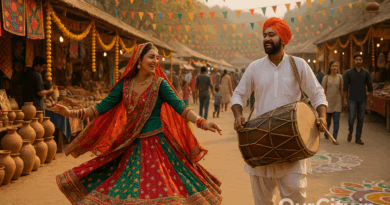
Gwalior is khayāl’s old school—the Gwalior gharana sits at the root of modern Hindustani style. Add dhrupad legacies, and an annual classical gathering at Tansen’s tomb. If you want music with history, few cities beat this. Wikipedia
What to See Live (Rehearsals, Sabhas, Baithaks)
-
Tansen Sangeet Samaroh (Dec): Night-long recitals near the tomb; pack a shawl and patience. Seats fill early; respect tanpura space and silence. Wikipedia
-
Sarod Ghar (Kala Vithika, Jiwaji Ganj): A museum-home celebrating Ustad Hafiz Ali Khan’s lineage; check for occasional baithaks/exhibits. Madhya Pradesh Tourism
-
Light & Sound at the Fort works as a 40–45 min primer on the city’s past before you attend a concert. MP Tourism
Ethical Souvenir Buying (Quick Tests & GI Mentions)
-
Handmade vs factory: Uneven stitch lines and tiny “mistakes” usually indicate handwork.
-
Ask the artisan to show backside finishing on embroidery or the hammer marks on metalwork.
-
Buy from stalls at the Trade Fair or long-standing units near Moti Mahal lanes—look for maker names. (Avoid bargaining to the bone with small sellers.)
🪔 Language, Greetings & Everyday Manners
Local Phrases (Transliteration + Script)
-
Namaste / नमस्ते, Pranām / प्रणाम (temples, elders).
-
Sat Sri Akal / सत श्री अकाल (gurdwaras).
-
Adaab / अदाब (dargah/mosque contexts).
-
Dhanyavaad / धन्यवाद, Maaf kijiye / माफ़ कीजिए.
-
Gentle refusal: “Maaf kijiye, bheed zyada hai, baad mein aata/āti hoon.”
Right-Hand Giving, Thresholds, Sacred Trees/Animals
-
Offer/receive with right hand.
-
Don’t step on thresholds of sanctums; pause, bow slightly.
-
Don’t touch idols/murtis.
-
Be mindful near peepal/neem trees that devotees circle; don’t block the path.
What Not to Do (Short List)
-
Don’t use drones near processions/sacred sites.
-
Don’t climb on vehicles, chhatris, or fort parapets for photos.
-
Don’t eat inside sanctum areas; step to the side.
🪔 Seasonal Playbooks (Heat • Monsoon • Winter/Smog • Peak Festive)
Summer (Apr–Jun)
-
Take the earliest darshan slot; carry ORS sachets.
-
Temples with marble floors (Lashkar/Thatipur) heat up—socks help.
-
Prefer shaded compounds like Sun Temple, Morar for mid-mornings. Holidify
Monsoon (Jun–Sep)
-
Non-slip footwear; carry a light plastic cover for offerings.
-
Expect waterlogging near some Maharaj Bada by-lanes; keep margins when watching processions.
-
Fort approaches can be slick—hold railings.
Winter/Smog (Nov–Jan)
-
Mask (N95/FFP2) if sensitive.
-
Carry a warm layer for pre-dawn aarti and Tansen nights (open-air, late). Wikipedia
-
Post-20:30, prefer app cabs over random lifts.
Peak Festive Weeks
-
Pre-load UPI, keep ₹10–₹50 notes.
-
Identify quiet hours (e.g., 15:30–17:30) for darshan.
-
Avoid bringing toddlers to late-night, high-decibel stages.
Exam/Job-hunt Season
-
Calm corners: Sarod Ghar lawns (check timing), Phool Bagh benches on weekday mornings.
🪔 Quick Cheatsheets (Tables)
Festival Months vs Typical Timings
| Festival/Occasion | Usual Month(s) | Typical Time Cues |
|---|---|---|
| Makar Sankranti | Jan | Morning puja & dana; markets open early |
| Gwalior Trade Fair | Dec–Jan/Feb | Evenings best; weekdays lighter crowds Holidify |
| Mahashivratri | Feb–Mar | Pre-dawn–07:30 first slots |
| Ramzan Iftar | Shifts (lunar) | Maghrib at sunset; check masjid board |
| Eid | Shifts (lunar) | Namaz at dawn–forenoon; modest attire |
| Janmashtami | Aug–Sep | Midnight aarti; arrive by 22:30 |
| Ganesh Chaturthi | Aug–Sep | Evening aarti 19:00–20:00; immersion traffic later |
| Navratri/Durga Puja | Sep–Oct | 19:00–20:30 surge; quieter 17:00–18:00 |
| Bandi Chhor Divas/Diwali | Oct–Nov | Twilight at Fort gurdwara; lamp-lighting later Wikipedia |
| Tansen Samaroh | Dec | Night recitals till late; carry shawl Wikipedia |
Etiquette by Place of Worship
| Tradition | Head Cover | Footwear | Offerings | Seating |
|---|---|---|---|---|
| Temples (mandirs) | Optional; carry a scarf | Always remove; use rack | Flowers, prasad, oil/ghee | Stand or brief sit; avoid blocking aarti path |
| Gurdwaras | Mandatory (head scarf, dupatta, cap) | Remove; wash hands if possible | None required; accept karah prasad | Sit on floor in pangat; eat what you take |
| Dargahs/Mosques | Head cover advised; women carry dupatta | Remove in prayer hall | Chadar, flowers | Gendered areas in some sites; be discreet during namaz |
| Churches | No head cover needed | Footwear allowed | Light a candle; silent prayer | Follow kneel/stand cues; keep silence |
| Water edges (Baija Taal/Tigra Dam) | N/A | Footwear okay | No offerings in water | Keep distance from waterline with kids |
Offering/Donation Ranges (₹)
| Item | Typical Range |
|---|---|
| Flowers/garlands | ₹20–₹100 |
| Prasad boxes | ₹20–₹60 |
| Oil/ghee packs | ₹50–₹200 |
| Candles/diya sets | ₹10–₹30 |
| Chadar (dargah) | ₹200–₹600 |
| Community dana (clean-up/temple trust) | As per ability; UPI accepted |
Quiet-Hour Windows & Crowd Surges
| Slot | Crowd Feel | Tips |
|---|---|---|
| 05:45–07:15 | Calm | Best for seniors/kids |
| 12:00–15:00 | Light at many shrines | Good for unhurried darshan |
| 18:00–20:30 | Peak | Arrive 20–30 min early; keep to sides |
| 20:45–22:00 | Easing | Good for aarti visuals without crush |
🪔 FAQs (Real Questions, Straight Answers)
1) What should I wear for darshan in Gwalior?
Light cottons in heat; shawl/dupatta for modesty and head cover if needed. Covered shoulders/knees. Easy slip-on footwear.
2) Can I click photos inside?
Ask first—“Photography allowed hai?” No flash, no drone. During aarti/namaz/mass, keep the phone down.
3) Is UPI okay for donations?
Yes, most trusts have UPI QR near hundi/donation desks. Keep a few small notes for quick flow.
4) Best time to visit the Fort’s Light & Sound?
Non-fair weekdays. Be at the venue 30 minutes before showtime; the approach includes steps. MP Tourism
5) Where can I experience classical music?
December’s Tansen Sangeet Samaroh near Tansen’s tomb; also peek into Sarod Ghar (Jiwaji Ganj) for exhibits and the city’s music lineage. Wikipedia+1
6) I’m bringing seniors. Any easy sacred spots?
Sun Temple, Morar has clean, level paths and easy parking; go before 10:00. Holidify
7) Are there riverside ghats in Gwalior?
Not like Varanasi. Locals stroll at Baija Taal and do family outings at Tigra Dam; treat these as public spaces, not ritual ghats. Wikipedia+1
8) Solo-female tips at night events?
Prefer lit routes, stick to app cabs, stand near families or barricaded areas, and avoid isolated fort stretches after events.
9) Kids + loud processions?
Carry earplugs. Stand at the edges and pre-fix a meet-up point—“Jayaji Chowk Ghanta Ghar ke niche.”
10) Drones—allowed?
Avoid around sacred sites, fort precincts, and processions. Police advisories often restrict them.
11) Late-night commute after aarti/concert?
Choose app cabs or a pre-booked auto from a known stand; avoid random lifts.
12) What about iftar timings?
Based on maghrib (sunset). Check the day’s local time on masjid boards/apps. Keep the buying queue moving; don’t eat near prayer lines.
13) Where can I buy ethical crafts?
At the Trade Fair (Dec–Jan/Feb) or artisan-led stalls near Moti Mahal lanes; ask the maker about the process and time taken. Holidify
14) How do I offer seva at langar?
Cover your head, wash hands, ask “Main seva kar sakta/sakti hoon?” Follow the sevadar’s direction. Sit in pangat, finish what you take.
15) Are there Jain heritage spots?
Yes—Gopachal Parvat rock-cut Jain colossi around the Fort cliffs. Look, don’t touch; be careful on slopes. Wikipedia
🪔 Locals Say… (Pocket Wisdom)
-
“Sunrise darshan, sabse shānt.”
-
“Bandi Chhor Divas ke din fort side pe time nikaalo.” Wikipedia
-
“Tansen nights—shawl aur thermos chai kaam aata hai.” Wikipedia
-
“Maharaj Bada mein photo banao, par road ke beech mat rukna.”
-
“Baija Taal par bas walk karo—phool paani mein nahi.” Tripadvisor
🪔 Wrap-Up: You’ll Fit Right In
Gwalior respects sincerity. Arrive a little early, dress modestly, ask before you click, and lend a hand where you can. If you have a free winter evening, catch the Fort’s story first, then find your way to music—Tansen’s city still sings. For live timings of aarti/mass/namaz or festival routes, always check the temple trust’s noticeboard, gurdwara announcements, masjid board, church bulletin, or the district/city police advisory on event days.
Neighborhoods to explore respectfully: Lashkar’s lanes around Maharaj Bada/Jayaji Chowk, Phool Bagh gardens, Hazira for Sufi and Tansen sites, Morar for Sun Temple and bazaars, Thatipur’s community pandals, Gole Ka Mandir and City Centre markets, Darpan Colony promenades, Padav/Station area food joints, Kampoo, DD Nagar, Janakganj, Bahodapur, Sirol.
Before you head out, a last set of ready lines you can use anywhere:
-
“Line kidhar ban rahi hai?”
-
“Darshan mein kitna samay lagega?”
-
“Langar kahaan serve ho raha hai? Main seva kar sakta/sakti hoon?”
-
“Maaf kijiye, photo allowed nahi hai to main phone band kar deta/deti hoon.”
See you by the lamps at twilight. Or in the hush before a raga unfolds.