Bengaluru Traditions Guide
Table of Contents
Bengaluru Traditions & Culture: Show Up Right
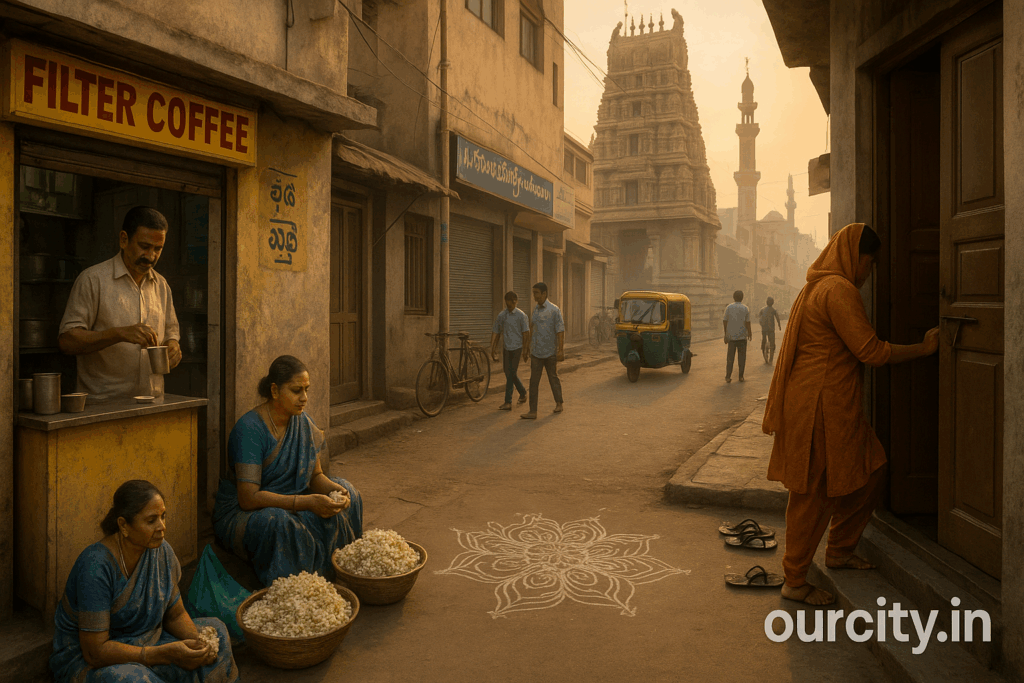
Bengaluru moves on filter coffee, morning aarti bells, Friday prayers, choir practice, and the hum of drum troupes heading to a procession. In Basavanagudi you’ll spot jasmine sellers by sunrise; in Malleswaram, kolam/rangoli dries on doorsteps by 07:00; by evening, the lanes of Shivajinagar and Frazer Town glow with kebab smoke during Ramzan. First-timers sometimes reach at peak surge, fumble with footwear, or hold phones up during aarti. No stress—this guide keeps it simple, respectful, and local.
🧭 How to use this: follow the time cues, speak with warmth, and carry small courtesies—scarf, socks, tissues, ₹ change. When in doubt, ask. Bengaluru folk will guide you with a smile.
🪔 Why This Culture Guide Works for Bengaluru
You want to participate, not just watch. Here’s the thing: Bengaluru has an IT skyline, yes, but it’s still a temple-town core with layered faith spaces—Dharmaraya Swamy Temple (City Market/Chickpete), Kadu Malleshwara (Malleswaram), Gavi Gangadhareshwara (Gavipuram), ISKCON (Rajajinagar), St. Mary’s Basilica (Shivajinagar), Infant Jesus Shrine (Viveknagar), Masjid-e-Khadria (Millers Road), Tawakkal Mastan Dargah (Cottonpet), and Sri Guru Singh Sabha (Halasuru/Ulsoor). Add lakeside immersions at Sankey Tank and Ulsoor, flower chaos at KR Market, and neighbourhood golu displays in Jayanagar and Indiranagar. We give you:
-
Month-wise highlights (Jan–Dec) with realistic arrival windows.
-
Etiquette by place (temple, gurdwara, dargah/mosque, church, immersion ghats).
-
Micro-scripts you can say without overthinking.
-
₹ ranges for offerings and prasad—so you don’t scramble at the hundi.
-
Seasonal tweaks for heat, monsoon, and cool mornings.
-
Mobility hints: Namma Metro handoffs (Majestic, KR Market, Chickpete, MG Road, Halasuru), BMTC backups, safe dispersal.
Locals say: “Reach before sunrise; Bengaluru’s rituals are gentler then.”
🪔 Festival Calendar: What Happens When (Jan–Dec)
City Highlights Month by Month
January
-
Makara Sankranti/Pongal: Kolam (rangoli) outside homes in Malleswaram, Basaveshwaranagar, Jayanagar; sugarcane, ellu-bella sharing. At Gavi Gangadhareshwara, the famous sunlight-through-the-cave event (date/time varies; crowds spike). Arrive by 05:45 for calm darshan.
-
Republic Day church & temple services: quiet, respectful mornings in MG Road–Brigade Road belt and Halasuru.
February–March
-
Maha Shivaratri: All-night darshan at Gavi Gangadhareshwara, Someshwara (Halasuru), and neighbourhood Shiva shrines (JP Nagar, Banashankari). Carry a shawl; avoid 19:00–22:00 surge.
-
Ugadi (Kannada New Year): Neem–jaggery mix at temples; early aarti at Kadu Malleshwara; reach by 06:00.
March/April (Chaitra)
-
Bengaluru Karaga at Dharmaraya Swamy Temple (Thigalarpet/Chickpete): one of the city’s oldest processions, late-night to pre-dawn. Family-friendly viewing from barricaded edges near KR Market; avoid pushing at sharp turns.
-
Easter (date shifts): St. Patrick’s (Brigade Road), Holy Trinity (MG Road), St. Mary’s Basilica—Good Friday solemn, Easter joyful; dress modest, reach by 06:30.
Ramzan/Ramadan (lunar)
-
Iftar lanes in Frazer Town (Mosque Road/Coles Park belt), Shivajinagar, Johnson Market. Respect prayer timings (maghrib), do not block mosque gates. Street food after sunset; keep tissues, small notes/UPI ready.
May–June
-
Community temple jathres/anniversary poojas across Yelahanka, Vijayanagar, Kengeri. Heat peaks: carry a refillable bottle; floors get hot—socks help.
July–August
-
Muharram tazias in Shivajinagar/Cottonpet—somber, no intrusive photography; keep to sidewalks.
-
Varamahalakshmi Vrata and Janmashtami at ISKCON Rajajinagar and local shrines; avoid 18:00–20:00.
August/September
-
Ganesha Chaturthi & Visarjan: Big community idols in Rajajinagar, Basaveshwaranagar, Malleswaram, HSR. Immersions at Ulsoor Lake, Sankey Tank, Yediyur Lake—use eco-friendly routes; follow marshals’ instructions.
-
St. Mary’s Feast (Sept) at St. Mary’s Basilica, Shivajinagar—novena days lead up to the feast. Arrive by 06:00 for seating; candles ₹10–30.
September/October
-
Navratri & Golu: House displays in Jayanagar 4th T Block, Indiranagar, Malleshpalya, cultural sabhas in Gayana Samaja (KR Road) and Chowdiah Memorial Hall (Malleswaram).
-
Dasara: Mysuru’s grand, but Bengaluru has chariot pulls and music evenings in Basavanagudi/Malleswaram.
October/November
-
Deepavali: Oil-lamp temple visits, Lakshmi puja at homes; fireworks rules change—check city police advisories. Senior-friendly: early evening darshan by 17:00 before noise spikes.
-
Kadalekai Parishe (Groundnut Fair), Basavanagudi (Nov/Dec): Bull Temple Road turns festive. Carry small change; mind pickpockets in crowds.
December
-
Christmas: Midnight mass at St. Mary’s, Infant Jesus Shrine (Viveknagar), St. Francis Xavier (Frazer Town). Reach by 23:00 for seating; park near MG Road/Ulsoor metro zones and walk.
Weather angle: Summer ~32 °C; monsoon showers Jun–Sep; winter mornings can be ~15 °C. Keep a light layer for pre-dawn visits.
Where to Go & When to Arrive (Time Cues)
-
Morning temple aarti: pre-dawn to 07:30; best slot: 05:45–06:30.
-
Evening temple aarti: 18:00–20:00 is surge; go by 17:30 or after 20:30 when feasible.
-
Friday prayers: be clear of mosque gates 12:30–14:00; use side lanes.
-
Sunday mass: 06:00–08:00 calmer; 09:00 family crowds.
-
Processions: late-night to dawn—stand at edges, near barricades, not at narrow bends.
Metro & Traffic: On festival days, Majestic (Kempegowda) is the key interchange; KR Market and Chickpete stations are handy for City Market/Chickpete temples; Halasuru for Someshwara & St. Mary’s access; MG Road/Trinity for churches; Rajajinagar/Mahalakshmi for ISKCON. Check the metro operator’s noticeboard/app for early openings/extended services. City police advisories may announce diversions—follow marshals.
Family-, Senior-, and Child-Friendly Tips
-
Strollers vs crowds: For dense melas (Basavanagudi, Shivajinagar), baby carriers are safer.
-
Seniors: pick first aarti or post-20:30 slots; ask volunteers for seating near exit.
-
Kids: carry ID and write a contact number on a paper tucked into pocket. Pre-fix a meet-up point: “Gate B, information desk.”
🪔 Sacred Spaces Etiquette (Temples • Gurdwaras • Dargahs/Mosques • Churches • Ghats)
Bengaluru is soft-spoken about rules—still, follow the basics. Shoes off, shoulders/knees covered, phones away during prayer moments, and gentle voices.
What to Wear & Carry
-
Dress: breathable cottons; shawl/dupattā for head cover if needed; avoid shorts in temples/churches/mosques.
-
Footwear: easy slip-ons. Floors can be hot or wet—carry thin socks.
-
Carry list: small scarf, refillable bottle, handkerchief, wet wipes, tiny cloth bag for offerings, ₹10–50 notes for quick donations.
-
Accessibility: older temples (Halasuru, Gavipuram) may have steps; modern complexes (ISKCON) have ramps/lifts—check official noticeboards.
Offerings/Prasad/Chadar: Ranges & Rules
-
Flowers: ₹20–100 (KR Market has marigold/lotus early morning).
-
Prasad laddus/pongal: ₹20–60 ticketed counters; don’t crowd the counter; hold your place.
-
Oil/ghee packs: ₹50–200 for lamps; place gently, don’t reach across the flame.
-
Candles at churches: ₹10–30; light, say a quiet prayer, move aside.
-
Chadar at dargahs: ₹200–600; place with both hands near the sanctum as guided by caretakers.
Daan/Hundi etiquette: Give with the right hand, discretely. Many places have UPI QR or digital boxes—use if you prefer; don’t flash bundles of cash. If someone insists near the gate, say: “Main andar official hundi mein daan dunga/dungi. Dhanyavaad.”
Photography & Phone Etiquette
-
Rule of thumb: ask first; no flash; never during aarti/flame moments, namaz, communion, or private confession.
-
Immersion/urs/procession: wide shots okay; avoid faces of grieving or praying individuals.
-
Kids: don’t photograph children without guardian consent.
-
Drones: No near sacred spaces/processions.
Ask Politely (Ready Scripts)
-
“Photography allowed hai?”
-
“Queue kahan se shuru hoti hai?”
-
“Darshan token yahin milta hai?”
-
“Head cover kahaan milega? (Dupatta/rumal?)”
-
Kannada helps too:
-
“Photo māḍakke anumati ideyā?” (ಫೋಟೋ ಮಾಡಲು ಅನುಮತಿ ಇದೆಯಾ?)
-
“Line elli shuru āgutte?” (ಲೈನ್ ಎಲ್ಲಿಂದ ಶುರು ಆಗುತ್ತೆ?)
-
“Darshan token illi sigutta?” (ದರ್ಶನ ಟೋಕನ್ ಇಲ್ಲಿ ಸಿಗುತ್ತಾ?)
-
“Head cover/rumāl elli doreyutte?” (ಹೆಡ್ ಕವರ್/ರುಮಾಲ್ ಎಲ್ಲಿದೆ?)
-
🪔 Processions, Melas & Community Events
Where you stand matters. Corners and bottlenecks cause pushing; choose straight stretches with barricades.
Safe Viewing Spots & Exit Plans
-
Bengaluru Karaga: take position near KR Market’s wider stretches or Avenue Road edges. Keep a side exit mapped (a parallel lane).
-
Kadalekai Parishe: Basavanagudi Bull Temple Road gets packed—stand on the footpath side opposite stalls.
-
Visarjan: at Ulsoor/Sankey/Yediyur lakes, follow immersion marshals; keep children on the inside away from water’s edge.
Meet-up plan if separated:
-
“Hum Metro Gate B pe milte hain.”
-
“Phone nahi lag raha; 15 min wait karke wahan chalte hain.”
-
For kids: teach them to approach a uniformed police/volunteer and say, “Mujhe volunteer ke paas le chaliyé.”
Transport Diversions & Crowd Windows
-
Auto/Taxi drops: 1–1.5 km away from the core helps. For Shivajinagar feasts, alight near Halasuru/MG Road metro and walk.
-
Peak windows: 18:00–21:00 is pressure time. Late-night (post-23:00) can be calmer at processions but keep a group or trusted cab.
🪔 Seva, Daan & Doing Your Bit
Simple Ways to Volunteer
-
Shoe-rack help (temples): guide newcomers; keep pairs together.
-
Langar at gurdwaras (Halasuru/Indiranagar): wash hands, cover head, sit in pangat (rows) and serve as guided—don’t waste food.
-
Queue marshals: ask the head volunteer: “Main seva kar sakta/sakti hoon? Kahan khada rahun?”
-
Post-event cleanup at lakes and lanes; carry gloves if you can.
Hygiene & Clean-up Etiquette
-
Use designated bins. Don’t leave flowers/coconuts on sidewalks. At lakes, hand offerings to collection points—no tossing.
-
Carry a small trash sleeve in your bag; it helps in crowded lanes.
Digital UPI vs Cash (When & How)
-
Temples/dargahs often have official QR near counters. Verify the trust/board name on screen before paying.
-
Keep ₹10–50 notes for small counters or candle stalls.
Locals say: “Chuppa daan sabse accha—give quietly, move on.”
🪔 Arts, Crafts, Music & Dance of Bengaluru
What to See Live (Rehearsals, Sabhas, Baithaks)
-
Carnatic & light classical: Gayana Samaja (Basavanagudi/KR Road), community halls in Malleswaram; winter mornings are golden.
-
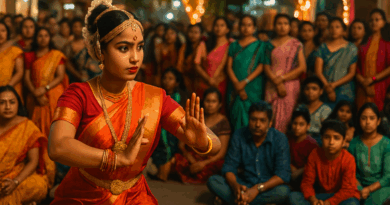
Chowdiah Memorial Hall (Malleswaram): violin-shaped auditorium hosting classical, bhakti concerts, and dance arangetrams.
-
Ranga Shankara (JP Nagar): theatre with folk, Kannada plays—quiet, respectful audiences; phones off.
-
Temple courtyards: evening bhajans at ISKCON, harikathas in Basaveshwaranagar, and occasional qawwali at dargahs (Cottonpet belt—ask locally for dates).
Ethical Souvenir Buying (Quick Tests & GI Mentions)
-
Clay idols: Pottery Town (Benson Town/Fraser Town belt); prefer shadu mitti (natural clay) over plaster.
-
Flowers & puja items: KR Market before 07:00—buy only what you’ll use.
-
Textiles: Look for Mysore Silk (KSIC showrooms), Ilkal sarees (handloom coop outlets), Channapatna toys (nearby town but available citywide). Ask for bill + GI/handloom tags.
-
Rule of thumb: Handmade has irregularities; mass-produce looks too perfect. Buy fair, not cheapest.
🪔 Language, Greetings & Everyday Manners
Bengaluru is bilingual-plus. English and Hindi work, Kannada warms hearts.
Local Phrases (Transliteration + Script)
-
Namaskāra (ನಮಸ್ಕಾರ) — Hello/Greetings
-
Dhanyavāda (ಧನ್ಯವಾದ) — Thank you
-
Dayaviṭṭu (ದಯವಿಟ್ಟು) — Please
-
Hegiddīra? (ಹೇಗಿದ್ದೀರ?) — How are you?
-
Chennagiddēni (ಚೆನ್ನಾಗಿದ್ದೇನಿ) — I’m fine
Everyday Bengaluruism you’ll hear: “Swalpa adjust maadi.” (ಸ್ವಲ್ಪ ಅಡ್ಜಸ್ಟ್ ಮಾಡಿ) — “Please adjust a little.” Use it kindly, not as an entitlement.
Right-Hand Giving, Thresholds, Sacred Trees/Animals
-
Right hand to give/receive prasad/donations.
-
Do not step on thresholds or touch idols.
-
Respect sacred trees (peepal, neem) tied with threads; walk around clockwise if others are.
-
Feeding street cows/animals? Don’t block traffic; keep it safe and clean.
What Not to Do (Short List)
-
No loud phone calls near sanctums; keep it on silent.
-
Don’t raise a phone during aarti/namaz/communion.
-
No climbing on chariots, vehicles, shrines, or statues.
-
No coin/flower tossing into lakes; use designated bins.
-
No arguments with marshals; they’re volunteers.
🪔 Seasonal Playbooks (Heat • Monsoon • Winter/Smog • Peak Festive)
What Changes, What to Pack, When to Go
Summer (Apr–Jun):
-
Earliest darshan slots win. Carry ORS sachet, cap, socks for hot floors, and a small towel. Stick to shaded lanes in Jayanagar, Basavanagudi, Malleswaram.
Monsoon (Jun–Sep):
-
Non-slip footwear, light rain layer, plastic sleeve for phone; keep offerings in a zip pouch. Some lanes near KR Market/Shivajinagar puddle—walk slow. Prefer covered pandals.
Winter/Cool Mornings (Nov–Jan):
-
A light shawl for 05:30 aartis. Bengaluru isn’t smoggy like some cities, but if your lungs are sensitive, a simple FFP2/N95 is fine in smoke-heavy evenings.
Peak Festive Weeks:
-
Preload metro card, plan first or last slots, and don’t bring infants to late-night crushes. Keep 112 in mind for emergencies; use designated help desks at big venues.
Exam/Job-Hunt Season:
-
Need a quiet prayer stop? Mornings at Someshwara (Halasuru) or weekdays at Infant Jesus Shrine (Viveknagar) before office hours are calmer. Nearby libraries/cafés in Indiranagar, Koramangala, Whitefield welcome students.
🪔 Quick Cheatsheets (Tables)
Festival Months vs Typical Timings
| Festival/Occasion | Months (approx.) | Typical calm window |
|---|---|---|
| Makara Sankranti/Pongal | Jan | 05:45–07:00 |
| Maha Shivaratri | Feb–Mar | After 00:30 or early dawn |
| Ugadi | Mar–Apr | 06:00–07:00 |
| Bengaluru Karaga | Mar–Apr (night) | 01:00–04:00 edges only |
| Ramadan Iftar Lanes | Shifts (lunar) | Post-maghrib; avoid gate pinch points |
| Easter | Mar–Apr | 06:00 mass |
| Ganeshotsav & Visarjan | Aug–Sep | Pre-17:00 or post-21:00 |
| St. Mary’s Feast | Sept | Arrive by 06:00 |
| Navratri & Golu | Sept–Oct | 18:30 sabhas (arrive by 18:00) |
| Deepavali | Oct–Nov | Temple visits by 17:00 |
| Kadalekai Parishe | Nov–Dec | 08:00–10:00 |
Live timings vary—check temple trust/mosque/church noticeboards or official apps on the day.
Etiquette by Place of Worship
| Place | Shoes | Head Cover | Phone | Offering Basics |
|---|---|---|---|---|
| Temples | At rack outside | Optional; scarf ok | Silent; no photos during aarti | Flowers ₹20–100, prasad via token |
| Gurdwaras | Jora ghar (shoe room) | Mandatory (rumal provided) | Silent; photos outside main hall | Karah prasad—receive with both hands; langar: don’t waste |
| Dargahs/Mosques | Shoes off before threshold | Recommended (women dupatta; men cap/rumal) | No photos during namaz; discretion always | Chadar ₹200–600; flowers as guided |
| Churches | Outside/entrance | Not required | Silent; no flash | Candles ₹10–30; move after lighting |
Offering/Donation Ranges (₹)
| Item | Typical Range |
|---|---|
| Flowers/garlands | ₹20–100 |
| Prasad (laddu/pongal) | ₹20–60 |
| Oil/ghee packs for lamps | ₹50–200 |
| Candles (church) | ₹10–30 |
| Chadar (dargah) | ₹200–600 |
Quiet-Hour Windows & Crowd Surges
| Window | Tip |
|---|---|
| 05:45–07:00 | Best for temples; seniors and kids-friendly |
| 12:30–14:00 Fri | Avoid mosque gates; choose parallel routes |
| 18:00–20:00 | Surge at most shrines—arrive before 17:30 |
| Post-21:00 | Calmer, but plan secure rides and groups |
🪔 FAQs (Real Questions, Short Answers)
1) Can I wear jeans to a temple or church?
Yes, if they’re modest; pair with a full-sleeve/covered-shoulder top. Shorts are best avoided.
2) Are phones allowed?
Carried, yes; used sparingly. No photos during aarti, namaz, communion, confession, or sensitive rites.
3) Is there a dress rule for gurdwaras?
Cover your head—bandana/rumal/dupatta works. Wash hands; sit on the floor in pangat.
4) What’s the best time to avoid crowds?
Dawn for temples, late post-20:30 for some shrines, and post-festival weeks for vow redemptions.
5) How early for Midnight Mass?
Reach by 23:00 for seating; candle ₹10–30; keep silence before service.
6) Where do I see Bengaluru Karaga safely?
Edges of barricaded stretches near KR Market/Avenue Road. Keep a side exit in view; no pushing at corners.
7) Are drones allowed over processions?
No. It’s unsafe and restricted.
8) Do lakes allow flower/coin offerings?
No tossing. Use collection points and eco-bins; immersions are managed—follow marshals.
9) Cash or UPI for donations?
Both. Prefer official counters/QR with the trust name displayed; keep ₹10–50 notes for small items.
10) Solo woman late-night darshan—safe?
Choose early morning or go with a friend; for late slots, book a known app cab, share live location, stand under lit areas near volunteers.
11) Can I carry outside prasad?
Often yes, but many temples distribute their own. Don’t insist if volunteers redirect you.
12) What to say if someone asks for a “special” donation at the gate?
“Main official hundi/QR par dunga/dungi.” Smile and move.
13) Which neighbourhoods are most festive to stroll?
Basavanagudi, Malleswaram, Jayanagar, Shivajinagar, Rajajinagar, Ulsoor/Halasuru, Indiranagar, Frazer Town, Chickpete/KR Market, Vijayanagar, Hebbal, Yelahanka, JP Nagar, Banashankari, Koramangala.
14) Are kids okay at immersion points?
Yes, with hand-holding and standing well away from the water edge. Use ear protection if loud.
15) Can I attend langar if I’m not Sikh?
Absolutely. Sit humbly, accept what’s served, finish your plate, thank the sevadars.
🪔 Wrap-Up: You’ll Fit Right In
Bengaluru’s culture is steady, soft-spoken, and warm. Arrive early, greet with “Namaskāra (ನಮಸ್ಕಾರ)”, keep your phone low, and lend a hand. Buy flowers you’ll actually offer, choose clay over plaster, and leave a space cleaner than you found it. The city will meet you halfway.
Last insider tip: For big days, park at a metro-connected node (Indiranagar, MG Road, Majestic, Rajajinagar), ride in, and walk the last kilometre. Your mind—and the city—will thank you.