Surat Traditions & Culture Guide
Table of Contents
Surat Traditions & Culture: Show Up Right
Surat moves fast—textiles, diamonds, street snacks—but when aarti bells ring or a procession turns a corner, the city slows down and breathes together. On the Tapi’s bends from Rander to Adajan, in old lanes of Gopipura and Nanpura, and across new grounds in Piplod, Vesu, and City Light, people know how to show up: clean clothes, a quiet smile, a little prasad, and time in hand. First-timers often misjudge two things—timings and queues. The fix is simple: arrive a touch early, carry small offerings, and ask politely. This guide gives you month-wise cues, local scripts, dress hints, and gentle rules so you can participate without fuss.
🪔 Why This Culture Guide Works for Surat
Surat has layers—Hindu temples, Jain derasars, gurdwaras, dargahs and mosques, churches, river ghats, coastal shrines near Dumas, and community halls from Athwa Gate to Katargam. Each place of worship has its rhythm. We keep things clear:
-
When to go: realistic time windows (like “reach by 05:45 for first aarti,” “avoid 18:00–20:00 surge”).
-
What to carry: a tiny thali or cloth bag, small notes, UPI ready, scarf/dupatta, socks for hot floors.
-
How to ask: short Hindi/Gujarati scripts that work in real queues.
-
Seasonal tweaks: summer heat, monsoon waterlogging, mild winters.
-
Safety & respect: discreet photos, no blocking, help elders, and leave spaces cleaner.
If your plan involves exact timings or routes, check the temple trust’s noticeboard/app or the city police/SMC advisories on event days. Surat likes order; keep to barricades and follow volunteers.
🪔 Festival Calendar: What Happens When (Jan–Dec)
City Highlights Month by Month
January
-
Uttarayan (Makar Sankranti): Terraces across Athwa, City Light, Piplod, Adajan—kites from dawn till dusk. Wear a cap and shades; keep a small first-aid kit. Offer a simple prayer at home shrines or nearby temples before flying.
-
Swaminarayan/derasar visits: Many families do a “first-month” darshan. Early mornings are calm.
February
-
Vasant Panchami: Saraswati puja in schools & community halls around Nanpura/Ghod Dod Road. Light yellow attire is common.
-
Pre-exam blessings: Quiet darshan at temples and derasars; keep offerings minimal.
March
-
Mahashivratri: Lines at Shiva temples in Athwa, Katargam, Varachha. Best window: 05:30–07:30. Carry water; avoid loud chatter during japa.
-
Holi/Dhuleti: Colony-level rang and temple-level puja. Respect “No colour” homes; avoid colours near sacred zones.
April
-
Ram Navami / Hanuman Jayanti: Morning aarti crowds; keep phones pocketed during the flame.
-
Ramzan (dates vary): Evenings in Rander glow—if you’re visiting markets, dress modestly, avoid blocking iftar lines.
May
-
Summer sevas: Distribute water/ORS at temple forecourts (ask the office first). Many people prefer pre-dawn darshan to beat heat.
June/July
-
Rath Yatra (Jagannath): Local temple processions in Gopipura, Varachha, sometimes Udhna. Stand behind barricades; don’t cross in front of the chariot.
-
Shravan Mondays (Shiv temples): Early rush. Reach by 05:45; carry flowers (₹20–50) and bilva leaves.
August
-
Janmashtami: Midnight aartis; families with kids prefer the 20:00–22:00 slot and head home before peak.
-
Paryushan/Das Lakshan (Jain): Derasars in Gopipura, Nanpura, Sagrampura are serene. Dress simple; avoid leather items; keep fragrance mild.
-
Muharram (dates vary): Tazia processions in old-city pockets near Chowk Bazaar; observe silence and do not photograph mourners up close.
September
-
Ganeshotsav: Community pandals in Adajan, Katargam, Ved Road. Visarjan routes affect Ring Road and Tapi ghats—listen for diversions. Eco-friendly idols welcome; do not throw puja items in the river.
October
-
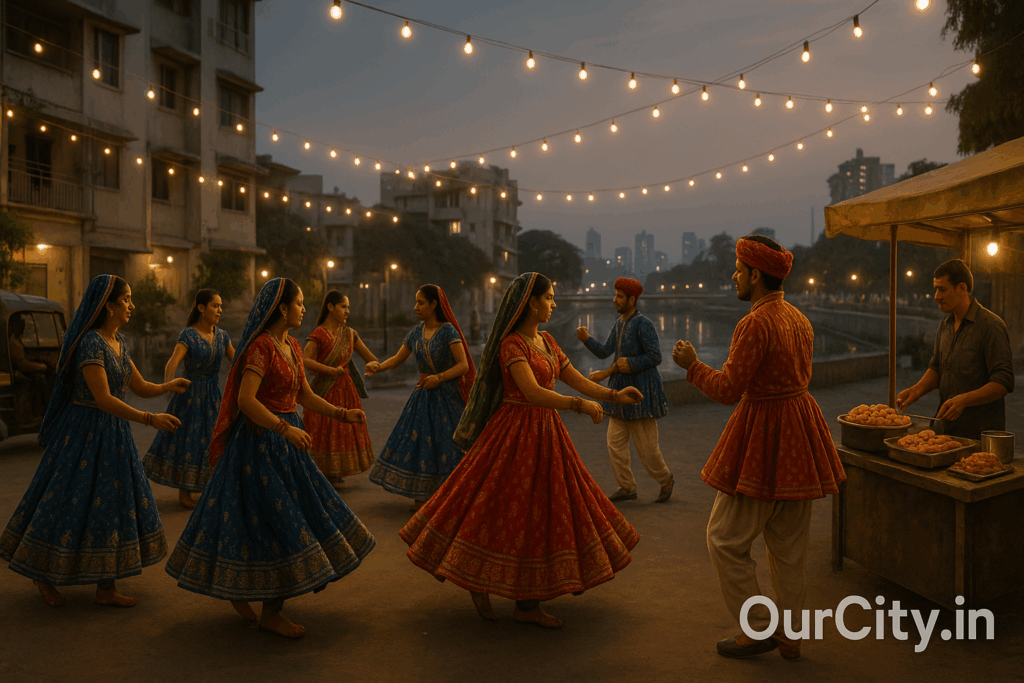
Navratri: Garba grounds at Piplod, Vesu, Adajan come alive. Traditional dress rules are relaxed but respectful. Keep a small sling bag; shoes off near the inner mandap.
-
Sharad Purnima: Late-night bhajans; light shawl recommended.
November
-
Diwali & Gujarati New Year: Morning temples are packed; arrive by 06:00. Respect fireworks bans/timings if any. Derasars have long lines—carry patience.
-
Chhath (migrants’ communities): At water edges, keep distance from puja; no flash photography.
December
-
Christmas & New Year Mass: Churches in Nanpura and Athwa host midnight services. Modest attire, arrive early.
-
Year-end satsangs/baithaks: Community halls in City Light, Vesu, Piplod.
Where to Go & When to Arrive (Time Cues)
-
First aarti window: 05:30–07:30 (temples/derasars).
-
Evening aarti: Post-sunset; busiest 18:00–20:00—arrive at least 30 minutes early.
-
Friday prayers (mosques): Midday; be extra discreet around entrances.
-
Sunday mass: Morning; come a little early and sit quietly.
If a major procession is scheduled, give yourself +30–45 minutes. Park in City Light, Parle Point, Althan, or Pal/Adajan back lanes and walk.
Family-, Senior-, and Child-Friendly Tips
-
Best slots: Early mornings and midweek afternoons (13:00–16:00).
-
Elder support: Most sites have a lean-on railing or side benches; carry a folding cane stool if needed.
-
Kids: Explain “quiet hands” near the diya and “inside voices.” Keep a contact number in their pocket.
🪔 Sacred Spaces Etiquette (Temples • Gurdwaras • Dargahs/Mosques • Churches • Ghats)
What to Wear & Carry
-
Dress codes: Covered shoulders and knees. Light cottons most of the year; a shawl/dupatta doubles as head cover.
-
Footwear: Easy slip-ons; use shoe racks (keep ₹5–10 change). Socks help on hot floors.
-
Carry list: Small scarf, refillable bottle, handkerchief, wet wipes, small cloth bag for offerings. Avoid bulky backpacks.
Offerings/Prasad/Chadar: Ranges & Rules
-
Flowers: ₹20–100 (buy near Chowk Bazaar, Athwa Gate, Ring Road).
-
Prasad boxes: ₹20–60; keep sealed till offered.
-
Oil/ghee packs/agarbatti: ₹50–200.
-
Chadar at dargahs: ₹200–600; share carry with a friend; keep it folded neatly.
-
Langar (gurdwara): Sit in pangat line; accept karah prasad with both hands; finish fully—no waste.
Hundi/daan: Give with your right hand, quietly. UPI boxes are common; confirm the official QR near the office counter. Keep small notes for quick flow.
Photography & Phone Etiquette
-
Rule of thumb: If the flame is moving, your phone isn’t. No raised phones during aarti.
-
People’s faces: Avoid close-ups without consent, especially during prayers or mourning.
-
Ask first: “Photography allowed hai?” If told no, say: “Maaf kijiye, phone band.”
-
No drones: Especially near processions and sacred rooftops.
Ask Politely (Ready Scripts)
-
“Photography allowed hai?”
-
“Queue kahan se shuru hoti hai?”
-
“Darshan token yahin milta hai?”
-
“Head cover kahaan milega?”
-
“Langar kahaan serve ho raha hai? Main seva kar sakta/sakti hoon?”
-
“Maaf kijiye, bheed zyada hai, main baad mein aata/ati hoon.”
-
“Prasad yahin rakhna hai?”
-
“Bachchon ke liye side seating milegi?”
🪔 Processions, Melas & Community Events
Safe Viewing Spots & Exit Plans
-
Stand along barricaded edges; do not step into the path—especially for Rath Yatra chariots or Ganesh visarjan trucks.
-
Identify two exits before the crowd thickens (one back lane, one main road).
-
Avoid climbing on vehicles, statues, or fragile platforms. No throwing coins/flowers onto moving idols.
Transport Diversions & Crowd Windows
-
Peak crowd: 18:00–20:00.
-
Visarjan days: Tapi ghats and roads toward Nanpura, Adajan often see diversions. Use app cabs or buses (BRTS) and walk the last 0.5–1 km.
-
Keep a preloaded card/ticket when possible; carry small change for autos (₹50–200 for short hops).
If You Get Separated (Meet-up Scripts)
-
“Main barricade ke paas seedhi side khada/khadi hoon, aap aaram se aaiye.”
-
Teach kids to say: “Mujhe volunteer ke paas le chaliye.”
-
Fix a landmark: the mandap side gate, a tea stall on the corner, or a police help desk.
🪔 Seva, Daan & Doing Your Bit
Simple Ways to Volunteer
-
Shoe-rack help: “Main joda sambhalne mein madad karun?”
-
Queue guidance: “Line yahan se banegi, aaram se chaliye.”
-
Langar service: Wash hands, head covered; serve with a smile; sit and eat only after the last batch if requested.
-
Post-event cleanup: Join local groups near Gopi Talav, Dumas, or colony mandaps—carry gloves.
Hygiene & Clean-up Etiquette
-
Do not litter flowers; use the designated bins or eco-pits.
-
Keep sanitizer handy; avoid touching eyes after handling garlands.
-
For ghats: keep a respectful distance from cremation rites; silence phones.
Digital UPI vs Cash (When & How)
-
Official counters/UPI: Look for the trust/committee sign.
-
Small notes: Speeds up shoe racks, prasad counters, and parking tips.
-
No flaunting: Discreet, right-hand giving is the norm.
🪔 Arts, Crafts, Music & Dance of Surat
Surat breathes textiles—bandhani, brocades, and embroidery. You’ll find craft pockets in Ring Road, Varachha, Udhna, and Katargam. Music-wise, evening bhajans in community halls at City Light, Vesu, and Piplod are regular. During Navratri, garba steals the show; even small society grounds in Adajan or Pal buzz with live dhol.
What to See Live (Rehearsals, Sabhas, Baithaks)
-
Bhajan evenings: Look for notices at temple boards near Athwa/Nanpura.
-
Garba practice: Many grounds open practice by late September—observe respectfully; don’t block circles.
-
Qawwali nights: Some dargahs/communities host evening mehfils; modest dress, sit quietly.
Ethical Souvenir Buying (Quick Tests & GI Mentions)
-
Bandhani check: Tie-dye should show tiny thread marks; colours look alive, not flat.
-
Embroidery: Turn it over; handwork looks slightly “imperfect” and organic.
-
Fair price: Ask, “GST bill milega?” Genuine shops won’t balk. Prefer GI-indicated clusters when available.
🪔 Language, Greetings & Everyday Manners
Local Phrases (Transliteration + Script)
-
Gujarati greeting: “Kem cho?” (કેમ છો?) — How are you?
-
Response: “Majama.” (મજામાં) — I’m good.
-
Devotional greeting: “Jai Shri Krishna.” (જય શ્રી કૃષ્ણ)
-
Thank you: “Aabhar.” (આભાર)
-
Polite ask: “Krupa kari ne bataavsho?” (કૃપા કરીને બતાવશો?) — Please show/tell me?
Other cultural hellos still apply: Namaste/Pranam, Sat Sri Akal, Adaab.
Right-Hand Giving, Thresholds, Sacred Trees/Animals
-
Use your right hand for offerings/receiving prasad.
-
Don’t step on thresholds; pause, then enter.
-
Avoid touching idols. Walk clockwise when indicated.
-
Respect sacred trees (peepal/banyan) and animals near shrines—no teasing/feeding junk food.
What Not to Do (Short List)
-
Don’t raise your phone during aarti.
-
Don’t push the queue.
-
Don’t argue with volunteers; ask and follow.
-
Don’t light fireworks near sacred spaces.
-
Don’t throw coins/flowers into the river.
🪔 Seasonal Playbooks (Heat • Monsoon • Winter/Smog • Peak Festive)
What Changes, What to Pack, When to Go
Summer (Apr–Jun):
-
When: Earliest slots; done by 09:00. Evenings post-sunset, but watch crowds.
-
Pack: ORS sachet, cap, sunglasses, socks for hot floors.
-
Tip: Shade first, darshan next; stand under a shamiana if the line snakes outside.
Monsoon (Jun–Sep, varies):
-
When: Mid-morning breaks (10:30–12:00) if rains ease.
-
Pack: Non-slip footwear, small plastic covers for offerings, a foldable umbrella.
-
Note: Waterlogging in low stretches near Rander, Nanpura—check municipal advisories.
Winter (Nov–Feb, mild):
-
When: Pre-dawn can be breezy; carry a light layer. Midnight Mass/Janmashtami—wrap up kids.
-
Air: If smog picks up, a simple mask helps elders and kids.
Peak Festive Weeks:
-
Plan transport: Park farther away and walk.
-
Book ahead: Event passes/entry where applicable; keep IDs handy.
-
Quiet hours: Early mornings are gold. For kids/elders, skip late-night peaks.
Exam & Job-Hunt Season:
-
Calm pockets: Afternoon temple courtyards, community libraries near Athwa, Nanpura, City Light.
-
Prayer routine: Short, daily, consistent—less rush, more focus.
🪔 Quick Cheatsheets (Tables)
Festival Months vs Typical Timings
| Festival/Observance | Usual Months | Typical Time Bands |
|---|---|---|
| Uttarayan (Makar Sankranti) | Jan | Terrace prayers at sunrise; day-long |
| Mahashivratri | Feb/Mar | 05:30–07:30, evening aarti 18:30–19:30 |
| Holi/Dhuleti | Mar | Morning temple puja; daytime colours (not near shrines) |
| Ramzan/Iftar | Shifts | Iftar at sunset; tarawih late evening |
| Rath Yatra | Jun/Jul | Daytime processions; check route advisories |
| Shravan Mondays | Jul/Aug | Pre-08:00, steady 17:00–20:00 |
| Janmashtami | Aug | Late evening to midnight |
| Paryushan/Das Lakshan | Aug/Sep | Calm mornings, pravachans mid-morning |
| Muharram | Shifts | Processions after dusk; silent respect |
| Ganeshotsav | Aug/Sep | Daily aarti 19:00; visarjan processions vary |
| Navratri | Oct | 20:00–23:30 garba; aarti near start |
| Diwali/NY (Gujarati) | Oct/Nov | 06:00–09:00 temple rush |
| Christmas/New Year Mass | Dec | 23:00–00:30 services |
Always check the official noticeboard/app for live timings.
Etiquette by Place of Worship
| Place | Head Cover | Footwear | Food Rules | Seating/Lines |
|---|---|---|---|---|
| Temple | Not required (carry dupatta) | Remove at rack | Prasad after offering | Follow rope lines, no pushing |
| Derasar (Jain) | Modest, optional head cover | Remove; be fragrance-light | Avoid leather; pure veg | Speak softly; no touching idols |
| Gurdwara | Mandatory (scarf/patka) | Remove; wash hands | Accept karah prasad; langar no waste | Sit on floor in pangat, equal lines |
| Dargah/Mosque | Head cover (men & women) | Remove at jora ghar if present | Offer chadar/flowers respectfully | Gendered areas; be discreet |
| Church | Not required; modest dress | Keep shoes on unless indicated | No eating inside | Sit/stand/kneel with congregation |
| Ghats | Not required; modest | Keep shoes if path hot | No eating near rites | Maintain distance; silence |
Offering/Donation Ranges (₹)
| Item | Typical Range |
|---|---|
| Flowers | 20–100 |
| Prasad box | 20–60 |
| Oil/ghee/agarbatti | 50–200 |
| Chadar (dargah) | 200–600 |
| Shoe rack tip | 5–20 |
| Langar/raw ration donation | 100–500 |
Quiet-Hour Windows & Crowd Surges
| Window | Crowd Level | Notes |
|---|---|---|
| 05:30–07:30 | Low–Medium | First aarti best for elders/kids |
| 13:00–16:00 | Low | Heat/siesta lull; quick darshan |
| 18:00–20:00 | High | Peak; arrive early or go later |
| Post-20:30 (non-peak days) | Medium | Calms after first aarti |
🪔 FAQs (Real Questions, Short Answers)
1) What should I wear for Navratri garba in Surat?
Comfortable traditional wear works—chaniya choli/kurta-pyjama. Keep a light dupatta, minimal jewellery, and a small sling. Shoes off near the inner mandap.
2) Can I take photos during aarti?
Ask first. If allowed, keep the phone low and no flash. Never raise it during the flame.
3) Is UPI accepted for donations?
Increasingly yes. Confirm the official QR at the office or donation desk. Keep small cash notes too.
4) Are there women-only areas?
At some mosques/dargahs, yes. Follow signage/volunteers. Temples/derasars usually have shared spaces with separate lines during rush.
5) How early should I arrive for big days like Diwali morning?
Aim for 06:00. If you have elders/children, finish by 08:30 before the surge.
6) What do I say to ask for the queue start?
“Queue kahan se shuru hoti hai?” or in Gujarati, “Line kya thi sharu thay che?” (લાઇન ક્યાંથી શરૂ થાય છે?)
7) Is head covering needed in temples?
Not mandatory everywhere, but a dupatta/scarf is handy. At gurdwaras and many dargahs, it’s required.
8) Can kids join late-night events?
Prefer early evening aartis/garba. Carry ear protection for loud drums and set a fixed meet-up point.
9) How do I behave at a langar?
Wash hands, head covered, sit on the floor, accept what’s served, finish fully, thank the sevadars.
10) Are drones allowed at processions?
No. Drones near sacred zones/processions are unsafe and often restricted.
11) What about footwear at ghats and cremation grounds?
Keep respectful distance; footwear is situational—follow signage/attendants. No photos.
12) What’s a polite refusal for prasad if I’m fasting?
“Dhanyavaad, main upvas par hoon—baad mein le lunga/ungi.” Say it softly; no fuss.
13) How to help without joining committees?
Offer shoe-rack help, guide the line, or join clean-ups post event. Ask, “Seva kahan milegi?”
14) Is there a safer time for solo women?
Early mornings and mid-evenings on non-peak days. Stay near families, use app cabs for returns, share live location with a friend.
15) Where to stand during chariot/visarjan?
Behind barricades, never in front or along the wheels’ line. Follow volunteers.
🪔 Wrap-Up: You’ll Fit Right In
Surat values speed at work and softness in worship. Keep it simple: reach a little early, carry a small offering, dress modest, and ask gently. The rest flows. A few local maxims:
-
“Line clear, mann clear.” A calm queue makes a calm mind.
-
“Pehla prasad, phir photo.” Offer first, camera later.
-
“Surat ni reet—saaf, saral, sachi.” Clean, simple, sincere.
Locals say…
-
“Reach before sunrise; Tapi-side air feels kinder.”
-
“Midweek darshan = less rush, more peace.”
-
“Garba circles welcome all—just match the rhythm and smile.”
Walk lightly, help quietly, leave spaces cleaner than you found them. You’ll be part of the city’s rhythm in no time.