Gwalior Places & Activities
Table of Contents
Gwalior: Places & Activities — Your Smart Local Playbook
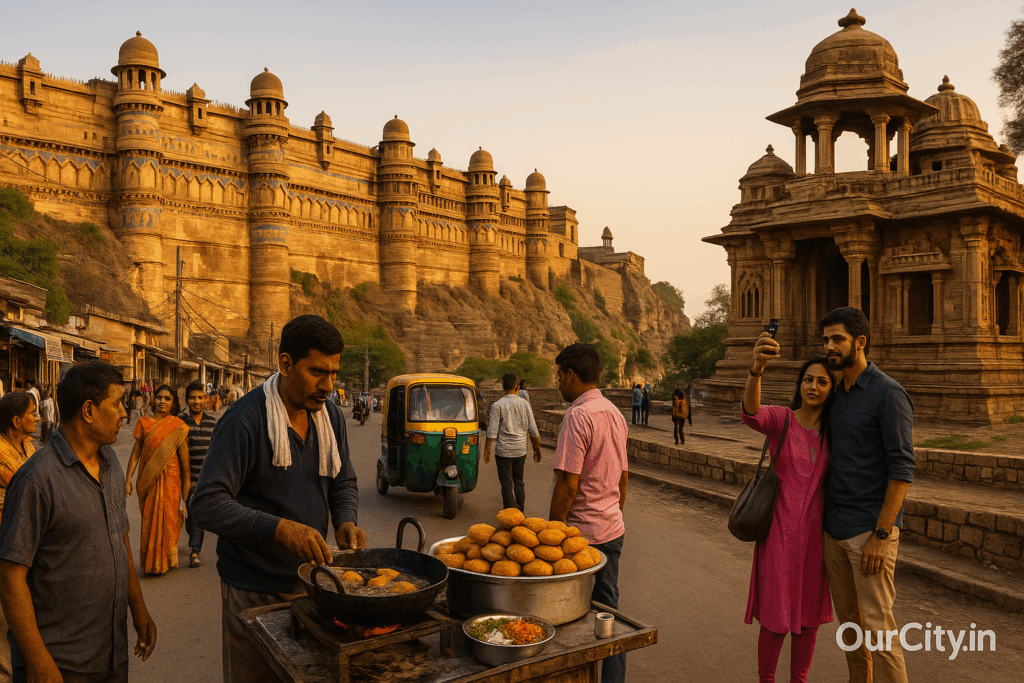
Gwalior is a city that wakes soft and steady, then glows. Mist on the fort ramparts at 06:30, a flute near Hazira by 07:00, office crowds through Lashkar by 10:00, and golden light on Man Singh Palace by 17:30. Locals plan their days around heat and seasons: smart morning windows, shady midday stops, and a relaxed evening circuit—especially around Maharaj Bada, Phool Bagh, and City Centre. First-timers often bounce between big-ticket spots (Fort → Jai Vilas → Tansen Tomb) but miss the timings, the right gates, and the easy handoffs. This playbook fixes that—with clean routes, “arrive by” cues, ₹ bands, monsoon and summer variants, and simple scripts you can actually use.
We’ll name real neighbourhoods—Lashkar, Thatipur, Morar, Hazira, Kampoo, City Centre, Birla Nagar, Tansen Nagar, Gola Ka Mandir, Bahodapur, Padav (near the railway station), Sirol, DD Nagar, Phalka Bazar, and the Tigra (Tighra) Dam belt—so you can orient like a local. Expect Indian English, a few local words, and guardrails for safety and respect. Let’s get you moving.
🧭 Why This Guide Works for Gwalior
-
Clarity over checklist: You get morning–midday–evening windows with exact “arrive by” hints. No rushing, no zig-zag.
-
Short, real handoffs: Walk where it’s pretty and safe, auto where it’s practical, cab at night. No guesswork.
-
Seasonal swaps: Summer heat (Apr–Jun) needs sunrise starts and a 12:00–16:00 buffer. Monsoon (Jun–Sep) wants covered markets and museums. Winter (Nov–Jan) brings a haze—good for silhouette photography, chilly after sunset.
-
Scripts you’ll actually use: Tickets, autos, refusals, help cues, and quick Hindi phrases.
-
Local respect: Temple/gurdwara/dargah etiquette, no loudspeakers near residential lanes at night, photography rules where needed.
-
₹ bands that match reality: Free, ₹ (₹20–₹150), ₹₹ (₹200–₹600), ₹₹₹ (₹700–₹1500+) per adult. Transport ranges too.
🗺️ Essentials & Hidden Gems (With “Arrive By” Cues)
Morning Windows (sunrise points, parks, ghats, lakes)
Gwalior Fort Hill (Urwai Gate ramp + Man Singh Palace terraces)
-
What it’s like: Sandstone walls glow at sunrise; the blue-tiled jharokhas of Man Singh Palace pop after 07:00 when the sun cuts across the facade.
-
Best hour: Arrive by 07:15 (summer), 07:00 (winter) for soft light and fewer tour buses.
-
Entry idea: ₹–₹₹ (fort compounds are ₹ for Indians; palace interiors and sound show are extra—carry small change or UPI).
-
Time needed: 2–3 hours if you explore Man Singh Palace, Sas Bahu (Sahasra Bahu) Temple, and Teli ka Mandir.
-
Nearest stand: Autos queue near Urwai Gate side and Gwalior Gate side; e-rickshaws common.
-
Safety note: The old ramp is steep and uneven—grip footwear. Skip isolated sections if you’re solo at dawn.
Sas Bahu Temple (Sahasra Bahu), Fort Plateau
-
What it’s like: Fine stone carving; light kisses the reliefs right after sunrise. Quiet corners, great for wide-angle shots.
-
Best hour: 06:30–07:30 (winter haze can be lovely).
-
Entry: Free/₹ (nominal if any).
-
Time: 30–45 min.
-
Tip: Carry a shawl in winter; wind can be nippy on the plateau.
Teli ka Mandir, Fort Plateau
-
What it’s like: A towering blend of styles; impressive vertical lines.
-
Best hour: 08:00–09:00 for side light.
-
Entry: ₹.
-
Time: 20–30 min.
-
Photo cue: Step back for clean verticals; phone users—use 2x or 3x to avoid distortion.
Tomb of Tansen & Tomb of Mohammed Ghaus (Hazira)
-
What it’s like: Garden complex with Mughal arches and music lore. You may catch a morning riyaaz (practice) if you’re lucky.
-
Best hour: 07:00–09:00 (shade; gentle crowd).
-
Entry: ₹/Free (donations common).
-
Time: 45–60 min.
-
Neighbourhood: Hazira; e-rickshaws accessible.
Tigra (Tighra) Dam Belt
-
What it’s like: Reservoir views, birds at first light, occasional morning mist in winter.
-
Best hour: Arrive by 06:45–07:00 for birds and still water reflections.
-
Entry/boats: Free access; boating is ₹–₹₹ (seasonal).
-
Time: 1.5–2 hours (more if boating).
-
Safety: Life jackets when boating. Monsoon: water releases—respect barriers.
Phool Bagh & Italian Garden Axis (Lashkar)
-
What it’s like: Green lawns, morning walkers, colonial-era buildings nearby.
-
Best hour: 06:15–07:45 (pleasant before traffic).
-
Entry: Usually free/₹ (nominal).
-
Time: 30–45 min walk loop.
-
Family note: Stroller-friendly paths on the main loop.
Midday Shade & Indoors (museums, galleries, libraries)
Jai Vilas Palace & Scindia Museum (Lashkar/City Centre side)
-
What it’s like: Opulent durbar halls, galleries of art and royal memorabilia.
-
Best hour: 11:00–13:00 (AC galleries; combine with a light lunch after).
-
Entry: ₹₹ (student/senior discounts; Aadhaar or college ID sometimes asked at counter—keep soft copy).
-
Time: 1.5–2.5 hours.
-
Note: Photography rules vary room to room—ask: “Photo allowed, flash nahi?”
Gujari Mahal Archaeological Museum (within Fort complex)
-
What it’s like: Sculptures and artifacts in a historic palace.
-
Best hour: 12:00–13:00 (cooler galleries during the day’s heat).
-
Entry: ₹.
-
Time: 45–60 min.
-
Tip: Pair with nearby fort interiors for a half-day.
Sun Temple (Surya Mandir, Morar)
-
What it’s like: A modern red sandstone temple inspired by Konark; beautiful light on the shikhara in late afternoon too.
-
Best hour: 12:30–16:00 if you want quieter darshan; or just before sunset for glow.
-
Entry: Free.
-
Time: 20–30 min.
-
Etiquette: Dress modestly; keep voices low inside.
Gwalior Zoo (Gandhi Prani Udyan, Lashkar/Kampoo edge)
-
What it’s like: Shaded walkways, a straightforward city zoo.
-
Best hour: 10:00–11:30 (animals more active before peak heat).
-
Entry: ₹.
-
Time: 60–90 min.
-
Family note: Check for drinking water points near main gate.
Libraries & Study Corners (Thatipur, City Centre, Lashkar)
-
What it’s like: Quiet reading rooms popular during exam season.
-
Best hour: 11:00–15:00 (cool, quiet).
-
Entry: Mixed (Free/₹ day passes).
-
Tip: Respect silent zones; phones on vibrate.
Evenings & Views (promenades, lit monuments)
Gwalior Fort Sound & Light Show
-
What it’s like: Narrated history with light on the fort walls; atmospheric after a warm day.
-
Best hour: Reach by 18:45–19:00 for seats; shows usually around dusk.
-
Entry: ₹–₹₹.
-
Time: ~1 hour.
-
Note: Carry a light layer in winter; it gets chilly.
Maharaj Bada & Phalka Bazar Walk (Lashkar)
-
What it’s like: City square and buzzing lanes. Architecture, fountains, quick chai stops.
-
Best hour: 18:30–20:00 (lights on, energetic but manageable).
-
Entry: Free.
-
Time: 45–75 min.
-
Safety: Keep bags zipped; avoid very narrow, crowded lanes after 21:00 if alone.
City Centre & Race Course Road Stroll
-
What it’s like: Broad roads, evening breeze, easy way to decompress.
-
Best hour: 19:00–20:30.
-
Entry: Free.
-
Time: 30–45 min.
-
Tip: Good spot to hail app cabs for night rides.
Tansen Nagar & Hazira Music Pockets
-
What it’s like: Occasional small community baithaks (music get-togethers) closer to festival dates.
-
Best hour: Evening; check local boards or ask shopkeepers.
-
Entry: Often free.
-
Note: Be respectful; recordings might be restricted.
🚶 One Great Day: Realistic Route
Route Overview (km, legs, handoffs)
-
Total distance: ~14–18 km across the day.
-
Legs: Walk on the fort plateau → e-rickshaw/auto down ramps → short auto hops in Lashkar/Hazira → app cab at night.
-
Why it works: You catch sunrise light at the fort, do shaded/indoor culture at midday, then an easy evening with views and a safe night switch.
Stop-by-Stop (time needed, ticket, nearest gate, quick safety)
-
Gwalior Fort Plateau — Sunrise Window
-
Arrive by: 07:00 (winter) / 07:15 (summer) via Urwai Gate.
-
Time: 2–2.5 hours split across Man Singh Palace, Sas Bahu Temple, Teli ka Mandir.
-
Ticket: ₹–₹₹ (carry ₹100–₹300 each; QR UPI accepted in most kiosks).
-
Safety: Uneven stones; watch your step. Solo travellers—stick to main paths.
-
Auto to Hazira — Tansen & Ghaus Complex
-
Script: “Bhaiya, Hazira Tansen Samadhi chalenge? Meter se.”
-
Time on spot: 45–60 min.
-
Entry: Often ₹/Free (donations).
-
Tip: Quiet garden etiquette; cover shoulders inside shrines.
-
Auto to Lashkar — Jai Vilas Palace & Scindia Museum
-
Arrive by: 11:00 to avoid peak heat.
-
Time: 2 hours.
-
Ticket: ₹₹; student/senior IDs fetch discounts.
-
Lunch waypoint: Quick, hygienic tea/coffee or a simple thali near Maharaj Bada/City Centre—keep it short (30 min).
-
Phool Bagh / Italian Garden Loop
-
Time: 30–45 min walk in shade.
-
Free/₹: Usually free access.
-
Fallback: If rain hits, swap to Gujari Mahal Museum (indoor).
-
Evening: Sound & Light Show at Fort
-
Arrive by: 18:45–19:00 (buy ticket earlier in the day if possible).
-
Time: ~1 hour.
-
Night switch: After show, choose app cab from a lit, busy point.
-
Script: “Nahi chahiye, thank you. Already booked.” (refusal to touts)
Fallbacks & Rain Plan
-
If fort interiors are crowded: Do Sas Bahu first, circle back at 09:30–10:00.
-
If a museum is shut (weekly off): Swap in Sun Temple (Morar) or library/study room time (quiet, AC).
-
Heavy rain after lunch: Skip gardens; go covered markets in Phalka Bazar or Thatipur arcades, then evening show if weather eases.
🌇 Weekend Sampler (2 Half-Days + 1 Evening)
Day 1 AM + PM
AM — Fort + Tansen (classic)
-
Arrive: 07:15 at fort plateau; 2 hours including Man Singh Palace.
-
Auto to Hazira: Tansen/Ghaus complex, 09:45–10:45.
-
Break: Coconut water near Lashkar; keep it quick.
PM — Jai Vilas + Phool Bagh
-
11:30–13:30: Jai Vilas Palace.
-
17:30–18:30: Phool Bagh & Italian Garden loop.
-
Evening: Maharaj Bada fountain view.
Day 2 AM + PM
AM — Tigra (Tighra) Dam
-
Arrive: 06:45–07:00.
-
Boating: ₹–₹₹; always ask for life jackets: “Jacket milegi? Pehen kar hi chalenge.”
-
Return: 10:00–10:30; hydrate.
PM — Sun Temple (Morar) + City Centre Stroll
-
16:30–17:15: Sun Temple for warm light.
-
18:30–20:00: City Centre and Race Course Road walk; app cab home.
Monsoon / Summer Variants
-
Monsoon: Prioritise Jai Vilas, Gujari Mahal, covered Phalka Bazar; keep Tigra as a cloud-watch stop from safe viewpoints (no slippery edges).
-
Summer: Start 06:00 sharp; long 12:00–16:00 AC break; evening Sound & Light only if breeze is decent.
🎭 Themed Days for Gwalior
Art & History Day (₹₹)
-
08:00–10:00: Man Singh Palace & Sas Bahu (fort).
-
11:00–13:00: Jai Vilas Palace galleries.
-
16:30–17:30: Gujari Mahal Archaeological Museum.
-
18:45–19:45: Sound & Light Show.
-
Handoffs: Auto between clusters; walk on plateau.
-
Carry: College ID (discount), water, scarf for temples.
Green Day (₹/Free)
-
06:30–07:45: Phool Bagh loop.
-
08:00–09:30: Shade walks in Kampoo and Thatipur green pockets.
-
16:30–18:00: Tigra Dam view (no boat if winds).
-
Travel: Autos/e-rickshaws; watch puddles in monsoon.
Kid-Friendly Path (₹)
-
09:30–11:00: Gwalior Zoo (shade, short loop).
-
11:30–12:15: Quiet hour at a public library reading corner (City Centre).
-
16:45–17:30: Sun Temple gardens (let them run around).
-
Stroller note: Main paths at Phool Bagh are stroller-friendly; fort ramps are not.
Budget/Free Day (Free–₹)
-
Sunrise: Sas Bahu Temple (free).
-
Mid-morning: Tansen Tomb complex (donation).
-
Evening: Maharaj Bada & Phalka Bazar window-shopping.
-
Transport: E-rickshaw day; short hops ₹20–₹60.
Rain-Safe Plan (₹–₹₹)
-
11:00–13:00: Jai Vilas (indoor galleries).
-
15:00–16:00: Gujari Mahal (indoor sections).
-
17:30–19:00: Covered Phalka Bazar arcades; tea under awnings.
-
Backup: Community halls sometimes host music recitals near Hazira/Tansen Nagar—ask locals.
Active/Outdoors (₹)
-
06:15–07:30: Ramp walk up from Urwai Gate (steep; shoes with grip).
-
17:00–18:30: Tigra Dam cycling stretch (only if permitted and safe shoulders; else brisk walk).
-
Locker note: No formal lockers at ramps; keep valuables minimal.
Couples’ Evening (₹–₹₹)
-
17:30–18:15: Sun Temple glow.
-
18:45–19:45: Fort Sound & Light.
-
20:00: App cab to City Centre for a calm stroll.
-
Last-ride cue: Shift to cab by 21:30.
🌅 Photo-Friendly Times & Spots
Golden Hour Map in Words
-
Fort East Faces: 06:40–07:20 winter, 06:00–06:40 summer—soft side light.
-
Sas Bahu Temple: Just after sunrise, reliefs pop.
-
Teli ka Mandir: 08:00–09:00, then again 16:30–17:15 (shadows define the tower).
-
Tigra Dam: 07:00 birds, 17:30–18:30 reflections (watch wind ripples).
Lens tips:
-
Wide (24–28mm): Fort walls, palace courtyards.
-
Portrait (50–85mm): Carvings at Sas Bahu, candid street frames in Phalka Bazar.
-
Skip after dark: Isolated stretches on the fort plateau; choose lit areas near gates.
Blue-Hour & Night Safety
-
Sound & Light: Great for blue-hour silhouettes; keep a small torch.
-
Maharaj Bada: Pretty fountains; mind pockets.
-
Rule: If your path is empty and unlit—don’t push for a shot. Take the safer angle or return earlier.
🌧️ Monsoon-Proof Picks
Covered & Indoor Ideas
-
Jai Vilas Palace rooms (long corridors, chandeliers).
-
Gujari Mahal galleries (stone sculpture).
-
Phalka Bazar covered lanes (window-shopping, small snacks).
-
Libraries in City Centre/Thatipur (study, calm).
Footwear/Bags/Transport Tweaks
-
Shoes with grip, fast-dry fabrics, a tiny towel.
-
Bag-cover/poncho in outer pocket for quick access.
-
Transport: Prefer e-rickshaws/autos on known roads; avoid waterlogged shortcuts.
-
Avoid: Low underpasses and very narrow old-city lanes during a downpour.
🧒 Family, 🧓 Senior & ♿ Accessibility Notes
Step-Free Entries & Facilities
-
Fort plateau: Vehicle access to upper gates helps, but most interiors still have steps. Ask guards: “Gate B se wheelchair access milega?”
-
Jai Vilas Palace: Several galleries on upper floors; lifts may be limited—confirm at counter before buying tickets if step-free access is required.
-
Sun Temple: Generally step-light but not fully step-free at all edges.
-
Phool Bagh / City Centre promenades: Best for wheelchairs and strollers.
Stroller & Quiet-Room Tips
-
Stroller-friendly: Phool Bagh main loop, City Centre pavements.
-
Feeding/quiet: Libraries (City Centre/Thatipur) offer silent corners; carry a light scarf for privacy.
-
Restrooms: Use museum complexes and big public gardens; carry tissues and sanitiser.
💸 Free & Low-Cost Fun
Public Spaces & Weekly Programmes
-
Maharaj Bada: Free evening lights and street life.
-
Phool Bagh lawns: Morning walks and community yoga.
-
Tansen complex (Hazira): Often free; occasional musical gatherings.
-
College fests (Lashkar/Thatipur): Posters on gates—look out for open events with zero/₹ tickets.
Community/College Events (general pointers)
-
Ask guards: “Aaj koi open programme hai?”
-
Student IDs sometimes get priority seating in cultural halls—carry it.
🎟️ Tickets, Timings & Helpful Apps (Describe)
Where to Book & What to Carry
-
Fort & ASI sites: On-site kiosks; QR UPI accepted; some counters prefer small change.
-
Museums/Shows: Buy at counters or via known ticket platforms (check same-day availability).
-
Carry: Soft copy of Aadhaar, student/senior ID, and a backup payment option (UPI + small cash).
-
Time-sensitive: Prices/hours change; always confirm on the official app/site or at the gate.
Student/Senior Discounts, ID Notes
-
Ask politely: “Student ID pe discount milega?”
-
Seniors: “Senior citizen discount hai? ID dikhana padega?”
-
Some gates may request Aadhaar—a clear photo works; keep physical if you’re not comfortable sharing phones.
🚌 Between-Stops Movement
Metro/Bus/Auto Scripts
There’s no metro in Gwalior; rely on e-rickshaws, autos, city buses, and app cabs.
-
Auto start: “Bhaiya, meter se chalenge? Gate 2, Urwai side.”
-
If no meter: “Kitna loge? ₹80 theek rahega. Chale?” (keep it friendly; agree before boarding)
-
Refuse touts: “Nahi chahiye, thank you. Already booked.”
-
Help script: “Gate B se wheelchair access milega?” / “Ticket counter kidhar hai?”
-
Bus nudge: “Is route pe bus kitne minute me?” (drivers/conductors are helpful)
Night-Safe Switch to App Cabs
-
After 21:00–21:30, prefer app cabs from lit, busy points: City Centre, Maharaj Bada, Padav (near railway station entrance).
-
Share trip with family/friends, sit behind the driver, and keep your phone battery healthy.
🛟 Safety & City Etiquette
Zones to Be Cautious In
-
Isolated fort sections after dark—avoid.
-
Very narrow lanes in old markets (Phalka Bazar spurs, interior Hazira) late night—go with a buddy or skip.
-
Water edges at Tigra in monsoon—respect barriers; no heroics.
Photo/Drone Rules
-
Many heritage sites restrict drones; permits are needed for professional shoots.
-
Ask: “Drone allowed?” If unsure—don’t fly.
-
Tripods: Allowed outdoors usually, but check guards; inside museums often restricted.
Water/Restrooms/First-Aid
-
Water: Carry a refillable bottle; use museum taps or known filtered dispensers near big gates.
-
Restrooms: Museums, large gardens, railway station concourse (Padav).
-
First-aid: Keep plasters, ORS, and a small bandage roll; sunblock in summer.
🗺️ Day Trips Near Gwalior
3–6 Options with Travel Times
Orchha (≈120 km | 3–3.5 hrs)
-
Why go: Bundelkhand palaces, cenotaphs on Betwa River.
-
Best hour: 16:30–18:30 on the riverbank; sunrise on cenotaph silhouettes.
-
Return by: 20:30–21:00 if self-drive; else overnight.
Datia & Sonagiri (≈75–85 km | 2–2.5 hrs)
-
Why go: Peetambara Peeth (Datia) and gleaming Jain hill temples (Sonagiri).
-
Best hour: Morning 08:00–10:00 before heat.
-
Return by: 19:30 to avoid night highway fatigue.
Morena Circuit — Mitawali (Chausath Yogini), Bateshwar Temples, Padavali (≈45–60 km | 1.5–2.5 hrs combined)
-
Why go: Unique circular yogini shrine (Mitawali), sprawling sandstone clusters at Bateshwar, and carvings at Padavali.
-
Best hour: 07:00–10:00 (soft light, fewer crowds).
-
Return by: 18:30; roads get dim after dusk.
Shivpuri (≈115–125 km | 3 hrs)
-
Why go: Forest vibes, old royal sites, lakeside breezes.
-
Best hour: 16:30–18:30 for lakes/parks.
-
Return by: 21:00 (or make it an overnight).
National Chambal Sanctuary (≈100–120 km | 3–3.5 hrs via Morena/Dholpur belt)
-
Why go: River safari for gharial and birds.
-
Best hour: 07:00–10:00 boat rides.
-
Return by: 19:00; riverbanks are remote and dark after sunset.
“Return By” Suggestions
-
General rule: For out-and-backs within 150 km, plan to re-enter Gwalior by 20:30.
-
Monsoon/winter: Add 30–45 min buffer for rain/fog.
✅ Quick Cheatsheets (Tables)
Sample Entry Fees & Best Hours
| Place Type | Typical Entry | Best Hour | Weekly Off | Notes |
|---|---|---|---|---|
| ASI Fort Interiors | ₹40–₹100 | 07:00–10:00 | Varies | Carry small cash/UPI |
| Palace Museum | ₹200–₹400 | 11:00–13:00 | Mon/Tue | Student ID discount possible |
| Zoo/Park | ₹20–₹80 | 06:30–08:00 | – | May shut in heavy rain |
| Sound & Light Show | ₹100–₹250 | 18:45 seating | Varies | Buy earlier if you can |
| Temple (Sun Temple) | Free | 16:30–17:30 | – | Dress modestly |
Metro/Bus Hand-Offs & Last Rides
| Leg | From → To | Mode | Typical Time | Last Ride |
|---|---|---|---|---|
| 1 | Fort plateau → Hazira | Auto | 15–20 min | 22:00-ish |
| 2 | Hazira → Jai Vilas (Lashkar) | E-rickshaw | 15–25 min | 22:00-ish |
| 3 | Jai Vilas → Phool Bagh | Walk/Auto | 5–10 min | – |
| 4 | City Centre → Hotel/Station | App cab | 10–25 min | 24:00 |
Monsoon/Heat Swaps
| If Rained Out | Go Instead | Why |
|---|---|---|
| Fort ramp walk | Gujari Mahal Museum | Indoor, informative |
| Tigra boating | Jai Vilas galleries | Dry, AC |
| Park stroll | Covered Phalka Bazar | Lively, sheltered |
| Evening square | Sound & Light (if on) | Seated, controlled |
❓FAQs
1) What’s the safest evening viewpoint?
The Sound & Light seating area at the fort is structured and lit. For city lights, Maharaj Bada is lively—stay near the main square and leave by 20:30–21:00 if alone.
2) How late should I use autos vs app cabs?
Autos/e-rickshaws are fine till ~21:00 on main roads. After that, switch to app cabs from City Centre, Maharaj Bada, or Padav entrances.
3) Best free views?
Sas Bahu Temple at sunrise and Phool Bagh mornings are free and lovely. Tansen Tomb complex gardens are quiet and often free/donation-based.
4) How early should I reach the fort?
Winter: 07:00 gates and light are ideal. Summer: 06:45–07:15; the sun rises earlier, but buses arrive after 08:30—use the calm hour.
5) Is Tigra (Tighra) Dam okay in monsoon?
Check local advisory. Respect no-entry barriers; skip boating in strong winds or rain. Shoreline can be slippery.
6) Drone rules?
Assume no drones at heritage zones without permits. Ask guards: “Drone allowed?” If unsure—don’t fly.
7) Are there stroller-friendly routes?
Yes—Phool Bagh, City Centre pavements, and large museum corridors. Fort ramps and inner palaces are not stroller-friendly.
8) Do I need ID at ticket counters?
Carry Aadhaar (soft copy) and student/senior IDs for discounts. Some counters ask to see an ID for concessional tickets.
9) How hot does it get?
April–June can touch 40–45 °C. Plan 06:00–10:00 outdoors, long 12:00–16:00 indoor break, and resume after 16:30.
10) What about winter haze?
Nov–Jan mornings can be foggy (good for silhouettes). Carry a light layer; use afternoons for parks and museums.
11) Where can I refill water?
Large museums, gardens, and some public buildings near Maharaj Bada/City Centre. Carry a bottle and ORS in summer.
12) Day-trip cut-offs?
For out-and-backs (Orchha/Chambal/Morena circuit), aim to re-enter Gwalior by 20:30. Add buffer for monsoon or fog.
13) What’s a respectful way to refuse touts?
“Nahi chahiye, thank you. Already booked.” Keep walking, no arguments.
14) “Photo allowed?” how to ask nicely?
“Photo allowed hai? Flash nahi use karenge.” Most guards appreciate that you’re mindful.
15) What’s a good “arrive by” for Jai Vilas?
11:00 is sweet: AC, thinner crowds, and time for a simple lunch after.
🔚 Wrap-Up: You’ll Do Great Here
Gwalior rewards anyone who respects its rhythm: early light at the fort, shade and galleries at midday, a calm evening window, and a safe switch to app cabs at night. Keep ₹ change and UPI handy. Ask guards for quickest gates. Listen for a soft alaap near Hazira—music is part of this city’s breath.
Locals say… reach Sas Bahu five minutes before the first guard shifts—you’ll get the carvings to yourself and the best morning photo without anyone in frame. Go well, move smart, and enjoy the city like it’s yours.