Ghaziabad Traditions & Culture Guide
Table of Contents
Ghaziabad Traditions & Culture: Show Up Right
Ghaziabad sits at the hinge of Uttar Pradesh and Delhi—NCR speed outside, desi heart inside. Morning aarti (आरती—lamp ritual) spills out of corner mandirs in Kavi Nagar and Sanjay Nagar. Friday namaz surges around Loni and Sahibabad. Nagar kirtans glide through Vasundhara and Vaishali with shabad kirtan and kada prasad. By evening, bhajans hum at ISKCON-style satsangs in Raj Nagar Extension while Urdu shairi and qawwali (क़व्वाली—devotional music) float from smaller dargahs near the GT Road belt. It’s busy, but it’s warm. People will make space if you show respect and move with the flow.
First-timers usually trip up on three things: timings, queues, and camera manners. This guide fixes that. It’s written the way locals actually move—short cues, simple scripts, and neighborhood name-drops so you can place yourself quickly. Bring an easy smile, a small scarf, and a little patience. You’ll fit right in.
🪔 Locals say: “RDC ke mandir yaahin hai—reach early, leave gently.”
🪔 Why This Culture Guide Works for Ghaziabad
-
Clarity over guesswork: Month-wise festival cues (Jan–Dec) with when-to-arrive windows you can trust.
-
Scripts that work: Ask softly, stay respectful: “Photography allowed hai?” / “Queue kahan se shuru hoti hai?”
-
Seasons matter: Heat, monsoon, winter-smog—your plan shifts with the weather.
-
Family-first: Senior-friendly slots, stroller math for crowded melas, and safer viewing pockets near barricades.
-
No fuss: Modest attire, small offerings, UPI where possible, cash for small counters, and simple seva (सेवा—volunteering) you can start the same day.
Neighborhoods you’ll see mentioned so you feel oriented: Raj Nagar, RDC (Raj Nagar District Center), Kavi Nagar, Sanjay Nagar, Shastri Nagar, Vijay Nagar, Nandgram, Nehru Nagar, Patel Nagar, Govindpuram, Indirapuram (Shipra Suncity), Vaishali, Kaushambi, Vasundhara, Sahibabad, Mohan Nagar, Arthala, Loni, Modinagar, Muradnagar, Dasna, Crossing Republik, Pratap Vihar.
🪔 Festival Calendar: What Happens When (Jan–Dec)
City Highlights Month by Month
January
-
Makar Sankranti: Early-morning snan (holy dip) traditions have softer echoes here along the Hindon; many opt for temple darshan instead. Til-gud laddoos as prasad (प्रसाद—blessed offering).
-
Republic Day: School parades around Kavi Nagar, Raj Nagar, housing-society flag hoists across Indirapuram, Vaishali.
February–March
-
Mahashivratri: Lines at Shiv temples along GT Road belt and Dudheshwar Nath side (a major landmark). Abhishek (ritual bathing) begins before sunrise; carry a small water/milk pack only if the temple allows.
-
Holi: Societies in Indirapuram, Vaishali, Vasundhara run family-safe gulal gatherings. Protect eyes and phone. Avoid chemical colours; keep a post-Holi shawl in autos/metro.
March–April
-
Ram Navami / Chaitra Navratri: Morning aarti best between 05:45–07:15 in Raj Nagar, Kavi Nagar temples.
-
Ramzan (रमज़ान): Iftar (इफ्तार—fast-breaking) bazaars glow in Loni, Nandgram, old Ghantaghar area; arrive 15–20 minutes before maghrib; be mindful, don’t block paths.
April–May
-
Eid-ul-Fitr: Eid namaz in large grounds; greet with “Eid Mubarak” and a smile. Continue walking, don’t linger at gates.
-
Baisakhi / Vaisakhi: Nagar kirtans from gurdwaras in Sahibabad, Vasundhara; modest dress and head cover is a must.
June–July
-
Rath Yatra: Smaller processions in Indirapuram/Raj Nagar Extension societies; avoid standing directly in front of chariots.
-
Kanwar Yatra (regional): Routes toward Haridwar cross Muradnagar–Modinagar corridor. Expect diversions; give right of way to kanwariyas.
August–September
-
Janmashtami: Night queues at Krishna mandirs around Raj Nagar, Shastri Nagar. Dahi-handi in housing lanes—don’t crowd below human pyramids.
-
Ganeshotsav: Celebrated in pockets—Indirapuram, Crossing Republik. Immersions are modest; follow volunteer cues.
-
Muharram: Tazias and matam processions in old Ghaziabad lanes; watch respectfully from the sides; avoid photography of sensitive moments.
September–October
-
Navratri & Durga Puja: Garba at community halls in Vaishali–Kaushambi belt; Bengali pujos in Indirapuram (Shipra side). Evening aartis get full; reach 18:00 if you want front-room space; 20:00–21:00 is peak.
-
Ramlila & Dussehra: Ramlila grounds in Kavi Nagar, Raj Nagar draw families; best with kids pre-20:00.
October–November
-
Karva Chauth: Lines near Indirapuram and Vasundhara temples in late evening; move quietly, don’t cut lines.
-
Diwali: Lakshmi-Ganesh puja across societies. Check police/municipal advisories for cracker windows and silent zones. Carry slippers you can spot easily—shoe piles get wild.
November–December
-
Guru Nanak Gurpurab: Nagar kirtans, kirtan samagams in Sahibabad, Vaishali; langar (लंगर—community meal) etiquettes matter (see below).
-
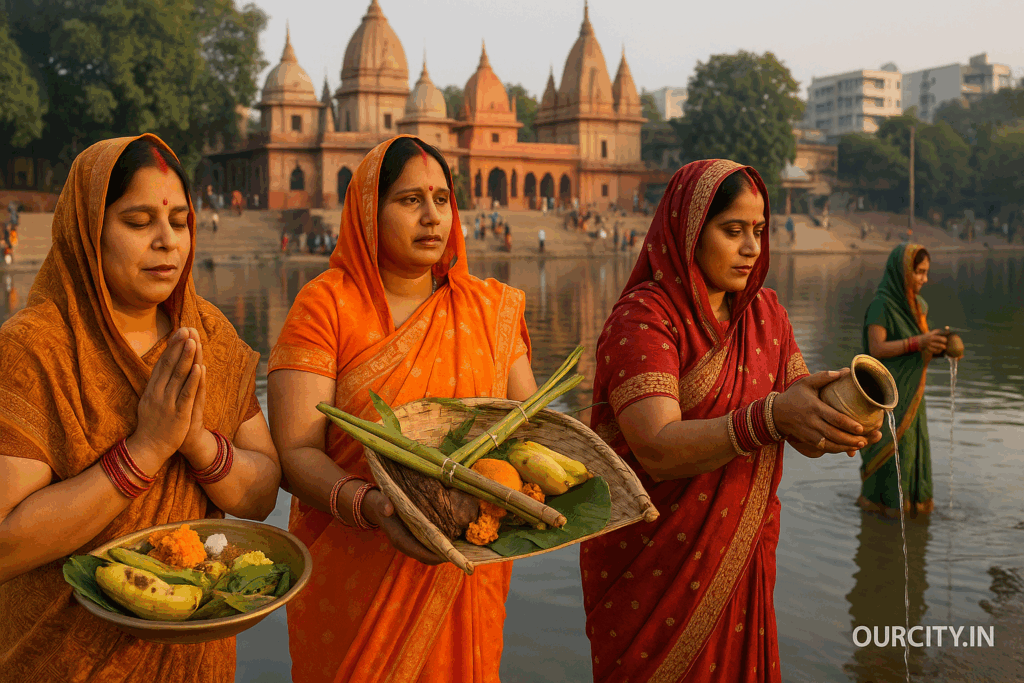
Chhath Puja (Hindon ghats and society setups): Arghya (sun offerings) at sunrise/sunset; reach early; don’t photograph faces without consent.
-
Christmas & New Year: Midnight mass in Kaushambi–Vaishali corridor churches; modest clothing, soft steps, phones on silent.
Where to Go & When to Arrive (Time Cues)
-
First aarti: pre-dawn to 07:30 in many temples—arrive by 06:00 for calm darshan (दर्शन—sacred viewing).
-
Evening peaks: 18:00–20:00 across most shrines and pandals; if you dislike crowds, come by 17:30 or after 20:30 (still decent).
-
Iftar band: 15 minutes before to 20 minutes after maghrib; don’t stand at shop counters during azan.
-
Sunday mass: usually morning bands; step in quietly, sit at the back if unsure of cues.
-
Nagar kirtan: late morning to afternoon; ask volunteers for safer viewing “edges”.
Family-, Senior-, and Child-Friendly Tips
-
Strollers: Avoid in tight lanes of Nandgram, old Ghantaghar. Use slings; keep one adult free from bags.
-
Seniors: Choose Raj Nagar, Kavi Nagar, Indirapuram temples with clearer ramps and shoe racks; come in the first hour.
-
Kids: Ear protection for drums; stand near barricades at Ramlila grounds; pre-set a meeting point (a chai stall or a gate number).
🪔 Locals say: “Garba night? Park before 18:30 in Vaishali. After that, it’s a shuffle!”
🪔 Sacred Spaces Etiquette (Temples • Gurdwaras • Dargahs/Mosques • Churches • Ghats)
Temples in Raj Nagar, Kavi Nagar, Shastri Nagar and the GT Road side see most daily flow. Gurdwaras in Sahibabad–Vasundhara–Vaishali are active with seva. Mosques and dargahs have steady rhythms around Loni, Nandgram, and older markets. Churches cluster in the Kaushambi–Vaishali corridor and parts of Indirapuram.
What to Wear & Carry
-
Dress code: Shoulders and knees covered. Light cottons in heat; a shawl/dupatta (दुपट्टा) doubles as head cover (गुर्द्वारा/दर्गाह).
-
Footwear: Easy on/off sandals. Carry a small cloth bag for shoes if racks overflow. Socks help on hot floors.
-
Bag check: Keep valuables minimal. Power banks sometimes barred.
-
Carry list: Scarf, refillable bottle, handkerchief, wet wipes, small notes (₹10–₹50), UPI ready.
Offerings/Prasad/Chadar: Ranges & Rules
-
Flowers: ₹20–100; buy from vendors without blocking gates.
-
Prasad: ₹20–60; receive with right hand or cupped both hands.
-
Chadar (चादर—offering cloth at dargahs): ₹200–600; fold respectfully, don’t step on it.
-
Oil/ghee packs: ₹50–200; check if abhishek/lighting is allowed.
-
Candles/diya: ₹10–30; place safely, tie back dupattas near flames.
Daan/Hundi etiquette: Give with the right hand; avoid flashing big cash. Digital UPI boxes are common; small cash keeps lines moving. Don’t insist on touching alms boxes—drop gently.
Photography & Phone Etiquette
-
Keep phones on silent.
-
During aarti, don’t raise phones above eye level; never block flame circulation.
-
Avoid faces during namaz, prayer, or sensitive rites.
-
When unsure, ask: “Photography allowed hai?” (फोटो लेना ठीक है?) If no, put the phone away without debate.
Ask Politely (Ready Scripts)
-
“Photography allowed hai? / फ़ोटोग्राफी allowed है?”
-
“Queue kahan se shuru hoti hai? / क्यू कहां से शुरू होती है?”
-
“Darshan token yahin milta hai? / दर्शन टोकन यहीं मिलता है?”
-
“Head cover kahaan milega? / हेड कवर कहाँ मिलेगा?”
-
“Langar kahaan serve ho raha hai? Main seva kar sakta/sakti hoon? / लंगर कहाँ सर्व हो रहा है? मैं सेवा कर सकता/सकती हूँ?”
Gurdwara-Specific
-
Head cover mandatory (use provided rumaal/dupatta).
-
Wash hands, remove shoes, rinse feet where indicated; keep footwear neatly in jora ghar.
-
Sit in pangat (पंगत—rows) for langar; don’t waste food; return plates to the wash area.
-
Karah prasad (कड़ा प्रसाद): receive with both hands; don’t refuse rudely—say “Bas thoda sa” if you want less.
Dargah/Mosque-Specific
-
Head cover for all; men avoid sleeveless; women prefer longer kurta/salwar.
-
Chadar/flowers are common at dargahs; confirm flow with a caretaker (khadim).
-
During namaz, step aside; avoid crossing prayer lines.
-
Qawwali evenings: Sit where indicated; clapping is okay when others do; maintain decorum.
Church-Specific
-
Enter and sit quietly. Follow stand/sit cues if you know them; else stay seated and observe.
-
Confession and private prayer zones are not tourist areas—keep distance.
-
Sunday mass: modest clothing; avoid flash; phones off.
Ghats/Cremation Grounds
-
Maintain silence and distance; no photography.
-
Watch footing on wet steps; don’t throw flowers/coins into the Hindon.
-
Donations: keep discreet; look for official boxes.
🪔 Locals say: “If you’re unsure—copy what the person in front of you is doing, not the loudest person in the room.”
🪔 Processions, Melas & Community Events
From Kavi Nagar Ramlila to Indirapuram society garbas, and nagar kirtans across Sahibabad–Vasundhara, Ghaziabad’s public celebrations are big-hearted and mostly volunteer-run.
Safe Viewing Spots & Exit Plans
-
Stand at edges near barricades; never at float corners or directly in front of tazias/raths.
-
Keep exits visible; agree on a meet-up tea stall or gate number.
-
For kids: write a contact number on a small paper tucked in pocket; point out volunteer vests.
Transport Diversions & Crowd Windows
-
Metro: Red Line (to Shaheed Sthal/New Bus Adda side) and Blue Line (Kaushambi, Vaishali). Expect last-mile via e-rickshaws in Mohan Nagar, Arthala, Raj Nagar.
-
Peak windows: 18:00–20:00 most days of big festivals.
-
Check city police/DMRC advisories for diversions; carry a preloaded smart card.
If You Get Separated (Meet-up Scripts)
-
“Main gate 2 ke paas wait kar raha/rahi hoon. Aap kahaan ho?”
-
“Main volunteer ke saath hoon—yahin rukta/ti hoon.”
-
“Gaadi ko mat move karo; main aata/ati hoon 5 minute mein.”
🪔 Locals say: “When in doubt, follow the volunteers. They always know a side lane.”
🪔 Seva, Daan & Doing Your Bit
Simple Ways to Volunteer
-
Shoe-rack help at temples in Raj Nagar, Kavi Nagar.
-
Langar service at gurdwaras in Sahibabad–Vasundhara: pouring water, serving dal, cleaning plates.
-
Queue guidance at society pandals (ask the organizing committee desk).
-
Post-event cleanups around RDC, Indirapuram, Vijay Nagar lanes.
How to offer: “Main seva karna chahta/chahti hoon—kahan help chahiye?”
Hygiene & Clean-up Etiquette
-
Carry a small trash bag; keep flowers/packaging together.
-
Use designated bins; don’t toss in drains (monsoon flood risk).
-
Handwash after prasad/langar; carry a small sanitizer.
Digital UPI vs Cash (When & How)
-
UPI: official QR at temple trust/gurdwara counters and pandals; verify the name on screen.
-
Cash: keep ₹10–₹50 notes for hundi, shoe counter tips, and small vendors.
-
Avoid crowding the donation box—step aside after giving.
🪔 Arts, Crafts, Music & Dance of Ghaziabad
What to See Live (Rehearsals, Sabhas, Baithaks)
-
Bhajan evenings and Geeta discourse sessions in Raj Nagar Extension, Shastri Nagar community halls.
-
Garba/dandiya during Navratri in Vaishali, Indirapuram clubs; rehearsal peeks are fine if organizers permit.
-
Ramlila in Kavi Nagar—classic dialogues, local talent, and a festive bazaar ring.
-
Qawwali at smaller dargahs in older markets—low-key, soulful, seat yourself with modesty.
-
Kirtan sabhas in Sahibabad gurdwaras—focus on the shabad; phones away.
Ethical Souvenir Buying (Quick Tests & GI Mentions)
-
Nearby clusters:
-
Pilkhuwa (bedsheets/handloom, UP—short drive from Dasna side).
-
Khurja (pottery, UP—day-trip distance).
-
-
Quick checks: Ask who made it, how long it took, whether colours are azo-free, and if there’s a collective/SHG behind the stall.
-
Prefer direct-from-artisan stalls at melas and housing-society haats in Indirapuram–Vaishali.
🪔 Locals say: “If a price falls too fast, it wasn’t handmade.”
🪔 Language, Greetings & Everyday Manners
-
Greetings: “Namaste/Pranam” (नमस्ते/प्रणाम), “Sat Sri Akal” (ਸਤਿ ਸ੍ਰੀ ਅਕਾਲ), “Adaab” (अदाब).
-
Polite asks: “Maaf kijiye, main line mein hoon.” / “Zara side denge?”
-
Thanking: “Dhanyavaad/Shukriya.”
-
Right-hand giving/receiving is standard.
-
Don’t step on thresholds; don’t touch idols; circle clockwise if you’re circling a shrine tree.
-
Sacred animals (cows) and trees (peepal): be mindful; don’t block offerings.
Scripts to refuse gently
-
“Maaf kijiye, bheed zyada hai, baad mein aata/ati hoon.”
-
“Photo allowed nahi hai to main phone band kar deta/deti hoon.”
🪔 Seasonal Playbooks (Heat • Monsoon • Winter/Smog • Peak Festive)
Heat (Apr–Jun; 38–45 °C)
-
Slots: Pre-dawn to 08:00, post-19:30.
-
Pack: ORS sachet, cap/scarf, SPF, socks (hot floors), light cottons.
-
Food: Nimbu paani (₹20–30), matka water—ensure clean source.
Monsoon (Jun–Sep; variable)
-
Footwear: Non-slip sandals; avoid heels at pandals.
-
Gear: Plastic cover for offerings, spare dupatta, small towel.
-
Routes: Skip waterlogged stretches near Vijay Nagar, Sahibabad drains; use covered pandals in Indirapuram–Vaishali.
-
Phones: Zip bag; QR scans hate rain.
Winter/Smog (Nov–Jan; 8–18 °C, occasional 5 °C nights)
-
Mask: N95/FFP2 on poor AQI days; seniors and kids first.
-
Layers: Shawl for pre-dawn aarti; warm socks for ghats.
-
Commute: Prefer app cabs over random lifts after 22:00.
Peak Festive Weeks (Navratri, Diwali, Gurpurab)
-
Plan: Metro card in advance; carry exact change for e-rickshaws (₹15–30/km typical).
-
Quiet hours: Pre-18:00 or post-20:30 at pandals; early morning at temples.
-
Kids: Avoid 19:00–20:00 crush; pick calmer societies or back rows of halls.
Exam/Job-hunt Season
-
Calm corners: Temple courtyards in Raj Nagar, Kavi Nagar early mornings; libraries dotted around RDC. Keep sessions short; don’t hog benches.
🪔 Quick Cheatsheets (Tables)
Festival Months vs Typical Timings
| Festival/Occasion | Typical Months | Calmer Slot | Peak Window | Note |
|---|---|---|---|---|
| Makar Sankranti | Jan | 06:00–07:30 | 08:00–10:00 | Temple darshan more common than river dips |
| Mahashivratri | Feb–Mar | 05:30–07:00 | 19:00–22:00 | Abhishek rules vary—ask counter |
| Holi | Mar | Societies 10:00–12:00 | 12:00–15:00 | Protect eyes/phone; eco colours |
| Ramzan Iftar | Mar–Apr (shift) | — | Maghrib ±20 min | Don’t block shopfronts |
| Eid-ul-Fitr | Apr–May | — | 07:00–09:00 | Greet and keep moving |
| Janmashtami | Aug–Sep | 18:00–19:00 | 20:00–23:00 | Night queues; plan ahead |
| Ganeshotsav | Sep | 18:00–19:00 | 19:00–21:00 | Society-led in pockets |
| Muharram | Sep | 11:00–14:00 | 19:00–21:00 | Watch from sides; respect |
| Navratri/Durga Puja | Sep–Oct | 17:30–18:30 | 19:00–21:00 | Garba & aarti crowds |
| Ramlila/Dussehra | Oct | 18:30–20:00 | 20:00–22:00 | Kids love it; pick edges |
| Diwali | Oct–Nov | 17:30–18:30 | 19:00–21:00 | Check cracker advisories |
| Gurpurab | Nov | 06:00–08:00 | 10:00–13:00 | Langar etiquettes apply |
| Chhath Puja | Nov | Sunrise/Sunset | — | Hindon ghats/society pools |
| Christmas/Midnight Mass | Dec | 21:30–23:00 | 23:30–00:30 | Modest dress, silent phone |
(Timings vary; always check the shrine’s noticeboard or organizers’ page.)
Etiquette by Place of Worship
| Place | Footwear | Head Cover | Offerings | Seating/Flow | Photography |
|---|---|---|---|---|---|
| Temple | Off at rack | Optional (women may use dupatta) | Flowers, prasad, oil/ghee | Clockwise darshan; don’t push | Ask; avoid during aarti |
| Gurdwara | Off; keep neatly | Mandatory for all | Karah prasad; langar | Pangat; no waste | Avoid inside sanctum; ask |
| Dargah | Off where marked | Mandatory for all | Chadar, flowers | Men/women sections may differ | Discreet; ask khadim |
| Mosque | Off before prayer area | Men cap ideal; women scarf | None inside; charity outside | Stay clear of prayer lines | No photography during namaz |
| Church | Keep on (unless sign) | Not required | Candles sometimes | Sit quietly; follow cues | Usually restricted; ask |
| Ghat | Off if doing rituals | Optional | Flowers, diyas | Keep distance from rites | No photos of ceremonies |
Offering/Donation Ranges (₹)
| Item | Typical Range |
|---|---|
| Flower plate | ₹20–100 |
| Prasad (ladoos/boondi/etc.) | ₹20–60 |
| Chadar (dargah) | ₹200–600 |
| Oil/Ghee packs | ₹50–200 |
| Candles/Diya | ₹10–30 |
| Shoe-rack tip | ₹10–20 |
| Langar donation (optional) | As you wish (keep discreet) |
Quiet-Hour Windows & Crowd Surges
| Setting | Quiet Window | Surge Window | Tip |
|---|---|---|---|
| Neighborhood temples (Raj Nagar/Kavi Nagar) | 06:00–07:00 | 18:30–20:00 | Come with small plate; exit side gate |
| Big society pandals (Indirapuram/Vaishali) | 17:30–18:30 | 19:00–21:00 | Pre-charge UPI; keep change |
| Gurdwaras (Sahibabad/Vasundhara) | 06:30–08:00 | 10:00–13:00 | Head cover; small langar portion |
| Dargahs/old markets (Loni/Ghantaghar) | 15:00–17:00 | Evening azan band | Walk single file; no blocking |
| Ramlila grounds (Kavi Nagar/Raj Nagar) | 18:30–19:30 | 20:00–22:00 | Kids at edges; pre-decide exit |
🪔 Attire, Comfort & Accessibility
-
Modest and practical: Kurta–jeans or salwar suits work everywhere.
-
Head covers: Keep a light scarf for gurdwaras/dargahs; many places provide rumaals.
-
Accessibility: Larger complexes in Indirapuram, Raj Nagar often have ramps; older shrines may have steps. Call the office (or check noticeboards) for wheelchair feasibility.
-
Sensory-friendly: Earplugs help at drums/loudspeakers. For kids, pick early morning temple slots or back-row seating at sabhas.
-
Hydration: Use refill points; avoid single-use plastic where possible.
🪔 FAQs (Real Questions, Straight Answers)
1) What should I wear for mixed events in one evening?
A simple kurta and comfortable trousers with a scarf in your bag works across temples, gurdwaras, dargahs, and even a quick stop at a church.
2) Are phones okay during aarti?
Keep them on silent. If people aren’t filming, don’t be the one. Never raise your phone above others’ heads.
3) Can I bring children to nagar kirtans or processions?
Yes, but stay on the edges near barricades and avoid the turning points of floats. Write a contact number and keep water handy.
4) How early should I arrive for first darshan?
By 06:00. You’ll avoid queues and step out before traffic builds.
5) Is cash or UPI better for donations?
UPI is fine at official counters. Carry small notes (₹10–₹50) for hundi, tips, and vendors without QR.
6) What if I’m unsure about photography rules?
Ask: “Photography allowed hai?” If anyone says no, pocket the phone. Done.
7) Are women expected to cover their heads everywhere?
Head cover is mandatory in gurdwaras and common in dargahs. In temples and churches, usually not required—carry a scarf anyway.
8) Can I do seva if I’m new?
Absolutely. Tell a volunteer, “Main seva karna chahta/chahti hoon.” They’ll put you where help’s needed—shoe racks, water service, cleanup.
9) Solo female at night events—safe?
Choose well-lit areas, stand near families/volunteers, prefer app cabs post-22:00. Share live location with someone you trust.
10) Are drones allowed at processions?
Generally no. Crowded religious zones and drones don’t mix. Check advisories; assume it’s restricted.
11) What about iftar—can I visit?
Yes, with respect. Don’t block space during azan. If invited to share, accept modestly or decline politely.
12) How much prasad should I take?
Small is fine. Hold both hands out; say “Bas thoda sa.” Don’t waste.
13) Where to stand at Ramlila with kids?
Edge seats or behind barricades; exit before the final rush (pre-21:00).
14) Can I enter a church if I’m not Christian?
Yes, most are open. Sit quietly at the back and follow the mood of the place.
15) Any eco-friendly offering ideas?
Loose flowers (no plastic), reusable thali, clay diyas. Use designated bins; don’t throw in the Hindon.
🪔 Wrap-Up: You’ll Fit Right In
Ghaziabad moves fast, but it makes room for those who move gently. Wear modest clothes, carry a small scarf, keep your phone respectful, and ask volunteers when unsure. Pick earlier slots, choose edges over centers, and offer a hand when you can. That’s the culture.
🪔 One last insider tip: Pre-decide your exit lane. The best darshan is the one you leave with a calm mind.