Agra Culture Guide
Table of Contents
Agra Traditions & Culture: Show Up Right
Agra isn’t just the Taj; it’s temple bells along the Yamuna, Friday prayers in the old city, brass bands leading Ram Barat, qawwali drifting from Sufi shrines, and church bells on Christmas night. In Tajganj and Fatehabad Road the crowds feel touristy; swing toward Mantola, Sadar Bazar, Rakabganj, Belanganj, Shahganj, Dayalbagh, Civil Lines, Sanjay Place, Raja Mandi, Balkeshwar, Lohamandi, Khandari, Sikandra, Ram Bagh, Pratap Pura, Kalindi Vihar, and Kinari Bazar and you meet the everyday cultural rhythm locals love. First-timers usually under-estimate queues, over-dress for the heat, and fumble small etiquette—phones up during aarti, shoes left randomly, wrong entry points. This guide keeps it simple, respectful, and practical so you can blend right in.
🪔 Why This Culture Guide Works for Agra
You want to know three things: what happens when, how to participate without fuss, and how to keep family safe and comfortable in crowds. Here you’ll find month-wise cues, what to wear and carry, scripts you can use (हिंदी/Urdu+English), ₹ ranges for offerings and snacks, and sensible crowd windows. Agra has intense summers and chilly winter mornings; timings shift across seasons. We’ll flag that too. When exact timings change (aarti, mass, namaz, procession routes), check the temple trust noticeboard/app, mosque announcement boards, gurdwara sevadars, parish bulletins, and city police advisories on the day.
🪔 Festival Calendar: What Happens When (Jan–Dec)
City Highlights Month by Month
January
-
Makar Sankranti (kite-flying on rooftops in Rakabganj, Raja Mandi) and temple visits at Balkeshwar and Kailash Mandir (near Yamuna).
-
Lohri in Civil Lines and Sanjay Place—small community bonfires; carry modest offerings (gur, revdi).
-
Winter mornings are cold (7–10 °C). Layer up for pre-dawn visits.
February
-
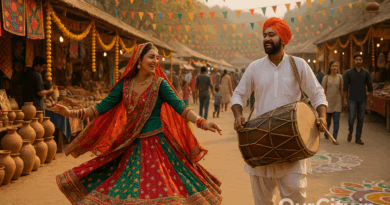
Taj Mahotsav (Shilpgram, Fatehabad Road): crafts, folk performances, food courts. Respect performance zones; don’t block dancers during ghoomar/bhawai.
-
Shivratri: long lines at Mankameshwar Mandir (near Kinari Bazar) and Balkeshwar; carry socks—stone floors are cold at 05:00–07:00.
March
-
Holi (Vrindavan/Mathura nearby; in-city colony Holi is gentler). In old quarters (Mantola, Kinari Bazar), keep phones sealed; wear clothing you don’t mind staining. Ask before applying gulal: “Lagana theek hai? (लगाना ठीक है?)”
April
-
Ramzan may begin late Mar/Apr: old city iftar lanes around Jama Masjid (Mantola), Nai Ki Mandi. Dress modestly; be mindful around maghrib.
-
Ram Navami: Rama temples host bhajans; queues build post-sunrise.
May
-
Ramzan often continues; Eid al-Fitr morning namaz at large grounds and mosques. Avoid blocking gates; photography is generally discouraged during prayers.
-
Heat spikes (40–45 °C). Plan earliest slots; carry ORS.
June
-
Quieter religious calendar; Guru Arjan Dev Shaheedi remembrance at Gurdwara Guru Ka Tal (Sikandra). Langar seva available—wash hands, sit in pangat (rows), don’t waste food.
July
-
Sawan begins: Kanwar yatras pass through outskirts/bridges; expect diversions near Rambagh and Balkeshwar. Mondays (Somvar) at Shiva temples are busy.
-
Monsoon starts; non-slip footwear helps.
August
-
Independence Day parades; Raksha Bandhan temple rush; Janmashtami jhankis at various Krishna temples (Raja Mandi, Shahganj). Late-night aarti—children may nap earlier.
-
Muharram processions: observe with silence and respect; avoid pushing forward for photos.
September/October
-
Ganesh Visarjan (smaller scale than Mumbai; colony mandals along Fatehabad Road, Sadar Bazar). Keep distance at immersion points.
-
Navratri: Garba/Dandiya in Khandari and Civil Lines clubs; Durga Puja pandals (Bengali associations around Sanjay Place, Dayalbagh).
-
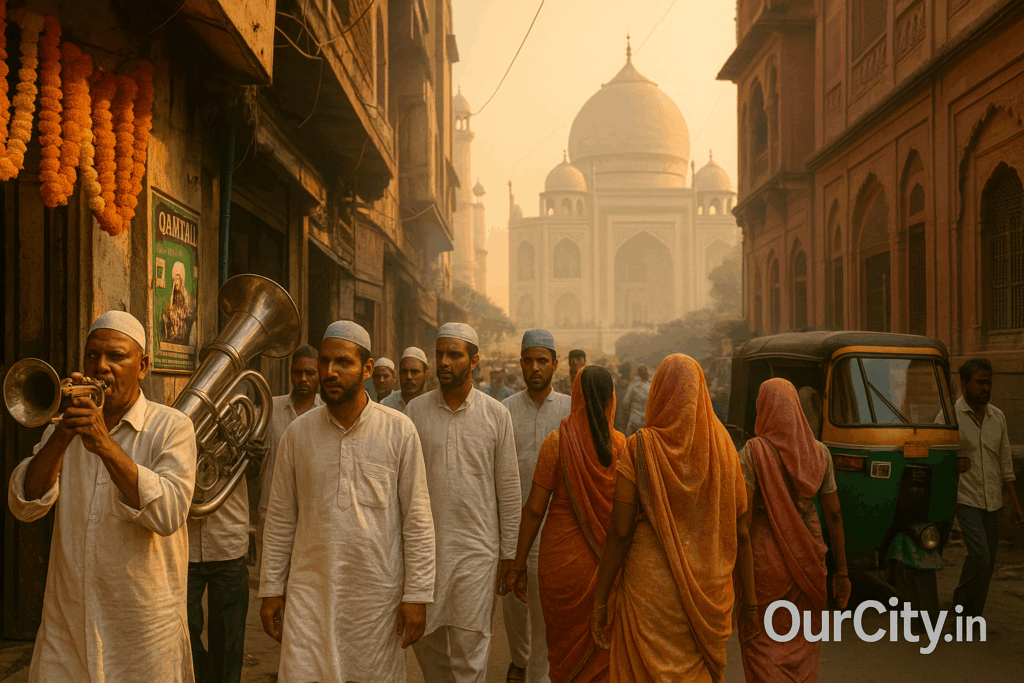
Ram Barat (pre-Dussehra): a grand wedding-procession style event across old city stretches—iconic Agra tradition. Expect road closures near Raja Mandi, Belanganj, Mantola.
October/November
-
Dussehra: Ramlila grounds (Rakabganj, Sadar) burn Ravana effigies—stand behind barricades, protect kids’ ears.
-
Diwali: evening aartis at home and temples; diyas at Kailash ghat and neighborhoods along the Yamuna. Firecracker restrictions vary—follow police advisories.
-
Guru Nanak Gurpurab: Nagar kirtans from Guru Ka Tal—walk to the side, not in the core of the procession.
December
-
Christmas: Midnight Mass at churches in Sadar Bazar and Civil Lines (Cathedral/Methodist). Dress warm; reach by 23:15 to find seating.
-
Year-end weddings and colony melas in Pratap Pura, Kalindi Vihar, Lohamandi.
Where to Go & When to Arrive (Time Cues)
-
Morning aarti (Shiva/Vaishnav): pre-dawn to 07:30. Arrive by 05:45 for first bell on big days (Shivratri, Mondays in Sawan).
-
Evening aarti: mostly 18:30–19:30; avoid 18:00–20:00 if you’re crowd-averse.
-
Friday prayers: around 13:00–13:45; be discreet near mosque gates, walk behind moving lines, keep phones silent.
-
Midnight Mass (24 Dec): reach by 23:15.
-
Ramzan iftar: maghrib varies by date; if you’re picking up food near Mantola/Nai Ki Mandi, go 15–20 min after azan to avoid the initial surge.
-
Ram Barat: road closures start late evening; view from Belanganj bridge edges or Raja Mandi side lanes; stand near railings, not intersections.
Family-, Senior-, and Child-Friendly Tips
-
Pick quieter slots: weekday mornings (Tue–Thu), 12:00–16:00 for non-festival temple visits (hot but emptier—carry water).
-
Seniors: use temple shoe racks and railings; carry socks for hot/cold stone floors.
-
Children: write a contact number on a small paper in pocket; agree a meet-up point (“near the peepal tree/exit gate”) beforehand.
-
Strollers struggle in old lanes (Kinari Bazar); use baby carriers or choose wider approaches (Civil Lines, Sanjay Place temples).
Locals say… “Reach before sunrise; the ghat feels gentler.”
Locals also say… “Stand on the side, not in front of the procession.”
🪔 Sacred Spaces Etiquette (Temples • Gurdwaras • Dargahs/Mosques • Churches • Ghats)
Temples (Hindu)
-
Shoes: use joodaans/shoe racks; don’t block entries.
-
Dress: shoulders/knees covered; light cottons Apr–Jun; shawl in Dec mornings.
-
Queues: look for token counters; families can move together but avoid line-cutting.
-
Prasad: receive with right hand; step aside to eat; don’t litter.
-
Aarti: keep phones low or off; don’t raise hands over others’ heads with diyas.
-
Abhishek: typical early morning; only if allowed—ask the priest quietly.
Gurdwaras (e.g., Guru Ka Tal, Sikandra)
-
Head covering mandatory (scarf/handkerchief; pick from baskets if needed).
-
Jora ghar (shoe & wash area): wash hands, feet.
-
Karah prasad: accept with both hands; move aside before eating.
-
Langar: sit in pangat; finish what you take; seva options include roti-making, serving, cleaning.
Dargahs & Mosques
-
Head covering: carry a scarf/handkerchief; men remove shoes before entry, women too where applicable.
-
Offerings at dargah: chadar (sheet), flowers, itr; ask caretakers where to place.
-
Namaz times: keep movement minimal; photography usually discouraged; avoid faces.
-
Qawwali evenings: Thursdays are common (some famous ones are short drives away like Fatehpur Sikri). Sit to the side, clap softly; avoid blocking entrances.
Churches
-
Enter quietly; follow sit/stand/kneel cues.
-
Confession/private prayer areas are not tourist spaces.
-
Sunday Mass: be seated before start; phones silent.
River Ghats & Cremation Grounds
-
Keep distance from rites; no photography.
-
Watch footing on wet steps; use railings.
-
Donations to priests/volunteers: keep discreet, small notes or UPI.
Micro-scripts to ask (use softly, with a smile)
-
“Photography allowed hai?” (फोटोग्राफी अलाउड है?)
-
“Queue kahan se shuru hoti hai?” (क्यू कहाँ से शुरू होती है?)
-
“Darshan token yahin milta hai?” (दर्शन टोकन यहीं मिलता है?)
-
“Head cover kahaan milega?” (हेड कवर कहाँ मिलेगा?)
-
Urdu: “Tasveer ki ijazat hai?” (تصویر کی اجازت ہے؟) / “Saff pehley kidhar se banti hai?” (صف پہلے کدھر سے بنتی ہے؟)
🪔 Offerings, Daan & Seva (Practical Ranges)
Typical ranges in Agra (₹):
-
Flowers: ₹20–100
-
Prasad (laddoo/peda/burfi): ₹20–60 per unit/packet
-
Chadar at dargah: ₹200–600 (simple cotton to embroidered)
-
Oil/ghee packs for diyas: ₹50–200
-
Candles at churches: ₹10–30
Daan/Hundi etiquette
-
Give with the right hand.
-
Avoid flaunting cash; use UPI boxes where provided.
-
Keep ₹10/20/50 notes ready—helps the line move.
Seva & volunteering
-
At gurdwaras: ask “Seva kahan mil sakti hai?” (सेवा कहाँ मिल सकती है?)
-
At temples/melas: shoe-rack assistance, queue guidance, post-event cleanup.
-
Be punctual; wear modest clothing; follow the supervisor’s word.
🪔 Attire, Comfort & Accessibility
Dress codes
-
Covered shoulders/knees in all sacred spaces.
-
Summer (Apr–Jun): light cottons, breathable fabrics; cap/dupatta; sunglasses for glare.
-
Monsoon (Jun–Sep): quick-dry fabrics, non-slip footwear.
-
Winter (Dec–Jan): shawl/cardigan for pre-dawn aarti; socks help on cold floors.
Carry list
-
Small scarf/dupattā (दुपट्टा) for head cover.
-
Socks; refillable water bottle (use refill points).
-
Handkerchief/wet wipes; small cloth bag for offerings; a spare polybag for used flowers (dispose in designated bins).
Accessibility notes
-
Many old temples have steps; bigger complexes often have side ramps—ask caretakers.
-
Wheelchairs are easier in Civil Lines/Sanjay Place churches and larger gurdwaras than in Kinari Bazar’s tight lanes.
-
Quieter slots: Tue–Thu, 12:00–16:00 (heat caveat in summer), or 07:30–09:00 in winter after the first rush.
-
Senior seating: look for benches/shamianas outside sanctums.
Sensory-friendly tips
-
Drums/loudspeakers can be intense—carry earplugs for kids.
-
Avoid peak windows (18:00–20:00, festival eves).
-
For shy children, start with smaller neighborhood mandirs or church prayer halls in Civil Lines before big melas.
🪔 Language, Greetings & Everyday Manners
Greetings
-
Namaste/Pranam (नमस्ते/प्रणाम)
-
Sat Sri Akal (ਸਤਿ ਸ੍ਰੀ ਅਕਾਲ) in gurdwaras
-
Adaab (آداب) in Muslim spaces
-
Peace be with you in churches (simple “Good evening, Father/Sister” works)
Polite phrases
-
“Dhanyavaad, main line mein hoon.” (धन्यवाद, मैं लाइन में हूँ.)
-
“Maaf kijiye, bheed zyada hai, baad mein aata/āti hoon.” (माफ़ कीजिए, भीड़ ज़्यादा है, बाद में आता/आती हूँ.)
-
“Photo allowed nahi hai to main phone band kar deta/detī hoon.” (…फोन बंद कर देता/देती हूँ.)
Manners that matter
-
Give/receive with right hand.
-
Avoid stepping on thresholds; don’t touch idols unless invited.
-
Be mindful of sacred trees (peepal/banyan) and animals (cows, dogs near ghats)—don’t tease or block.
🪔 Processions, Melas & Community Events
Standing positions
-
Edges near barricades; avoid junction centers.
-
Keep exits/lanes clear for emergency movement.
-
Don’t climb vehicles/shrines/statues; no drones without explicit permissions.
Children & elders
-
Safest pockets: behind police barricades, near tea stalls or pharmacy fronts on side lanes (Belanganj, Raja Mandi).
-
Set a meet-up point: “If we’re split, meet near the Hanuman statue outside the gate.”
-
Write a contact number on a card in the child’s pocket.
Aftercare
-
Disperse slowly; choose app cabs over random lifts at night.
-
Hydrate; wash hands before prasad/snacks.
-
Respect sound/time restrictions if the police/municipal body announces them.
🪔 Seva, Daan & Doing Your Bit
Simple Ways to Volunteer
-
Gurdwara langar: chop vegetables, roll rotis, serve water.
-
Temple/mela cleanups: eco-bins, plastic segregation, diya collection.
-
Queue management: polite guidance at shoe racks and token counters.
Hygiene & Clean-up Etiquette
-
Carry a small garbage bag for your flowers/leaves; use municipal bins later.
-
Don’t throw coins/flowers into the Yamuna; use designated collection points.
-
If you bring prasad in plastic, take the plastic back.
Digital UPI vs Cash
-
Major shrines now have UPI QR near hundis; use for larger donations.
-
Keep ₹10–₹50 notes ready for small offerings or seva counters—faster and safer in crowds.
🪔 Arts, Crafts, Music & Dance of Agra
What to see live
-
Baithaks/recitals: Look out for Hindustani classical evenings (Agra gharana legacy) at auditoriums like Soorsadan (Sanjay Place/Civil Lines belt) and college halls in Khandari. Dress modestly, arrive 15 min early, phones silent.
-
Folk & crafts: At Taj Mahotsav (Feb) and seasonal melas in Sadar Bazar and Fatehabad Road community grounds, watch for kathputli, dangal akhadas, and folk dhol-tashe.
Ethical buying (quick tests & tips)
-
Marble inlay (pietra-dura/parchin kārī): real semiprecious stones feel cool, show natural grain; ask for a small scratch-proof demo on a corner sample (not the piece you’re buying!).
-
Zardozi: hand-done embroidery has irregular back knots; machine pieces look too uniform.
-
Leather footwear (Sadar, Hing Ki Mandi): prefer shops that specify vegetable-tanned leather; ask about warranty/repair.
-
Durries & textiles: look for co-ops and artisan collectives; ask if the product carries a GI tag or cooperative seal.
-
Always request a bill; avoid pressured “factory” tours if you’re not comfortable.
Snack with sense
-
Petha and dalmoth are classic—buy sealed packs from reputed counters in Sadar Bazar or Rakabganj; carry in your bag, not into sanctums.
🪔 Language, Greetings & Everyday Manners
(See earlier section for greetings; here are more everyday lines you can actually use.)
-
“Line kidhar ban rahi hai?” (लाइन किधर बन रही है?)
-
“Darshan mein kitna samay lagega?” (दर्शन में कितना समय लगेगा?)
-
“Langar kahaan serve ho raha hai? Main seva kar sakta/sakti hoon?” (लंगर कहाँ सर्व हो रहा है? मैं सेवा कर सकता/सकती हूँ?)
-
“Maaf kijiye, photo allowed nahi hai to main phone band kar deta/detī hoon.”
Short refusals that keep peace:
-
“Abhi nahi, baad mein.” (अभी नहीं, बाद में.)
-
“Bas itna kaafi hai.” (बस इतना काफ़ी है.)
-
“Shukriya, hum line follow karenge.” (शुक्रिया, हम लाइन फॉलो करेंगे.)
🪔 Seasonal Playbooks (Heat • Monsoon • Winter/Smog • Peak Festive)
Summer (Apr–Jun)
-
Book earliest darshan slots; carry ORS sachets.
-
Floors get very hot—wear socks in shoe-free zones.
-
Autos/e-rickshaws are fine for short hops (2–4 km) between Tajganj, Sadar, Rakabganj; renegotiate fares beforehand.
Monsoon (Jun–Sep)
-
Expect waterlogging near Belanganj, Mantola, and low-lying lanes off Kinari Bazar.
-
Non-slip footwear; plastic covers for offerings; choose covered pandals.
-
Keep a small towel for wet benches at ghats.
Winter/Smog (Dec–Jan)
-
N95/FFP2 masks help during smoggy spells.
-
Add a warm layer for pre-dawn aarti; keep hands warm before handling diyas.
-
Visibility can drop at night—prefer app cabs over walking long, dim stretches.
Peak Festive Weeks
-
Pre-load travel cards or keep change for city buses/e-rickshaws.
-
Identify quiet hours (post-lunch window, weekday mornings).
-
Avoid bringing very small kids to late-night processions or fireworks displays.
Exam & Job-hunt Season
-
Need calm? Try prayer corners at Civil Lines churches (non-service hours), quiet temple courtyards in Dayalbagh, or libraries near Sanjay Place. Always ask staff before sitting for long.
🪔 Quick Cheatsheets (Tables)
Festival Months vs Typical Timings
| Festival/Observance | Typical Month(s) | Usual Peak Time | Arrive By |
|---|---|---|---|
| Makar Sankranti | Jan | 06:00–08:00 (temples) | 05:45 |
| Shivratri | Feb/Mar | 05:00–09:00 & 18:00–21:00 | 05:30 / 18:00 |
| Ramzan Iftar | Mar–May (varies) | Maghrib | +15 min after azan |
| Eid al-Fitr | Apr/May | 06:30–08:30 | 06:00 |
| Sawan Mondays | Jul–Aug | 06:00–10:00 | 05:45 |
| Janmashtami | Aug/Sep | 22:00–00:30 | 21:15 |
| Ram Barat | Sep/Oct | Evening–late night | 19:00 |
| Dussehra | Oct | 18:00–21:00 | 17:30 |
| Diwali | Oct/Nov | 18:00–21:00 | 18:00 |
| Gurpurab | Nov | Morning Nagar Kirtan | 08:30 |
| Christmas | Dec | 23:30–00:30 | 23:15 |
(Check official boards/apps on the day for live timings.)
Etiquette by Place of Worship
| Place | Footwear | Head Cover | Food/Drink | Phone/Photo |
|---|---|---|---|---|
| Temple | Off at rack | Optional (shawl ok) | Prasad outside sanctum | Low/silent; ask before photos |
| Gurdwara | Jora ghar | Mandatory | Langar—finish what you take | Silent; no photos in prayer hall without ok |
| Mosque | Off before entry | Recommended | No eating in prayer area | Silent; no photos of people during namaz |
| Dargah | Off before entry | Recommended | Offerings: chadar/flowers | Ask; avoid faces close-up |
| Church | Keep on (unless told) | Not required | No food inside nave | Silent; no flash during Mass |
| Ghats/Cremation | Off near certain shrines | Not required | No snacking near rites | Strictly no photos of rites |
Offering/Donation Ranges (₹)
| Item | Typical Range |
|---|---|
| Flowers/garlands | ₹20–100 |
| Prasad packets | ₹20–60 |
| Chadar (dargah) | ₹200–600 |
| Oil/ghee for diyas | ₹50–200 |
| Church candles | ₹10–30 |
| General daan/hundi | Your comfort; carry small notes |
Quiet-Hour Windows & Crowd Surges
| Window | Tip |
|---|---|
| 07:30–09:00 (non-festival weekdays) | Good for seniors; softer light at ghats |
| 12:00–16:00 (hot months) | Emptier, but hydrate and carry shade |
| 18:00–20:00 | Avoid if crowd-averse; main aarti peak |
| Post-maghrib in Ramzan | Avoid first 15 min; go after initial surge |
| Late-night processions | View from edges; pre-book ride back |
🪔 FAQs (Real Questions, Straight Answers)
1) What should I wear for temple darshan in peak summer?
Light cotton kurta/T-shirt, loose pants, breathable dupatta/scarf, easy sandals you can remove quickly. Carry socks for hot floors.
2) Are phones allowed during aarti?
Keep them on silent and low. Many places discourage filming; ask: “Photography allowed hai?” If no, put it away—simple.
3) How early for Shivratri at Mankameshwar?
By 05:30 to beat the rush. Expect long lines through Kinari Bazar lanes. Carry water and patience.
4) Can I join langar at Guru Ka Tal if I’m not Sikh?
Yes. Cover your head, wash hands/feet, sit in pangat, eat what you take, and consider doing a small seva.
5) Is it okay to carry flowers from home?
Yes, but many shrines have preferred vendors. Keep offerings simple and eco-friendly; avoid plastic glitter.
6) Where to watch Ram Barat without getting stuck?
Edges near Belanganj and side lanes off Raja Mandi. Stand behind barricades; don’t block turns or roundabouts.
7) Can I photograph people at iftar?
Better not. If you must, ask politely, and never during prayer. Focus on food displays and architecture.
8) Cash or UPI for donations?
Both. Use UPI for larger amounts; keep ₹10–₹50 notes ready for quick, small offerings.
9) Solo-female tips for late-evening aarti/processions?
Stick to busier, well-lit stretches (Civil Lines, Sanjay Place side), stand near families, share live location with someone, pre-book your ride home.
10) Are drones allowed at processions?
No, unless specific permissions are declared. It’s safer and respectful to keep drones out.
11) What’s a polite way to refuse prasad if I have dietary restrictions?
“Maaf kijiye, main meetha nahi khata/khati. Dhanyavaad.” Accept with hands together in namaste if you wish, and step aside.
12) Can I sit quietly in a church on a weekday?
Usually yes outside service times. Ask an usher: “Kya main thodi der prarthana ke liye baith sakta/sakti hoon?”
13) Where can children enjoy festivals without heavy crush?
Neighborhood pandals in Dayalbagh, temple courtyards in Civil Lines, early-evening smaller aartis at Balkeshwar on non-peak days.
14) Any tips for iftar shopping?
Go 15–20 min after azan to avoid the first rush; dress modestly; keep phones away; carry change.
15) What if we get separated in a mela?
Use a pre-decided point: “Meet at the tea stall near the main gate.” Keep phones charged; write a contact number for kids.
🪔 Wrap-Up: You’ll Fit Right In
Agra’s rhythm is warm and direct—queues form fast, greetings are simple, faith sits next to food and music. Arrive a little early, keep your phone pocketed, give with your right hand, and stand to the side of the action. Do that, and the city opens up—be it a soft dawn bell at Kailash ghat, a shared roti at Guru Ka Tal, a measured walk behind the Ram Barat, or a midnight carol in Sadar Bazar. Respect the space, ask when unsure, follow local advisories, and you’ll move like a local in no time.