Indore Traditions & Culture Guide
Table of Contents
Indore Traditions & Culture: Show Up Right
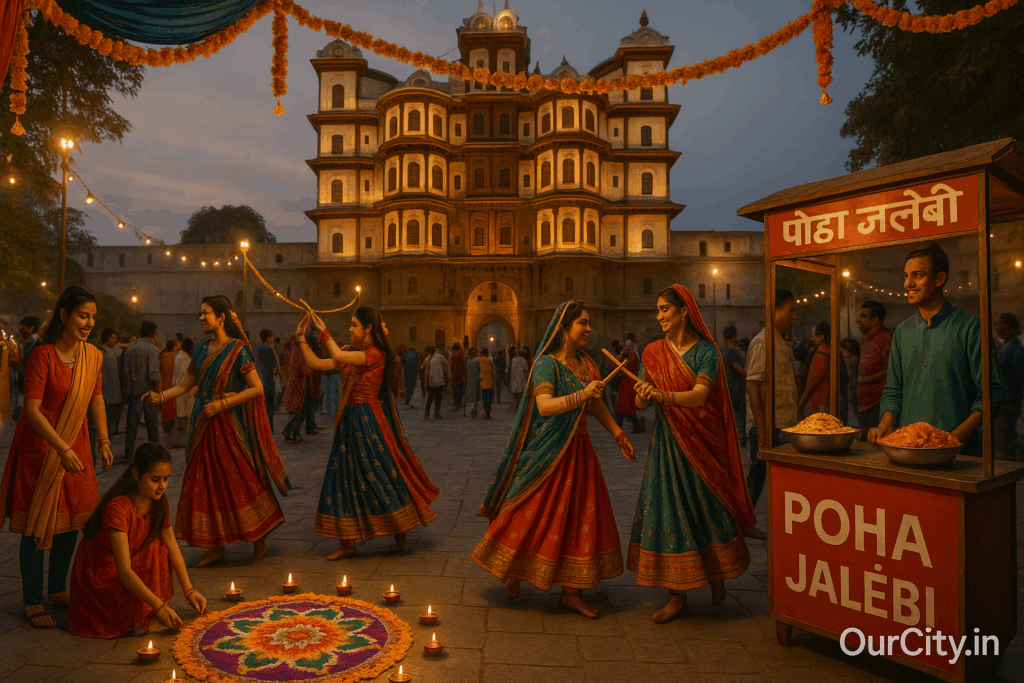
Indore moves on faith, food, and friendly order. Morning aartis slip into office hours, evening bhajans blur into poha-jalebi at Sarafa, and entire mohallas rearrange themselves for a shobhayatra (religious procession) without fuss. First-timers often miss small courtesies—where to keep footwear, how to accept prasad, which lane not to block when the dhols arrive. This guide keeps it simple: when to go, what to wear, how to ask, and how to help—so you show up right in Rajwada, Khajrana, Malharganj, or Vijay Nagar.
🪔 Why This Culture Guide Works for Indore
You’ll get month-wise highlights, local etiquette across temples, gurdwaras, dargahs/mosques, churches, and ghats or cremation grounds. You’ll see ready phrases in Hindi/Malwi, price bands you can actually use, family-friendly viewing ideas, and seasonal fixes for heat, monsoon, and winter haze. Where timings or routes change, we’ll say so—and point you to the temple trust’s official app/site, parish noticeboards, and city police advisories for live updates.
🪔 Festival Calendar: What Happens When (Jan–Dec)
City Highlights Month by Month
January — Makar Sankranti (kites on terraces across Palasia, Snehlataganj, Kanadia Road), Swami Vivekananda Jayanti events, church New Year blessings continue.
February — Vasant Panchami (Saraswati puja at schools/colleges around Bhanwar Kuan and Rajendra Nagar), quiet temple mornings.
March — Mahashivratri (queues at neighborhood Shiv mandirs; check Krishnapura/Chhatribagh belt for lines), Holi and Indore’s famous Rangpanchami Ger near Rajwada—huge color procession, water cannons, dhols. Plan ahead.
April — Ram Navami, Hanuman Jayanti, Gudi Padwa (Indore has a strong Marathi touch near Rajwada–Itwaria Bazaar), Ramzan begins some years; evening iftar lanes around Malharganj and Biyabani see food stalls after maghrib.
May — Ahilya Utsav / Ahilyabai Holkar Jayanti tributes near Rajwada and Holkar-era memorials; Malwa Utsav (folk arts, crafts, music—watch for sabhas at Ravindra Natya Grah on RNT Marg).
June — Eid-ul-Adha (qurbani is private; be respectful with photos—better not), early monsoon prayers.
July — Guru Purnima (ashrams and mathas), Muharram processions (ta’ziya routes in older quarters—Juni Indore, Malharganj—observe respectfully and keep lanes clear).
August — Nag Panchami, Raksha Bandhan, Janmashtami (late-night aartis), Independence Day patriotic bhajans.
September — Ganeshotsav peaks at Khajrana Ganesh Mandir and local pandals from Vijay Nagar to Pardesipura; Anant Chaturdashi visarjan processions wind toward key water points—expect diversions.
October — Navratri (garba nights in Scheme 54, AB Road belts; quieter bhavya aartis at Annapurna and neighborhood temples), Dussehra (Ravana dahan grounds fill up—arrive early).
November — Diwali (earthen diyas at Rajwada and Chhappan Dukan), Bhai Dooj, Guru Nanak Gurpurab at Gurdwara Imli Sahib (Chhawani)—langar and kirtan all day.
December — Christmas at the White Church area and central parishes; New Year’s midnight mass (quiet, orderly—arrive a little early).
Season notes: Indore’s summer (Apr–Jun) can touch 40–42 °C. Monsoon (Jun–Sep) brings slippery stone at older ghats and chhatries. Winter mornings (Dec–Jan) are cool; carry a light layer for pre-dawn aarti.
Where to Go & When to Arrive (Time Cues)
-
Morning aarti at big temples: reach by 05:45–06:00 for the first slot; by 07:30, lines grow.
-
Evening aarti at Khajrana/Annapurna: avoid the 18:00–20:00 surge; aim 17:15–17:45 or post-20:15.
-
Rangpanchami Ger (Rajwada core): late afternoon crowds build; safest edges are near barricades and police kiosks. Hydrate.
-
Ganesh visarjan (Anant Chaturdashi): last-mile closures begin by late afternoon; use app cabs to a drop zone on MG Road or Jawahar Marg and walk.
-
Friday prayers (central mosques): keep market-side lanes clear 12:30–14:30; avoid loud horns.
-
Sunday mass (central parishes/White Church area): plan parking earlier; keep phones on silent.
Always check the temple trust’s official app/site, parish noticeboards, and the city police advisory on event day.
Family-, Senior-, and Child-Friendly Tips
-
Pick first aarti or post-peak evening windows.
-
For processions, stand at an edge, not at turns; avoid speaker stacks.
-
Fix a meet-up point (e.g., “police booth near Rajwada gate”) and write a phone number on a card in a child’s pocket.
-
Carry earplugs for kids, a light shawl for elders, and socks for hot/muddy temple floors.
🪔 Sacred Spaces Etiquette (Temples • Gurdwaras • Dargahs/Mosques • Churches • Ghats)
Indore is gentle about faith—and firm about basic courtesies.
What to Wear & Carry
-
Dress: cover shoulders/knees. Light cottons in heat; a scarf/dupatta helps for head cover.
-
Footwear: remove at the juta ghar/shoe rack; keep a token if given.
-
Carry: small scarf, refillable bottle, handkerchief, wet wipes, small cloth bag for offerings, ₹10–50 notes for small daan boxes, UPI ready, and socks (summer floors burn!).
-
Phones: silent mode; avoid holding your phone above others during aarti.
Offerings/Prasad/Chadar: Ranges & Rules
-
Flowers: ₹20–100; prasad laddoo/barfi: ₹20–60; oil/ghee packs: ₹50–200.
-
Chadar at dargahs: ₹200–600 (simple, not flashy).
-
Give/receive with the right hand; don’t touch the idol or sanctum railings unless directed.
-
Take small prasad portions; step aside before eating; don’t waste.
Photography & Phone Etiquette
-
Ask first. Many shrines allow phones outside the sanctum, not inside.
-
No flash, no selfies during aarti, no faces during sensitive rites.
-
At mosques/churches: usually no photos during prayer; keep the camera away.
-
Dargahs: keep cameras low; qawwali mehfils are for listening, not filming.
Ask Politely (Ready Scripts)
-
“Photography allowed hai?” / फोटो की अनुमति है?
-
“Queue kahan se shuru hoti hai?” / क्यू कहाँ से शुरू होती है?
-
“Darshan token yahin milta hai?” / दर्शन टोकन यहीं मिलता है?
-
“Head cover kahaan milega?” / सिर ढकने का कपड़ा कहाँ मिलेगा?
-
“Maaf kijiye, bheed zyada hai, baad mein aata/ati hoon.” / माफ़ कीजिए, भीड़ ज़्यादा है, बाद में आता/आती हूँ।
Temples (Khajrana, Bada Ganpati, Annapurna, neighborhood mandirs)
-
Follow the queue system; small darshan tokens may run at peak aarti.
-
Don’t raise phones during the deep aarti; the flame is for darshan, not for video.
-
Prasad: accept with the right hand, touch to forehead, step aside.
Gurdwaras (Imli Sahib, smaller sangat centres)
-
Head covering mandatory (scarves kept near the entrance).
-
Shoe & jora ghar: wash hands/feet if facilities are provided.
-
Karah prasad: right-hand cupped; don’t refuse bluntly—take a small portion.
-
Langar: sit in pangat (rows); finish what you take; you can do seva—ask, “Langar kahaan serve ho raha hai? Main seva kar sakta/sakti hoon?”
Dargahs & Mosques (older quarters: Malharganj, Juni Indore, Sadar Bazar)
-
Head cover for all; modest clothing.
-
Chadar/flowers: keep it simple.
-
Namaz times: be discreet; don’t cross prayer lines; no photos during prayer.
-
Qawwali evenings: sit, listen; avoid blocking entrances.
Churches (White Church area & central parishes)
-
Enter quietly; phones on silent; follow kneel/stand cues.
-
Confession/private prayer zones are not for tourist viewing.
-
Sunday mass fills up; arrive 10–15 minutes early.
River Ghats/Cremation Grounds
-
Maintain silence and distance from families and rites.
-
No photography.
-
Watch your footing on wet stone; don’t throw coins/flowers in waterways.
-
Donation: if approached, give discreetly or decline politely.
🪔 Processions, Melas & Community Events
Indore’s big day-outs—Rangpanchami Ger, Anant Chaturdashi visarjan, Navratri garba nights, Muharram ta’ziyas, Gurpurab nagar kirtans—pull the city into shared motion from Rajwada to Rau.
Safe Viewing Spots & Exit Plans
-
Choose edges near barricades and police kiosks—common along MG Road, Jawahar Marg, and the Rajwada square.
-
Keep turning lanes and ambulance corridors clear; follow the marshals’ hand signals.
-
Fix a backup exit (e.g., “move toward Chhappan Dukan taxi stand if we get separated”).
-
Kids/elders: stand behind the first crowd line, not at the front.
Transport Diversions & Crowd Windows
-
Expect late-afternoon clampdowns for big shobhayatras; last-mile lanes into Sarafa/Rajwada shut in phases.
-
App cabs: ₹120–220 for 8–12 km hops depending on time; ask to drop at outer rings (Bhawar Kuan, Palasia, Snehlataganj) and walk in.
-
Autos: short hops ₹40–100 within Vijay Nagar/Palasia/Sarafa. iBus BRTS runs along AB Road—use it for predictable legs.
If You Get Separated (Meet-up Scripts)
-
“Main Rajwada police booth ke paas wait kar raha/rahi hoon.”
-
“Aap Chhappan Dukan ke corner pe aa jao, main 10 minute mein पहुँचता/ती हूँ.”
-
“Network weak hai—seedha MG Road pe nikalte hain.”
🪔 Seva, Daan & Doing Your Bit
Simple Ways to Volunteer
-
Shoe-rack help at temples during peak aarti.
-
Langar service at gurdwaras—serving, rolling rotis, cleaning vessels.
-
Queue management—ask the temple trust desk; stand where they place you.
-
Post-event cleanups after visarjans—join local groups that gather near Rajwada, Chhatribagh, and along water edges.
Hygiene & Clean-up Etiquette
-
Bring gloves if possible; close filled bags; use designated bins.
-
Keep wet waste (flowers) separate where instructed; many trusts compost.
Digital UPI vs Cash (When & How)
-
Most trusts have UPI QR at hundi counters; scan, confirm name, and amount.
-
Keep small notes for small boxes or for quick purchases from flower/prasad stalls.
-
Give quietly, no show.
🪔 Arts, Crafts, Music & Dance of Indore
Indore is Malwa’s cultural hinge: classical baithaks, folk rhythms, and textile towns just downriver.
What to See Live (Rehearsals, Sabhas, Baithaks)
-
Ravindra Natya Grah (RNT Marg) hosts classical dance/music—watch for evening sabhas.
-
Smaller baithaks pop up around Palasia and Annapurna colony halls; be on time, sit close, phones silent.
-
Indore gharana (Hindustani vocal—think slow elaboration, deep alaap) still has young disciples; ask teachers respectfully if rehearsal drop-ins are okay.
-
Malwa Utsav brings folk—gair drums, tribal dance troupes—usually summer evenings.
-
In Sarafa/Chappan Dukan lanes, you’ll catch nagara rehearsals before big processions; stand aside, don’t block the beat path.
Ethical Souvenir Buying (Quick Tests & GI Mentions)
-
Maheshwari sarees (Maheshwar, an hour away): check for handloom edges, neat selvedge, and the classic reversible border feel.
-
Bagh prints (Dhar district): natural dye smell and slight tonal variation are good signs; too-bright neons scream mass-printed.
-
Kaanch Mandir visit? Remember: buy outside the sanctum lanes; avoid pushing vendors inside narrow corridors.
-
Price fairness: in Rajwada, Sitlamata Bazaar, and Itwaria Bazaar, ask, “Fixed price ya thoda kam?” but keep it polite. Support crafts—not just the cheapest thing.
🪔 Language, Greetings & Everyday Manners
Indore speaks Hindi with a Malwi smile; you’ll also hear Marathi and Gujarati in markets.
Local Phrases (Transliteration + Script)
-
Namaste/Pranam — नमस्ते/प्रणाम
-
Ram-Ram (friendly hello, Malwa feel) — राम-राम
-
Jai Shree Ganesh (at Ganesh mandirs) — जय श्री गणेश
-
Sat Sri Akal — सत श्री अकाल
-
Adaab — अदाब
-
Dhanyavaad/Thank you, main line mein hoon. — धन्यवाद, मैं लाइन में हूँ।
-
Maaf kijiye, photo allowed nahi hai to phone band kar deta/deti hoon. — माफ़ कीजिए, फोटो अलाउड नहीं है तो फोन बंद कर देता/देती हूँ।
Right-Hand Giving, Thresholds, Sacred Trees/Animals
-
Give/receive with the right hand.
-
Don’t step on thresholds; pause and step over.
-
Don’t touch idols; don’t pluck leaves from sacred trees; be kind to temple cows—no plastic bags, please.
What Not to Do (Short List)
-
Don’t argue with volunteers.
-
Don’t climb on chariots/chhatries/vehicles for photos.
-
No drones around processions or near sanctums.
-
Don’t litter flowers and plastic in water bodies.
🪔 Seasonal Playbooks (Heat • Monsoon • Winter/Smog • Peak Festive)
Heat (Apr–Jun)
-
Pick earliest darshan; carry ORS; wear open sandals you can remove fast; socks for hot floors.
-
Shade matters: use covered pandals in Vijay Nagar/Scheme 54; pause at parks like Pipliyapala on the way back.
Monsoon (Jun–Sep)
-
Non-slip footwear, plastic cover for offerings, folded umbrella for lanes around Rajwada.
-
Waterlogging spots form near inner bazaars; stick to BRTS or main corridors, then walk.
Winter/Smog (Dec–Jan)
-
N95/FFP2 mask if sensitive; a light layer for pre-dawn aarti.
-
Night travel: prefer app cabs over random lifts; share trip status.
Peak Festive Weeks
-
Book metro/bus cards or keep ride apps ready; keep small change for stalls.
-
Identify quiet hours (post-20:45 temple slots; early morning sabhas).
-
Avoid bringing toddlers to crush-hour Ger or visarjan; pick balcony-view homes of friends or early edges.
🪔 Quick Cheatsheets (Tables)
Festival Months vs Typical Timings
| Festival/Occasion | Typical Month(s) | Safer Arrival Window | Avoid Window |
|---|---|---|---|
| Mahashivratri (temples citywide) | Feb–Mar | 05:45–06:30; 20:15+ | 18:00–20:00 |
| Holi (color morning) | Mar | Early morning | Late morning heat |
| Rangpanchami Ger (Rajwada core) | Mar (5 days after Holi) | Reach before 14:00 | 16:00–19:00 surge |
| Ramzan/Iftar lanes (Malharganj/Biyabani) | Mar–Apr/Apr–May (varies) | 17:30–18:30 | 18:45–19:45 |
| Ganeshotsav (Khajrana + pandals) | Aug–Sep | 17:00–17:45; 20:15+ | 18:00–20:00 |
| Navratri (garba & aartis) | Sep–Oct | 19:00–20:00 (early) | 21:00–23:00 |
| Diwali aarti (Rajwada & local) | Oct–Nov | 18:00–19:00 | Firecracker peak |
| Gurpurab (Imli Sahib) | Nov | 10:00–12:00 | Langar rush 13:00–14:00 |
| Christmas/NY Mass (White Church area) | Dec | 23:15–23:30 | Just before midnight |
Confirm live timings on the temple trust’s official app/site, gurdwara/masjid noticeboards, or parish circulars.
Etiquette by Place of Worship
| Place | Head Cover | Footwear | Photos | Offering Norms |
|---|---|---|---|---|
| Temple | Optional (scarf good) | Remove at rack | Usually outside sanctum | Flowers/prasad; right hand |
| Gurdwara | Mandatory | Remove; wash if facility | Generally no in hall | Karah prasad; sit for langar |
| Dargah/Mosque | Mandatory | Remove where directed | Often no during prayer | Simple chadar/flowers |
| Church | No (respectful attire) | Keep on unless told | Usually no during mass | Quiet donation boxes |
Offering/Donation Ranges (₹)
| Item | Typical Range |
|---|---|
| Flowers/garlands | ₹20–100 |
| Prasad (temple) | ₹20–60 |
| Oil/Ghee packs | ₹50–200 |
| Candles/diyas | ₹10–30 |
| Chadar (dargah) | ₹200–600 |
| Langar dana (gurdwara) | Your comfort—UPI box common |
Quiet-Hour Windows & Crowd Surges
| Venue Type | Quieter Window | Surge Window |
|---|---|---|
| Big temples (Khajrana/Annapurna) | 05:45–06:30; 20:15–21:00 | 18:00–20:00 |
| Rajwada core during Ger/visarjan | Before 14:00 | 16:00–19:00 |
| Gurdwaras on Gurpurab | 10:00–12:00 | 13:00–14:00 |
| Churches (Sun mass) | 07:00–08:00 | 08:30–10:00 |
🪔 “Locals Say…” Callouts
-
“Reach before sunrise; the city is kind then.”
-
“Stand at the edge, let the procession breathe.”
-
“Keep a scarf—works for head cover, sun, dust.”
-
“Earplugs for kids, ORS for all.”
-
“Give quietly; walk light; leave no mess.”
🪔 FAQs (Real Questions, Quick Answers)
1) Can I take photos at Khajrana or Bada Ganpati?
Outside sanctum, usually yes. During aarti or near the flame—better no. Ask a volunteer first: “Photography allowed hai?”
2) What should I wear for dargah or mosque visits in Malharganj/Juni Indore?
Modest clothes; carry a head scarf. Keep phones silent; no photos during prayer.
3) Are children okay at the Rangpanchami Ger?
Yes with care. Stand at edges, avoid water jets, use earplugs, mark a meet-up point. For toddlers, consider skipping peak hours.
4) How early for morning aarti at big temples?
Target 05:45–06:00. You’ll finish before office rush and heat.
5) Is langar open to non-Sikhs at Imli Sahib?
Yes. Cover your head, sit in pangat, eat what you take, and say thanks. Offer seva if you can.
6) Cash or UPI for donations?
Both. Most places have UPI QRs; keep some small notes for stall vendors and small daan boxes.
7) Can I carry flowers from home?
Yes, but keep them fresh and simple. Avoid plastic wraps; use a cloth bag.
8) What about drones for procession shots?
Skip them. City advisories and police usually prohibit drones near crowds and sacred zones.
9) Any quiet corners near Rajwada during big days?
Check side lanes toward Chhatribagh and Snehlataganj edges. Still, stay alert and follow barricades.
10) Where can I freshen up with kids or elders?
Malls/cafés near Vijay Nagar and Palasia for clean restrooms; re-enter on foot for final stretches.
11) I’m solo—late-night return after Navratri garba?
Prefer app cabs, share trip status, wait near well-lit pick-ups (Chhappan Dukan corner, AB Road BRTS stops).
12) Is touching the idol okay if the line allows?
Unless explicitly told, don’t. Fold hands, keep flow moving.
13) What do I say if someone asks for a donation at a sensitive site?
Give quietly or say: “Maaf kijiye, is baar nahi.” Move on gently.
14) Can I attend a classical music baithak without knowing anyone?
Many are open. Arrive before start time, sit close, phone off. If it’s a closed rehearsal, a polite “Baithe reh sakte hain?” goes a long way.
15) Food around venues—what costs to expect?
Near Sarafa/Chhappan Dukan: poha-jalebi ₹30–60, kachori ₹15–25, nimbu pani ₹10–20.
🪔 Wrap-Up: You’ll Fit Right In
Keep a scarf, a smile, and small change. Arrive a little early, stand at the edge, let the line breathe. Give quietly, carry your trash out, thank the volunteer who waved you through. In Indore—whether you’re at Khajrana, Rajwada, Gomatgiri, or a small lane shrine in Pardesipura—the city notices these small courtesies. Follow them and you’ll feel like a regular in no time.