Aurangabad Shopping Guide
Table of Contents
Aurangabad Markets & Shopping: Fair Prices, Real Finds
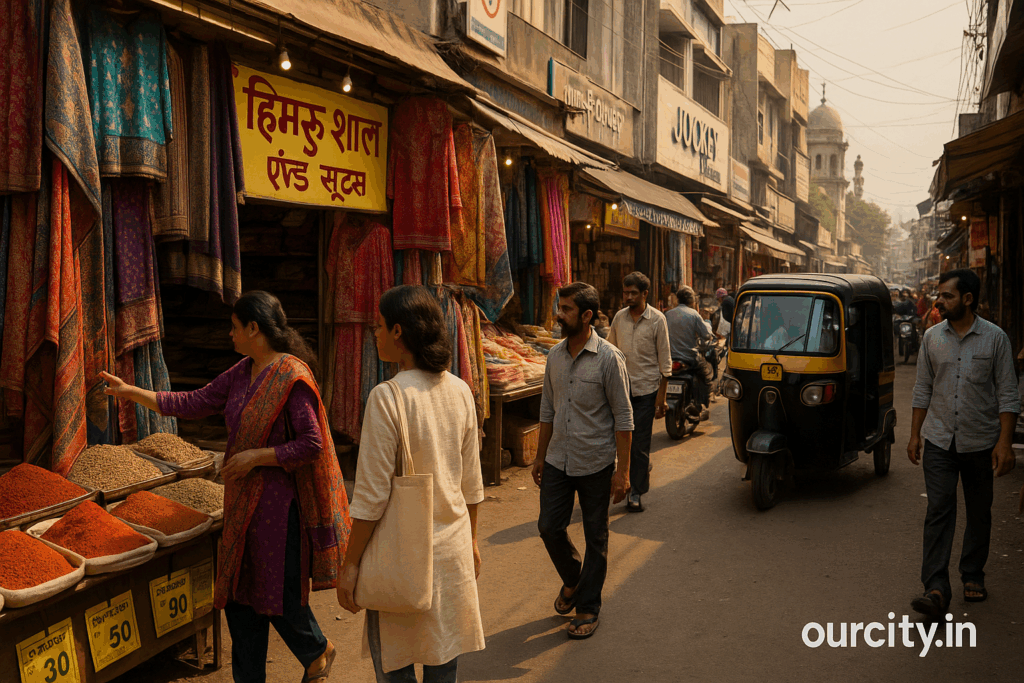
First-time shoppers in Aurangabad (officially Chhatrapati Sambhajinagar) often do two things wrong: they come too late in the day, and they accept the first price without asking for a bill or warranty. Here’s the thing—this city rewards calm mornings, patient comparing, and a few friendly phrases. Old-city bazaars around Gulmandi and Shahganj still carry Nizam-era charm, while Jalna Road and Chikalthana give you clean showrooms and big brands. Between Himroo shawls, Paithani sarees, spice lanes, and practical household buys, you can shop well without getting fleeced.
This guide is built the OurCity.in way—clear directions, real price bands, short scripts you can actually use, and sensible quality checks. Keep water handy (summer can be 38–42 °C), carry a cloth tote, and don’t be shy to ask: “Fixed price hai kya? Bill milega na?”
🧭 Why Shop Aurangabad
Aurangabad sits between heritage and everyday India. Ajanta-Ellora souvenirs, yes—but also school uniforms in Aurangpura, exam books in Nirala Bazar, and silver bits in Gulmandi. The star buys are classic: Himroo (a cotton-silk weave with a gentle sheen), Paithani (handwoven silk sarees with real zari from nearby Paithan), good spices and dry fruits, and sturdy cotton fabrics for daily wear.
What locals love: morning browsing, stopping for chai near Kranti Chowk, checking zari work in Paithan Gate showrooms, bargaining lightly in street belts, and using UPI for easy payments (after verifying the shop name). If you want both value and authenticity, add one fixed-price cooperative to your route for benchmarks, then compare in the bazaars.
🗺 Market Map in Words
The Big 5–9 Areas
Here’s a mental map. Plan two clusters per half-day; don’t try to “do it all” at once.
- Gulmandi (old city)
- Best for: silver/oxidised jewellery, everyday textiles, some spice and stationery lanes.
- Vibe: old-school, budget to mid-range; narrow lanes; quick deals.
- Weekly off: varies shop-to-shop.
- Best hours: 11:00–13:00 for calm checks; avoid 18:00–20:00 crush.
- Shahganj (near old mandi)
- Best for: wholesale-ish groceries, grains, spices, steel/homeware.
- Vibe: bustling, value-first; go with a list.
- Weekly off: varies; many shops open most days.
- Best hours: 10:30–12:30; post-17:30 gets busy.
- Aurangpura (fabric & tailoring belt)
- Best for: cottons, suit pieces, blouse materials; alterations nearby.
- Vibe: practical, mid-range; student and office crowds.
- Weekly off: often Monday/Thursday in parts; confirm.
- Best hours: 11:00–14:00 for trials; 16:00–19:00 for pick-ups.
- Paithan Gate (towards old-city gates)
- Best for: Paithani sarees, Himroo shawls/stoles, bridal gifting.
- Vibe: mid to premium; many showrooms; some fixed-price.
- Weekly off: varies; many open daily.
- Best hours: 11:00–13:00 to compare zari and pallu.
- Nirala Bazar (central spine)
- Best for: electronics, mobiles, books/stationery, luggage.
- Vibe: mid-range; mixed crowd; many service centres around.
- Weekly off: often Sunday for some segments; varies.
- Best hours: 12:00–15:00 to get demos without rush.
- Osmanpura – Kranti Chowk belt
- Best for: mixed retail—garments, footwear, opticals, homeware.
- Vibe: city-centre busy; useful for multi-errand days.
- Weekly off: varies; plenty open daily.
- Best hours: 11:00–13:00 or after 19:30.
- CIDCO & Connaught Place (N-1/N-2)
- Best for: planned squares with garments, kid-wear, décor, cafes.
- Vibe: walking-friendly blocks; evening buzz; families.
- Weekly off: mostly Tuesday/Thursday pockets; check signage.
- Best hours: 17:00–20:30; mornings quieter but fewer shops open.
- Jalna Road – Chikalthana
- Best for: branded showrooms, appliances, large-format stores, malls.
- Vibe: modern, parking-friendly; fixed-price, warranty focus.
- Weekly off: generally open daily (brands follow own schedules).
- Best hours: 12:00–16:00 for unhurried demos.
- Begumpura – Roshan Gate – Mill Corner
- Best for: traditional lanes, craft stores, some Himroo outlets, everyday household buys.
- Vibe: heritage edges; shade in lanes; bargain a little.
- Weekly off: varies.
- Best hours: 11:00–13:00; avoid late-night if solo.
Day trip add-on: Paithan town (~50–55 km south). If you’re serious about Paithani, visit reputed weavers’ showrooms for pattern and colour education; prices are transparent, but still compare.
How Crowds Flow by Time/Day
- Weekday mornings (10:30–12:30): best for checking quality, trial rooms, and calm bargaining.
- Late afternoons (16:30–19:30): student/office crowds spike around Nirala Bazar, Osmanpura, and Connaught.
- Evenings (18:00–20:30): festive weeks turn Gulmandi/Paithan Gate lanes into a slow shuffle—fun but not for fragile buys.
- Fridays around namaz: some old-city lanes pause; plan errands before/after.
- Sundays: showrooms on Jalna Road stay steady; some small shops in various belts take an off—always check store signage.
🛒 What to Buy & Price Bands
City-Special Buys (₹ ranges)
Himroo shawls/stoles
- ₹ (street): 700–1,500 for cotton-rich blends; check weave evenness.
- ₹₹ (budget showrooms): 1,800–3,500 for neater finishes, better drape.
- ₹₹₹ (boutiques/heritage labels): 4,000–9,000+ for classic patterns, gift-boxed.
Paithani sarees (from Paithan tradition; real zari raises price)
- ₹₹ (entry handloom/mercerised): 10,000–25,000.
- ₹₹₹ (mid authentic handloom): 30,000–80,000.
- Premium heirloom: ₹1–3 lakh+ for heavy pallu, peacock/lotus motifs.
Ajanta–Ellora souvenirs (stone/metal décor, replicas, fridge magnets)
- ₹ (street): 150–800 small pieces.
- ₹₹ (craft stores): 900–3,000 mid decor.
- ₹₹₹ (gallery): 4,000–15,000+ carved stone/metal.
Spices & dry fruits (Shahganj/Gulmandi lanes)
- ₹ (street): masala mixes ₹120–260/200 g; cashew ₹700–900/kg (grade dependent).
- ₹₹ (known stores): premium mixes ₹280–480/200 g; dry fruits ₹900–1,400/kg.
Cotton fabrics & suit pieces (Aurangpura/Osmanpura)
- ₹: ₹120–220/m for printed cotton; lining ₹40–80/m.
- ₹₹: ₹240–450/m for better weave; formal shirting ₹350–700/m.
Silver/oxidised jewellery
- ₹: 150–600 earrings/bracelets in oxidised styles.
- ₹₹: 800–2,500 for heavier designs or silver by gram (ask for purity stamp).
Books & stationery (Nirala Bazar)
- ₹: guides ₹200–500; used novels ₹100–250; student discounts possible.
Electronics & accessories
- ₹: cables ₹150–350; tempered glass ₹80–250 (ask for demo).
- ₹₹: brand accessories as per MRP; insist on GST bill for warranty.
Locals say… For Paithani, carry a soft cotton cloth; rub gently on zari to see loose gilt—good zari won’t shed colour quickly.
What Not to Buy Here (or When to Skip)
- “Paithani-print” sarees passed off as handloom at unbelievable rates—walk away. Good handloom has clean selvedge and crisp motif edges.
- Suede/leather from open lanes during monsoon (Jun–Sep); moisture warps it. Buy leather from covered showrooms or February–April instead.
- Fragile stone idols when lanes are shoulder-to-shoulder (pre-Diwali evenings). Come early morning on a weekday.
- Open-box electronics without brand warranty. If warranty card has no stamp or IMEI mismatch, skip.
🤝 Bargaining Scripts & Payment Norms
Discount Ranges & Fixed-Price Zones
- Fashion streets / textiles: 10–20% is normal if MRP tags aren’t stuck. Bulk (3–5 pieces) can touch ~25%.
- Touristy souvenirs / gift décor: 20–35% in old-city belts; compare 2–3 shops.
- Jewellery (non-precious, oxidised): 10–15% if buying multiple.
- Electronics accessories: 5–10% or a freebie (cable/guard). Main gadgets are usually MRP/fixed.
- Fixed-price zones: state emporiums, cooperatives, and branded showrooms (Jalna Road/Chikalthana) are mostly no-bargain but reliable. Use them to benchmark quality.
Scripts (English/Hindi/Marathi)
English
- “Could you give me your best price? I’ll pay by cash/UPI and need good packing.”
- “If I take two pieces, can you reduce a little?”
- “Is it fixed-price? You’ll give a bill, right?”
Hindi (Devanagari + transliteration)
- “भैया, best price बोलो, cash/UPI करूँगा, packing भी चाहिए।” (Bhaiya, best price bolo, cash/UPI karunga, packing bhi chahiye.)
- “क़ीमत थोड़ा कम कीजिए, दो पीस ले रहा/रही हूँ।” (Keemat thoda kam kijiye, do piece le raha/rahi hoon.)
- “Fixed-price है क्या? Bill देंगे ना?” (Fixed-price hai kya? Bill denge na?)
Marathi (with meaning)
- “दादा, बेस्ट प्राइस सांगा, cash/UPI करतो, packing पण द्या.” (Dada, best price sanga, cash/UPI karto, packing pan dya. → Please tell best price; I’ll pay cash/UPI; pack it well.)
- “किंमत थोडी कमी करा, दोन पीस घेणार आहे.” (Kimmat thodi kami kara, don piece ghenar aahe. → Reduce a bit, I’m taking two.)
- “फिक्स प्राइस आहे का? बिल मिळेल ना?” (Fix price aahe ka? Bill milel na? → Is it fixed price? I’ll get a bill, right?)
- “पेमेंट करण्याआधी नाव तपासू?” (Payment karnyapoorvi naav tapasoo? → May I verify the name before paying?)
Polite refusals
- “नहीं चाहिए, बस देख रहे हैं।” / “Nahi chahiye, bas dekh rahe hain.”
- “Already bought, thank you.”
Cash vs UPI, GST Bills & Receipts
- Cash can nudge price down in street belts; keep small notes. UPI is widely accepted; always verify the merchant name on your app before tapping send.
- For warranty or returns, insist on a GST invoice. For small street buys, a cash memo with shop name/date is fine.
- Need two bills (gift vs personal)? Ask: “Split bill ban jayega?” Some shops can do it; don’t push if they refuse.
🧪 Quick Quality Checks
Short tests you can do without tools.
Textiles / Handloom
- Hold fabric to light—weave should look even, no big slubs unless it’s a textured style.
- Gently rub a damp white cloth on a hidden corner—excess dye shouldn’t bleed.
- Printed cottons—motifs should align at seams; misaligned repeats are a red flag.
- Read care labels; real handloom often advises gentle hand-wash and shade-dry.
Zari / Silk blends (Paithani & dressy dupattas)
- Look for weaver/brand tag. Handloom Paithani has crisp motifs; power-loom copies look too uniform.
- On inner seams, do a mild thread-pull test—zari that sheds instantly is suspect.
- Polyester masquerading as silk shows a hard sheen and feels warm-plastic to touch.
Jewellery (non-precious) & Silver basics
- Check clasp quality, stone wobble, and finish at the back.
- For silver, find purity stamps (e.g., 925). If weight is high for price, ask why.
- Magnet test is for steel claims only; don’t use it to judge silver purity.
Leather / Footwear
- Feel for consistent grain, clean stitches, neat edges. Avoid exposed raw edges in monsoon.
- Flex the sole; look for even glue lines. Check both shoes for size parity.
Spices / Tea / Coffee
- Prefer whole spices over powders; aroma should be strong, not dusty.
- Check seasonality (new-crop dates when available). Buy smaller packs if you’re touring.
Electronics / Books / Homeware
- For gadgets, insist on sealed box, matching IMEI/serial on bill. No stamp, no buy.
- Open zip/rollers on luggage in-store. Test lamps/plug-in items on a socket.
- For books, check edition, flip for missing pages, and ask politely for student discounts.
🕒 Best Hours, Weekly Offs & Festive Sales
Off-Day Table (typical; always confirm on store signage)
| Area | Best for | Typical weekly off | Best browsing hours |
|---|---|---|---|
| Gulmandi | jewellery, textiles, spices | Varies | 11:00–13:00 |
| Shahganj | groceries, spices, steel | Varies | 10:30–12:30 |
| Aurangpura | fabrics, tailoring | Mon/Thu pockets | 11:00–14:00 |
| Paithan Gate | Paithani, Himroo | Varies | 11:00–13:00 |
| Nirala Bazar | electronics, books | Some Sun closures | 12:00–15:00 |
| Osmanpura–Kranti Chowk | mixed retail | Varies | 11:00–13:00; 19:30+ |
| CIDCO–Connaught | garments, décor | Pockets Tue/Thu | 17:00–20:30 |
| Jalna Rd–Chikalthana | brands, appliances | Mostly daily | 12:00–16:00 |
| Begumpura–Roshan Gate | crafts, homeware | Varies | 11:00–13:00 |
City Sale Weeks & Wedding Season
- Festive sales: Ganesh Chaturthi, Navratri–Dussehra, and Diwali bring offers on garments, appliances, and décor (Oct–Nov varies). Arrive by 11:00 on weekdays for trials.
- Eid weeks: Paithani, dress materials, and jewellery lanes around Gulmandi/Paithan Gate light up; visit mornings to avoid the evening surge.
- Gudi Padwa & Akshaya Tritiya: gold/silver buys spike; stick to reputed jewellers and insist on BIS hallmark.
- Wedding seasons: Oct–Feb, and Apr–May. Tailor queues swell—place blouse/alteration orders 10–14 days ahead.
- Monsoon (Jun–Sep): prefer covered markets and malls for leather/electronics; carry rain covers and ask shops for moisture protection packing.
🧭 Getting There, Parking & Accessibility
Metro/Bus/App-Cab Tips
- Metro: Not available. Use app cabs, autos, and city buses. Aurangabad Railway Station and Central Bus Stand (CBS) are your main anchors.
- Autos: Start with: “Meter se chaliye?” If no, say your landmark and confirm fare upfront. Short script: “Bhaiya, Kranti Chowk tak kitna? Ticket par likh dijiye.”
- App cabs: Reliable on Jalna Road – Chikalthana – CIDCO axis. For old-city lanes, get dropped on the main road and walk 5–8 minutes inside.
Parking & Last-Mile
- Old city (Gulmandi/Shahganj/Paithan Gate): lanes are tight. Park on broader spines near Kranti Chowk, Osmanpura, or designated main-road slots; walk in.
- New city (Jalna Road/Chikalthana/CIDCO): mall and showroom parking is easier but fills on weekends after 17:30. Arrive by 16:00.
Wheelchair/Stroller Notes
- Old-city bazaars: broken kerbs, occasional steps, uneven pavers—take a companion if possible.
- Malls/Showrooms: lifts, ramps, and restrooms are generally better. For Paithani/Himroo, prefer showrooms along main roads for step-free entries.
🧷 Alterations, Packaging & Shipping
Tailors/Repairs Near Markets
- Aurangpura has quick fall–pico counters and blouse-fitting tailors.
- Ballpark: fall–pico ₹120–180; blouse basic stitch ₹700–1,200 (fabric extra).
- CIDCO–Connaught often has shoe-repair key kiosks and garment fixes.
- Keep a trial checklist: shoulder fit, sleeve length, waist seam, zip quality.
Packing for Monsoon/Fragile Items
- Ask for bubble wrap and an extra sleeve for décor/stone items. “Moisture protection bhi de dijiye.”
- For garments, request a cloth cover if gifting. For leather, demand a silica gel pouch inside.
Courier vs India Post (Basics)
- Courier is faster for fragile items; charges are weight + volumetric. Get a tracking slip and keep unboxing video for safety.
- India Post can be cost-effective for sarees/fabrics within Maharashtra; request paper invoice inside the parcel with item description.
🧾 Returns, Exchanges & Warranty Basics
What’s Typical in Bazaars
- Many shops follow exchange-only within 2–7 days if unused and with the original bill. Get “valid till” handwritten on the bill.
- No exchange on cut fabrics, altered garments, innerwear, or festival décor—confirm before billing.
How to Document Your Purchase
- On bills for electronics/appliances, ensure model number, IMEI/serial, GSTIN, warranty stamp, and store contact.
- For jewellery, note weight, purity, and making charges on the invoice. Ask for a polish/repair policy in writing if offered.
🛡 Safety & Scam Shields
Common Patterns & Polite Refusals
- “Best friend price” followed by a cash-only push—smile, compare elsewhere.
- QR-swap at payment—double-check name before paying; ask them to show the receiver screen.
- Switcheroo during packing—watch your exact piece go into the bag; mark a tiny pen dot on the tag if needed.
- Free-gift upsell—if you don’t need it: “Nahi chahiye, thank you.”
Night-Time Sense & Emergencies
- Prefer well-lit main roads, especially around Begumpura and inner lanes after 20:30.
- Use app cabs from main spines like Jalna Road, Kranti Chowk, and CIDCO squares.
- In emergencies, India’s 112 works nationally. For traffic/transport updates, check the city police/social handles or local radio.
🌿 Sustainable & Ethical Picks
Cooperatives/Khadi/Handloom
- Add one Khadi/handloom outlet or a government emporium to your day. Prices are usually fixed and fair to artisans—great for benchmarking Paithani/Himroo quality and colours.
- Prefer women-led collectives for embroidery and small-batch décor when you find them in weekend pop-ups around Connaught or community halls along Jalna Road.
Care & Maintenance to Extend Life
- Himroo/handloom: gentle wash, mild detergent, shade-dry, light iron on reverse.
- Paithani: dry-clean first few times; store folded with muslin and silica gel; avoid direct perfume on zari.
- Leather: air-dry if damp; condition lightly every 6–8 months; avoid plastic covers.
- Lacquer/stone décor: periodic dusting with dry cloth; avoid soaking.
✅ Quick Cheatsheets (Tables)
Market Off-Days & Best Hours (recap)
| Area | Off-day (typical) | Best hours | Notes |
| Gulmandi | Varies | 11:00–13:00 | Bargain 10–20% |
| Shahganj | Varies | 10:30–12:30 | List shopping works best |
| Aurangpura | Mon/Thu pockets | 11:00–14:00 | Trials before lunch |
| Paithan Gate | Varies | 11:00–13:00 | Compare zari calmly |
| Nirala Bazar | Some Sun closures | 12:00–15:00 | Demos + student buys |
| Osmanpura–Kranti Chowk | Varies | 11:00–13:00; 19:30+ | Multi-errand belt |
| CIDCO–Connaught | Tue/Thu pockets | 17:00–20:30 | Family stroll time |
| Jalna Rd–Chikalthana | Mostly daily | 12:00–16:00 | Warranty focus |
Bargaining Ranges by Category
| Category | Typical scope |
| Street textiles/garments | 10–20% (bulk up to 25%) |
| Souvenirs/decor | 20–35% |
| Non-precious jewellery | 10–15% |
| Electronics accessories | 5–10% or freebie |
| Branded goods/co-ops | Mostly fixed-price |
Price Bands for Top Buys
| Item | ₹ street | ₹₹ budget stores | ₹₹₹ boutique/brand |
| Himroo shawl/stole | 700–1,500 | 1,800–3,500 | 4,000–9,000+ |
| Paithani saree | — | 10,000–25,000 | 30,000–80,000+ (1–3 lakh premium) |
| Stone/metal décor | 150–800 | 900–3,000 | 4,000–15,000+ |
| Spices (200 g mixes) | 120–260 | 280–480 | — |
| Cotton fabric (per m) | 120–220 | 240–450 | 500–900 (designer) |
Getting Around (no metro)
| Start point | Reach these markets | Travel note |
| Railway Station | Gulmandi, Nirala Bazar, Kranti Chowk | Auto 10–20 min off-peak |
| Central Bus Stand (CBS) | Shahganj, Aurangpura, Osmanpura | Walk/auto 5–15 min |
| Jalna Road hotels | Paithan Gate, CIDCO–Connaught, Chikalthana | App cab best |
❓FAQs
1) What time should I start shopping? Arrive by 11:00 in old-city areas for easy browsing. Showrooms on Jalna Road/Chikalthana are steady all day.
2) How much bargaining is okay? Start politely at 15–20% below ask in street belts; settle near mid-point. Fixed-price stores—no haggling.
3) Cash or UPI? Both work. With UPI, verify the merchant name before you send. Cash sometimes gets a small discount.
4) How do I check if a Paithani is real handloom? Crisp motifs, clean selvedge, neat reverse. Ask for weaver/brand tag, and compare colours at Paithan Gate showrooms.
5) Is Himroo the same as silk? No. Himroo is a cotton-silk blend look; many modern pieces are cotton-rich. Feel the drape and check labels.
6) Are Sundays good for Nirala Bazar electronics? Some shops take Sunday off. Weekdays 12:00–15:00 are best for demos.
7) Can I return items? Bazaars typically allow exchange-only within 2–7 days. Get “valid till” written on the bill.
8) Any rainy-day plan? Stick to Jalna Road/Chikalthana showrooms and CIDCO squares. Avoid buying suede/leather in open lanes.
9) Where to park for old-city markets? Use main-road or designated parking near Kranti Chowk/Osmanpura, then walk 5–10 minutes.
10) Solo-female tips? Shop mornings, keep maps live, and stick to well-lit main roads after 20:30. App cabs from Jalna Road/CIDCO are reliable.
11) How do I ask for a GST bill? “GST bill chahiye—warranty ke liye.” Ensure model/serial on electronics; for jewellery, purity and weight.
12) Can I ship a Paithani home? Yes. Use courier with tracking; put a paper invoice inside. Keep an unboxing video for safety.
13) Photography etiquette in showrooms? Always ask. Many Paithani/Himroo showrooms disallow close-up photos of designs.
14) Any student discounts? Possible around Nirala Bazar for books/stationery. Ask politely; carry ID.
15) Where to learn patterns/colours before buying Paithani? Visit one fixed-price cooperative or reputed showroom first to study motifs and zari types; then compare in bazaars.
🔚 Wrap-Up: Shop Smart, Support Local
Aurangabad rewards the shopper who shows respect—to artisans, to time of day, and to their own budget. Mix one fixed-price cooperative with two bazaar belts. Keep receipts, verify UPI names, and choose durable over disposable. Pay fair for crafts, especially Paithani and Himroo, and they’ll last decades. Happy shopping—and bargain with a smile.