Amritsar Survival Guide
Table of Contents
Amritsar Life Hacks & Survival Guide
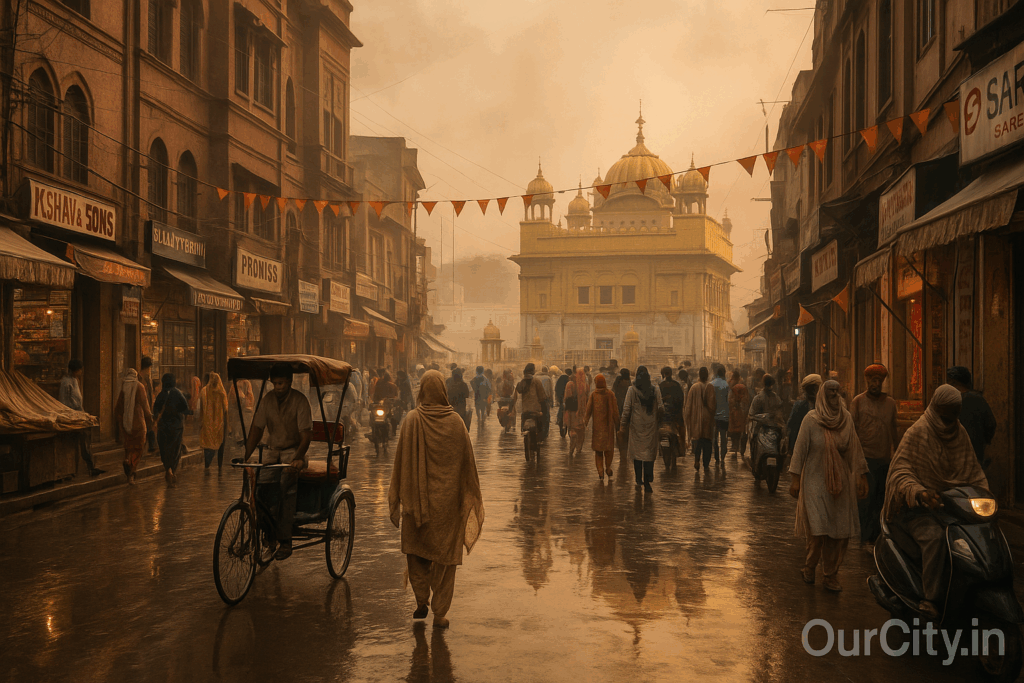
Amritsar moves on devotion, bazaars, and short hops across old-city lanes. Mornings begin near Harmandir Sahib, afternoons swell around Hall Bazaar, and evenings drift to Lawrence Road or Ranjit Avenue for food and errands. The city throws heat in May–June, waterlogging in peak monsoon, and smoggy mornings in November. Newcomers usually underestimate three things: how narrow the old quarters are, how quickly crowds build near pilgrimage landmarks, and how extreme the seasonal swing feels. This guide keeps you sorted—clear transport choices, no-nonsense scripts, seasonal kits, and calm safety habits that locals use every day.
🧭 Quick sense of place: Old city clusters around Katra Ahluwalia, Katra Jaimal Singh, Guru Bazaar, and Hall Bazaar. The wider city fans out along Majitha Road, Batala Road, GT Road (towards Chheharta and GNDU), Putlighar, Green Avenue, Ranjit Avenue, Verka, and Tarn Taran Road. Airport runs go toward the Attari side. Expect short distances (often 3–7 km) but variable travel time thanks to pilgrim flows and festival days.
🧭 Why These Survival Hacks Matter in Amritsar
First week here, you just need to reach on time, hydrate, and not overpay for short rides. By week four, you’ll want smarter interchange spots, the right lane to stand in for a quicker exit, and a season-ready kit that actually fits in a sling bag.
This guide helps you:
-
Pick the quickest option each time—BRTS (MetroBus), e-rickshaw, auto, or app cab—and know what they should cost.
-
Work with Amritsar’s rhythm: early darshan windows, lunch rush around Town Hall, and evening crowds near Ranjit Avenue.
-
Prepare once per season: simple heat, monsoon, and smog playbooks.
-
Handle small emergencies with confidence: which hospital entrance, what documents, which helpline.
-
Keep it respectful and safe—no panic, no bravado, just habits that locals follow.
🚇 Move Smart Every Day
Metro/Train/Bus Basics
No metro here—and that’s fine because distances are compact. Your backbone is BRTS (Amritsar MetroBus) on key corridors plus a web of city buses, e-rickshaws, cycle rickshaws, and autos.
BRTS (MetroBus):
-
Runs on dedicated lanes along major arteries linking the bus stand/railway side to old-city gates and outlying corridors.
-
Tickets: short hops typically ₹10–30. Smart cards (where available) usually need a small refundable deposit (expect ₹50–100 range) and top-ups in ₹100–500 chunks.
-
Women/elderly seats are reserved. Keep your bag zipped and on lap in crowded segments.
-
Check live timings and routes on the official Amritsar MetroBus/Smart City app before you step out (for first/last services and diversions on festival days).
Trains:
-
Amritsar Junction (ASR) is the rail hub. For intra-city movement, trains are less useful; think of rail mainly for outstation (Delhi Vande Bharat, Jalandhar, Ludhiana, Jammu, Pathankot).
-
Pro move: When returning from outstation, pre-book an app cab or note the auto stand inside the station area to avoid touts outside the main gate.
City Buses (non-BRTS):
-
Connect Batala Road, Majitha Road, Chheharta, Verka, Putlighar, Tarn Taran Road with core areas.
-
Fares are similar to BRTS on short stretches. Carry small change.
Last-mile grid:
-
E-rickshaws for 1–3 km hops inside the old-city maze (Katra Ahluwalia ↔ Town Hall ↔ Hall Bazaar).
-
Cycle rickshaws still shine in very tight lanes near Guru Bazaar and Katra Jaimal Singh—slower but reliable.
-
Autos are best for 3–7 km hops (Ranjit Avenue ↔ Railway Station; Lawrence Road ↔ Golden Temple). Meters exist but may not always be used—use the scripts below.
Auto/Taxi Fair-Play (Scripts + Price Cues)
Typical cues (subject to changes; confirm locally):
-
Auto meter start: ₹30–40; per km: ₹12–16. Night premium: up to ~25%.
-
Airport runs (ATQ): expect ₹250–500 by auto depending on distance and hour; app cab often ₹300–700.
-
Short city hops (2–4 km): ₹60–120 is common.
Scripts that work (use calmly, smile helps):
-
“Bhaiya, meter se chaliye.”
-
“Fixed rate kitna? Receipt dena.”
-
“Mujhe Ranjit Avenue jana hai, left se nikaalna.”
-
Punjabi flavor if you like: “Bhai ji, meter te chalo.”
If the driver refuses the meter, say: “Main app se book kar raha/rahi hoon.” and step back—no debate.
Ride-hailing (app cabs):
-
Choose for late evenings (post 21:00), airport runs, or when you have luggage.
-
Habits: check number plate, share trip, keep SOS ready in app, sit behind the driver seat (safer door exit).
-
Surges: common around 06:00–09:00 (rail/airport) and 19:00–22:00 (dinner/market). If prices spike, walk 200–300 m to a quieter pickup like Court Road or Company Bagh (Ram Bagh) perimeter and try again.
Peak Hours & Platform Positions
Peak windows (avoid if you can): 08:30–10:00 and 18:00–20:00, especially near Hall Bazaar, Town Hall, Katra Jaimal Singh, and Ranjit Avenue District Centre.
Interchange logic:
-
Coming from Majitha Road into old city? Get off before the tightest lanes and switch to e-rickshaw near Bhandari Bridge / Railway Station side.
-
From Batala Road/Chheharta headed to darshan: prefer BRTS till a gate periphery, then walk or e-rick. You’ll outpace autos stuck in bottlenecks.
Best exit positions:
-
On BRTS, stand near rear doors if your stop has a left-side exit onto service lanes.
-
Inside crowded lanes (Guru Bazaar), walk on the shopfront side, not gutter side, to reduce jostle and puddle splash in monsoon.
Walkable shortcuts locals use:
-
Town Hall ↔ Jallianwala Bagh ↔ Harmandir Sahib path is faster on foot than any vehicle at prayer peak.
-
Lawrence Road rear lanes help you cut to Mall Road without touching main junctions.
🌤 Weather Playbooks That Actually Work
Amritsar swings from 45 °C heat to fog-cold mornings. Prepare small, simple kits—no bulk.
Heatwave Kit & Day Plan (Apr–Jun)
Kit (carry in a sling):
-
2× ORS sachets (rule: 1 sachet per 1 L of water), 1× electrolyte tablet, 1× reusable bottle (750 ml), UV umbrella/cap, sunglasses, small cotton towel, SPF 30+.
-
Wear loose cotton/linen, light colours. Closed breathable shoes if you’re walking in busy lanes.
Day plan:
-
07:00–10:00: errands near Katra Ahluwalia/Hall Bazaar or darshan. Shade up on Heritage Street (arcades help).
-
10:00–16:30: stay indoors (library/cafe/mall). Good cooldown spots: Ranjit Avenue cafes, Mall of Amritsar / Trilium Mall corridors, GNDU reading rooms (if you have access).
-
17:00–20:00: second wind for shopping near Lawrence Road/Mall Road.
-
Warning signs: headache, dizziness, no sweat, cramps. First aid: cool shade, sip ORS slowly (200 ml every 10–15 min), damp towel on neck. If symptoms persist, see a doctor/hospital.
Monsoon Kit, Routes & Food Safety (Jul–Sep)
Kit:
-
Quick-dry sandals or anti-slip loafers, compact rain cover for bag, zip pouches for phone/cards, microfibre cloth for glasses/helmet, spare mask.
-
Small mosquito repellant (lotion/roll-on) for evenings near Sultanwind and Tarn Taran Road low-lying pockets.
Routes to prefer/avoid:
-
Choose BRTS lanes where possible—they drain faster than inner gullies.
-
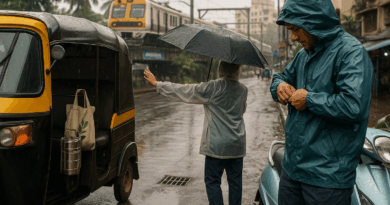
Expect pooling near underpasses and old gates. If water crosses ankle height, don’t wade—open drains and loose pavers are a risk. Switch to e-rickshaw or wait it out under a proper roof (not under a loose shopfront awning).
Food safety:
-
Prefer freshly cooked, piping hot. Avoid raw cut fruit from open carts on heavy-rain days.
-
Drink from sealed bottles or trusted refill points (malls, offices). Carry ORS.
Dengue prevention at home:
-
Fit window screens, use coils/liquid vaporizers, and empty standing water (balcony planters, buckets). Change cooler water weekly.
Winter/Smog Masking & Indoor Air (Nov–Feb; smog peaks Oct–Nov)
Mask:
-
Use N95/FFP2; ensure a snug seal around nose and chin. If you wear glasses, use anti-fog wipes and ensure mask sits under the frame.
-
Walking window: prefer late afternoon (15:30–17:30) when fog lifts. Mornings can be damp and cold.
Home air:
-
If you don’t have a purifier, set up a DIY corner—tight room, fan on low, damp wipe surfaces daily.
-
Keep a door towel for gaps to limit outdoor air on severe AQI days.
Warmth:
-
Layer: thermal inner + light sweater + windcheater. Nights around 6–8 °C happen; don’t underestimate it.
🩺 Health & Emergencies Without Panic
Nationwide numbers: 112 (all-in-one emergency), 108 (ambulance). Save them.
City helpline types you’ll find:
-
Punjab Police control room via 112 (violent crime, immediate danger, missing person).
-
Women’s help desks at major police stations; look for signage at Ranjit Avenue / Civil Lines stations.
-
Traffic updates & towing info via Amritsar Traffic Police social channels.
-
MetroBus customer care via official app for service alerts.
Hospitals (landmark guidance only):
-
Government Medical College & Guru Nanak Dev Hospital (Majitha Road side) — large public facility with casualty services.
-
Civil Hospital (Putlighar belt) — public, commonly used for vaccinations and emergencies.
-
Private multispecialty clusters near Green Avenue, Lawrence Road, and Batala Road corridors—good for quick diagnostics.
(Search maps for the nearest at the time you need it. Carry identity and insurance.)
Triage basics at a hospital desk:
-
“Casualty/ER kidhar hai?” (Where is emergency?)
-
“Doctor ko dikhana hai—heat exhaustion/shivering/food poisoning.”
-
If insured: “Cashless panel list dikhaiye.” Keep e-card + one paper copy.
First-aid mini-guides (basic only):
-
Dehydration/heat exhaustion: cool shade, ORS, loose clothing, fan breeze. See a doctor if no relief in 30–60 min.
-
Minor cut/sprain: clean, compress, elevate; cold pack 10–15 min. Tetanus up to date? Check with doctor.
-
Dog/cat bite: wash with soap and water for 15 min, go to hospital for anti-rabies advice.
-
Food poisoning: rest, sip ORS, avoid dairy/spicy food for 24 h; doctor if fever, blood in stool, or persistent vomiting.
Pharmacies:
-
Many open late near Railway Station, Majitha Road, Ranjit Avenue. E-pharmacies deliver in most pockets; keep paracetamol, ORS, saline nasal spray at home. Read labels, avoid mixing meds without advice.
🛡️ Night & Solo Safety
Night-travel rules of thumb:
-
Prefer app cabs after 21:00. If you must hail on street, choose a lit stand (Railway Station inner stand, Ranjit Avenue market loop).
-
Share live location with a family member.
-
Stick to brighter routes—Mall Road, Lawrence Road, Ranjit Avenue—over inner alleys in Katra belts late at night.
Red-flag zones by type (not singling out places):
-
Over-crowded bazaars, festival pandals, interchange footbridges, and narrow alley chokepoints—watch for pickpockets.
-
ATMs at isolated corners post-22:00—choose ones attached to banks/malls with guards.
Polite disengage scripts:
-
“Nahi chahiye, thank you.”
-
“Main app se book kar raha/rahi hoon.”
-
“Police se confirm kar leta/leti hoon.”
Women’s Compartment/Coach Pointers
No metro here, but:
-
Buses have reserved seats; take them confidently.
-
On trains (outstation), consider ladies coach or lower berth for night runs; keep a small torch, lockable luggage chain, and scarf as extra layer.
App Cab vs Street Hail (When & Why)
-
App cab: late nights, airport/rail runs, unknown drivers, digital record, SOS.
-
Street hail auto: very short hops inside the old city where pickup pins fail; use script + agree fare before boarding.
🏠 Housing, PGs & Utilities
Where people stay:
-
Ranjit Avenue & Green Avenue for families/professionals—wider roads, parks, reliable utilities.
-
Lawrence Road/Mall Road for central access, older spacious homes.
-
Majitha Road, Batala Road, Chheharta (near GNDU/Khalsa College) for students and teaching staff.
-
Tarn Taran Road/Putlighar for budget options; check water timings closely.
Deposits, Clauses & Broker Scripts
Broker norms:
-
Fee: usually ½–1 month rent.
-
Deposit (refundable): typically 1–2 months. Document it.
Questions to ask:
-
“Pani ka source kya hai—municipal ya borewell? Timings?”
-
“Power backup hai? Inverter capacity?”
-
“FTTH/Broadband kaun sa hai? Speed test dikhayenge?”
Scripts:
-
“Deposit kitna refundable hai, aur kab?”
-
“Maintenance mein kya-kya included hai?”
-
“Notice period kitna hai? Painting/repairs kaise honge?”
Clauses you’ll see:
-
30-day notice, minor repairs under tenant, painting at move-out or shared cost, no sub-letting.
Power/Water Outage Playbook
Power cuts:
-
Keep one room as backup zone with inverter; charge devices before evening.
-
Surge protectors for PC/TV. Keep a multi-plug and torch in a fixed spot.
Water:
-
If timings are fixed, store one day’s water in clean drums.
-
RO/UV upkeep: change filters every 6–12 months (depends on TDS). Keep two 20-L cans as backup in monsoon weeks.
Pest & Mosquito Control That Works
-
Window screens, door sweeps, weekly drain cleaner in kitchen/bath.
-
For mosquitoes: coil/liquid, plus plug-in repellents in children’s rooms at low setting.
-
Keep balconies dry; dengue breeds in clean stagnant water.
📄 Paperwork That Saves You Time
Tenant Verification & Receipts
-
Police/tenant verification is common for apartments. Ask your landlord which police station or Saanjh Kendra handles it.
-
Get an acknowledgement slip or stamped copy.
-
Keep Aadhaar/PAN scans and 2 photos ready.
E-Challan & Civic Apps
-
Check and pay traffic fines via the national e-challan portal/app.
-
Civic grievances (streetlights, roads, garbage pickup) can be filed via Amritsar Smart City/Municipal apps or website. Attach a photo, drop a pin, and note the ticket ID.
Driving rules that trip newcomers:
-
One-way spurs in the old city—follow signage near Hall Bazaar and Katra gates.
-
No-parking near Heritage Street and Town Hall; tow trucks are active in festive weeks.
-
Helmet is compulsory; look for ISI/BIS mark.
💸 Daily Costs & Cash-UPI Rhythm
Amritsar is UPI-friendly, but small vendors in inner lanes still prefer cash for tiny purchases.
Sample daily budgets (indicative):
| Profile | Breakfast | Lunch | Commute | Tea/Coffee | Misc | Total/day |
|---|---|---|---|---|---|---|
| Student (Chheharta/GNDU side) | ₹40–60 | ₹80–120 (mess/thali) | ₹20–60 | ₹20–40 | ₹30–60 | ₹190–340 |
| Fresher (Majitha/Batala Road PG) | ₹60–80 | ₹120–180 | ₹40–120 | ₹30–60 | ₹60–120 | ₹310–560 |
| Professional (Ranjit/Green Ave) | ₹80–120 | ₹180–280 | ₹60–180 | ₹40–80 | ₹100–200 | ₹460–860 |
Cash vs UPI:
-
Carry ₹300–500 in small notes for e-rickshaw/rickshaw, temple offerings, and small snacks.
-
Everything else: UPI works. Watch for QR-swap scams (see Safety).
MetroBus card top-ups:
-
Typical ₹100–500 loads; keep ₹50–100 minimum balance if you commute daily.
Contingency:
-
Keep ₹1,000–2,000 at home, ₹200 in your transit pouch, and ID photocopies (Aadhaar, driving licence) in a sealed envelope.
📱 Must-Have Apps & Offline Backups
-
Amritsar MetroBus / Smart City app: live routes, service alerts.
-
Ride-hailing: two apps installed for backup.
-
Maps: save offline for old city where data drops in basements and dense markets.
-
UPI: at least two apps (e.g., BHIM + one wallet).
-
mParivahan / DigiLocker: digital RC, DL, ID copies.
-
ICE widget: set In Case of Emergency contacts on lock screen.
Network quirks:
-
Basements of malls, thick-walled old shops near Guru Bazaar, and festival crowds can cause drops. Screenshot your QR tickets and cab OTPs beforehand.
🚗 Driving, Parking & Towing Traps
-
No-parking pockets you’ll meet: around Heritage Street, Town Hall, Golden Temple periphery, and choke points on Mall Road. Use official parking lots even if it means a 7–10 min walk.
-
Towing: Check Amritsar Traffic Police socials for yard locations and release steps. Keep RC, DL, insurance (digital OK) handy.
-
Airport (ATQ) pickup lanes: short grace periods; drivers should wait in holding area. Exceeding time attracts fines; coordinate via calls/texts.
-
Railway Station lanes: use the designated pickup loop; don’t block the main gate.
-
Helmet & markings: motorcyclists—ISI/BIS helmet, chin strap on. Add reflective tape to rear mudguard for better visibility in monsoon nights.
-
Rain riding: slow over first heavy shower—oil film lifts; avoid sudden braking; watch for manhole covers.
🌊 Disaster Readiness (City-Specific)
Amritsar isn’t coastal, but you’ll face urban flooding in monsoon and moderate earthquake risk (North India). Fires in packed bazaars are also a seasonal hazard.
Flood/Earthquake Notes
Monsoon flooding:
-
If your car stalls in water, don’t crank repeatedly; push to a safe side and call roadside assistance.
-
Don’t wade if water is opaque and moving—hidden open drains. Wait on higher ground like shop thresholds with solid awnings.
Earthquake:
-
Drop–Cover–Hold under a sturdy table; away from glass.
-
After tremors stop, use stairs, not lifts. Move to open space (mall parking lots, park edges like Company Bagh).
Go-Bag & Family Plan
Go-bag (compact):
| Item | Why |
|---|---|
| 1L bottle + 2× ORS | Dehydration prep |
| Flashlight + spare cells | Power cuts/night exits |
| Photocopies of ID + small cash | If phone dies |
| Basic meds (paracetamol, antihistamine) | Minor issues |
| Band-aids + crepe bandage | Small injuries |
| Mask (N95) + sanitiser | Smog/crowds |
| Phone power bank + cable | Obvious but critical |
Family plan:
-
Two rally points—one near home (street corner), one city-side (e.g., Ranjit Avenue market).
-
SMS template for status: “I’m safe at ___, heading to ___.”
-
Keep local cab/autowala numbers in a paper note (ask trusted drivers you use often).
👥 Special Playbooks
Students & Freshers
Clusters: Chheharta & GNDU belt, Khalsa College side, Majitha Road PGs.
First-month survival:
-
PG checklist: water timings, kitchen hygiene, study hours quiet policy, Wi-Fi speed test.
-
Mess hacks: pick a dal-roti-sabzi mess for routine; save fancy meals for weekends.
-
Reading rooms/libraries: GNDU/college options; for general prep, quiet cafes in Ranjit Avenue during non-peak hours.
-
Exam season: keep a laminated ID copy, extra pen set, print/scan hubs marked on maps near Hall Gate and Majitha Road.
-
Locals say… “Reach by 07:30 for quick ticketing at busy counters.”
Solo Women
-
Late-night routes: prefer Mall Road → Ranjit Avenue → Green Avenue spine over inner alleys.
-
Waiting spots: mall entrances, big hotel porches, hospital forecourts—lit, CCTVs, guards.
-
Elevator vs stairwell: in empty buildings at night, choose elevator to a lobby over isolated stairwells.
-
Coach choices: in buses, take reserved seats up front. In app cabs, sit behind driver seat; mirror check your plate before boarding.
-
Trusted quick snacks: sealed milk drinks, packed biscuits, roasted chana; avoid cut fruit late at night.
Parents with Kids
-
Stroller-friendly parks: Company Bagh (Ram Bagh) has level paths. Mornings 07:30–09:30 or evenings 17:00–19:00 in summer.
-
Festival safety: use a child-ID wristband (name + phone) when visiting Heritage Street/Town Hall.
-
Medical: note nearest pediatric clinic around Green Avenue/Ranjit Avenue or your side of town.
-
Food: carry bananas, packaged yogurt, and ORS. Keep wipes for sticky prasad hands.
Elders & PWD
-
Step-free entries: many BRTS stations are ramped; ask staff for assistance.
-
Lift reliability: malls and hospitals generally good; in old-city bazaars, expect stairs—plan short walking loops.
-
Hospital windows: 09:00–11:00 and 16:00–18:00 are sweet spots for OPD in many places (check your hospital’s board).
-
Wheelchairs at landmarks: request on arrival; volunteers often help, especially mornings.
✅ Quick Cheatsheets (Tables)
Transport passes/fares (indicative):
| Mode | Typical Short Hop | Card/Pass | Notes |
|---|---|---|---|
| BRTS (MetroBus) | ₹10–30 | Smart card (₹50–100 deposit), top-up ₹100–500 | Check official app for live fares/timings |
| City bus (non-BRTS) | ₹10–30 | Paper ticket | Keep change |
| E-rickshaw | ₹20–60 | Cash/UPI | 1–3 km hops |
| Auto (meter) | ₹30–40 start; ₹12–16/km | N/A | Night ~+25% |
| App cab (in-city) | ₹120–300 | App wallet/UPI | Surges evenings |
| Airport cab | ₹300–700 | App | Luggage friendly |
Peak windows by corridor (most crowded):
| Corridor | Morning | Evening | Tip |
|---|---|---|---|
| Old city gates ↔ Heritage Street | 08:30–10:00 | 18:00–20:00 | Walk last 500–800 m |
| Mall Road/Lawrence Road spine | 09:00–10:00 | 18:30–20:00 | Use parallel lanes |
| Ranjit Avenue district centre | 09:30–10:30 | 19:00–21:00 | App cab pickup at back loop |
AQI bands & actions:
| AQI | Air Quality | Action |
|---|---|---|
| 0–50 | Good | Open windows, outdoor walk |
| 51–100 | Satisfactory | Normal routine |
| 101–200 | Moderate | Sensitive groups mask outdoors |
| 201–300 | Poor | N95 outdoors; close windows at rush hour |
| 301–400 | Very Poor | Limit outdoor time; purifier/DIY room |
| 401–500 | Severe | Avoid outdoor exertion; N95 essential |
Monsoon day kit:
| Item | Why |
|---|---|
| Quick-dry sandals | Slippery lanes |
| Bag rain cover | Protect phone/docs |
| Zip pouches | Keep UPI phone dry |
| Microfibre cloth | Visor/glasses fog |
| Spare mask | Wet masks don’t filter |
| Mosquito roll-on | Evenings near water |
Heat kit:
| Item | Rule |
|---|---|
| ORS (2 sachets) | 1 sachet/1 L |
| 750 ml bottle | Refill at malls/offices |
| UV umbrella/cap | Shade |
| SPF 30+ | Reapply 3–4 h |
| Cotton towel | Cool compress |
Go-bag checklist:
| Item | Qty |
|---|---|
| Water + ORS | 1L + 2 |
| Flashlight | 1 |
| ID copies + cash | Envelope |
| Basic meds | Small pouch |
| N95 mask | 1–2 |
| Power bank + cable | 1 |
Arrive-by timing cues:
| Task | Arrive by |
|---|---|
| Darshan (busy day) | 06:30–07:30 |
| Hall Bazaar shopping | 11:00 or 17:00 |
| Ranjit Avenue dinner | 19:30 (parking easier) |
| Airport domestic | 120 min before |
| Railway pickup | Cab booked 10 min before arrival |
❓FAQs
1) Is BRTS faster than autos inside old lanes?
Often yes on main corridors, then switch to e-rickshaw or walk for the last 500–800 m.
2) What’s a fair auto fare from Railway Station to Ranjit Avenue?
Commonly ₹80–150 depending on exact block and traffic. Ask for meter; if refused, fix fare politely.
3) How do I avoid waterlogging traps?
Skip underpasses and old gates right after heavy rain. Use BRTS lanes, or wait 20–30 min under firm shelter.
4) Which mask should I use during smog?
N95/FFP2 with a snug seal. Replace when it gets damp or visibly dirty.
5) Can I rely only on UPI?
Mostly yes, but carry ₹300–500 cash for rickshaws, tiny shops, or network drops.
6) Where do students usually find PGs?
Around Chheharta/GNDU, parts of Majitha Road, and near Khalsa College. Check water timings and Wi-Fi.
7) What if a cab driver calls and asks to cancel?
Say, “Main app se hi chalunga/chalungi.” Don’t cancel; let the driver do it or rebook another.
8) How do I refuse touts without drama?
“Nahi chahiye, thank you.” or “Police se confirm kar leta/leti hoon.” Then walk to a brighter, busier spot.
9) Are there women-only coaches?
No metro here. Use reserved seats on buses; for outstation trains, choose ladies coach where available.
10) What to pack for a full monsoon day out?
Quick-dry footwear, bag cover, zip pouch for phone, microfibre cloth, spare mask, small repellant.
11) Which hours feel safest for solo evening walks?
Stick to 17:00–20:00 on Mall Road/Lawrence Road/Ranjit Avenue. Share location if later.
12) How to check if I got an e-challan?
Use the national e-challan portal/app. Keep your vehicle number handy.
13) If I lose my phone/wallet?
Use a friend’s phone to lock SIM and UPI, file a police complaint at nearest station/Saanjh Kendra, and track via Find My Device/iPhone.
14) How early for darshan on crowded days?
Target 06:30–07:30 to keep it smooth and calm.
15) Any “locals say…” tips?
“Reach early, walk last.” In the old city, walking the final stretch beats any vehicle.
🔚 Wrap-Up: You’ll Be Fine Here
Amritsar rewards early starts, short smart hops, and season-ready pockets in your bag. Keep your transport choices flexible—BRTS on corridors, e-rickshaw for the maze, app cabs at night. Hydrate in summer, step carefully in monsoon, mask up on smoggy days. Use the scripts; they save time and friction. Respect the city’s pace around prayer hours, greet people warmly, and you’ll find help at every turn—from Ranjit Avenue to Katra Ahluwalia, Chheharta to Green Avenue. You’ve got this.