Aurangabad Culture Guide
Table of Contents
Aurangabad (Chhatrapati Sambhajinagar) Traditions & Culture: Show Up Right
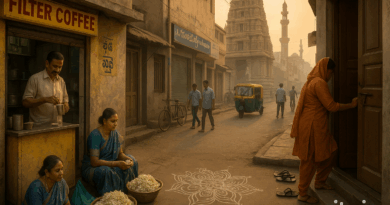
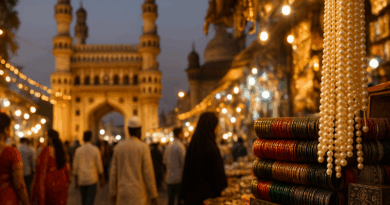
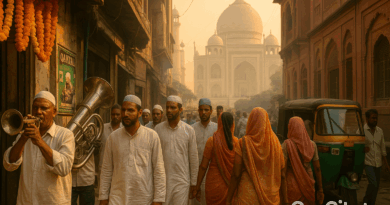
Aurangabad—officially Chhatrapati Sambhajinagar—sits where Deccan rock meets living faith. Temples hum at dawn, dargahs glow with qawwali in the evening, and entire mohallas come alive for Ganeshotsav, Muharram, and Diwali. The old city around Bhadkal Gate, Roshan Gate, Shahganj, and Aurangpura moves in rhythms that are everyday to locals but confusing for a first-timer. Footwear racks, prasad lines, head coverings, aarti flames, chadar etiquette—small things that matter. This guide makes it easy.
We keep it Indian-first and locally grounded. You’ll see time cues, short scripts you can actually use, and seasonal notes for heat and monsoon. Use this as your friendly playbook—whether you live in CIDCO (N-1 to N-11), Satara Parisar, Osmanpura, Garkheda, Harsul, Connaught, Chikalthana, or you’re in for a weekend hopping between Bibi ka Maqbara, Daulatabad (Devgiri), Ellora (Verul), Grishneshwar Jyotirlinga, and Khuldabad’s dargahs.
🪔 Note on names: Locals use both “Aurangabad” and “Chhatrapati Sambhajinagar.” On the ground, you’ll hear both. When speaking to elders or in sacred spaces, mirror the term your host uses.
🪔 Why This Culture Guide Works for Aurangabad
What people usually need in Aurangabad isn’t glossy lists; it’s the small, respectful moves:
- When to reach aarti, urs, or mass so you actually get space to pray.
- What to wear in 38–42 °C summers and during slippery monsoon evenings.
- How to offer prasad, chadar, or flowers without fuss.
- How to ask politely: “Photography allowed hai?”, “Queue kahan se shuru hoti hai?”
- Where to stand during Ganesh visarjan or Muharram tazias so you aren’t blocking the procession.
Here’s the thing: cultures overlap in Aurangabad. A morning start near Bhadkal Gate for temple darshan, a quiet hour at Bibi ka Maqbara, late-evening zikr or qawwali near Khuldabad, and a langar at a small gurdwara near Railway Station Road—all in a day. This guide keeps it clear, season-aware, and people-friendly.
🪔 Festival Calendar: What Happens When (Jan–Dec)
City Highlights Month by Month
January
- Makar Sankranti (मकर संक्रांति): Kite-flying on terraces across Aurangpura, Osmanpura, CIDCO, with tilgul exchanges—“Tilgul ghya, goad bola” (take sesame-jaggery sweet, speak sweetly). Light layers; mornings are crisp (~12–15 °C).
- Guru Gobind Singh Park sabhas: Small new-year community meets; keep it quiet if a hymn is on.
February
- Mahashivratri (महाशिवरात्रि): Night-long darshan lines at Grishneshwar Jyotirlinga (Verul); city temples like those around Kranti Chowk see crowds too. Reach by 05:45 for first abhishek slots; carry a small bilva leaves bunch.
March
- Holi/Rangpanchami: Dry colours are common in CIDCO N-11, Garkheda, Satara Parisar; avoid colours near sacred zones and water bodies.
- Classical music-dance festival near Ellora: Dates vary by year—check the official tourism/administration noticeboard for exact schedule.
April
- Ram Navami and Chaitra Navratri: Morning aartis; modest wear, covered shoulders.
- Ramzan/Ramadan begins (variable): Old city lanes—Shahganj, Nirala Bazar, Begumpura—set up iftar stalls. Expect a sweet spot post-Maghrib to ~1 hour after sunset. Dress modestly and be mindful of people breaking fast.
May
- Peak summer. Rituals continue but fewer big melas. If visiting Bibi ka Maqbara or Daulatabad, plan early mornings. Hydrate; soles heat up—carry thin socks for temple floors.
June–July
- Monsoon arrivals: Slippery temple courtyards; non-slip footwear helps.
- Eid al-Adha / Bakrid (variable): Offer greetings—“Eid Mubarak”. Around Roshan Gate and Paharsinghpura, traffic is slower near prayer times. Keep lanes clear.
August
- Muharram: Tazia processions move through Bhadkal Gate, Shahganj, and adjoining mohallas. Stand to the side, keep respectful silence at key moments; photography is sensitive—ask first.
- Independence Day community flag-hoists at schools and sabha halls in CIDCO and Waluj MIDC.
September
- Ganeshotsav (गणेशोत्सव): Mandals in Aurangpura, CIDCO N-2/N-11, Garkheda, Connaught, and the old city.
- Visarjan routes get crowded; avoid 18:00–21:00. Families: watch from barricaded corners near big chowks.
October
- Sharad Navratri & Dussehra: Garba/dandiya nights in housing societies across Beed Bypass, Kanchanwadi, Padegaon.
- Milad-un-Nabi (variable): Processions in select pockets; dress modestly, keep space for walkers.
November
- Diwali (दीवाली): Diyas on balconies from Osmanpura to CIDCO; temple queues in the mornings. Burst crackers only in permitted slots/areas; follow city advisories.
- Gurpurab (Guru Nanak Jayanti): Gurdwaras run langar; cover head, sit in pangat (row) and accept karah prasad with both hands.
December
- Christmas & New Year: Midnight mass at churches in Begumpura and Osmanpura—arrive 30–40 min early. Markets around Connaught get festive; plan return transport by 22:00 if with kids/elders.
All year
- Urs at Khuldabad (खुलदाबाद): Dargahs of revered Sufi saints hold urs as per the Islamic lunar calendar. Expect qawwali evenings; cover head and keep phones silent.
Where to Go & When to Arrive (Time Cues)
- Aarti at city temples: First aarti often pre-dawn to ~07:30; evenings post-sunset to ~20:00.
- Tip: Reach 25–30 min early. Avoid raising phones during the flame—focus on the darshan.
- Friday prayers: Around mosques in Aurangpura, Begumpura, Roshan Gate—lanes fill 12:30–14:30.
- Ganesh visarjan: Heavy flow evening till late night on main chowks like Kranti Chowk. Family-friendly corners are slightly away from the heart of the route.
- Urs/qawwali: Arrive before sunset for a good spot; carry a light scarf for head cover.
- Mass: Sundays morning and evening; Christmas Eve is busier—arrive 40 min early.
Always check: final aarti/mass/namaz timings on the temple trust’s noticeboard/app, dargah committee announcements, or church boards. Timings can shift during festivals.
Family-, Senior-, and Child-Friendly Tips
- Choose morning slots in summer; evenings in winter.
- For elders/kids, use side gates or senior queues if available; ask, “Senior queue kahaan hai?”
- Keep a meet-up script ready: “
- “Agar hum alag ho gaye, Kranti Chowk police kiosk ke paas milte hain 20 minute baad.”
- Carry a small scarf, ORS sachet, and wet wipes.
- Write a contact number on a small paper tucked in the child’s pocket.
🪔 Sacred Spaces Etiquette (Temples • Gurdwaras • Dargahs/Mosques • Churches • Ghats)
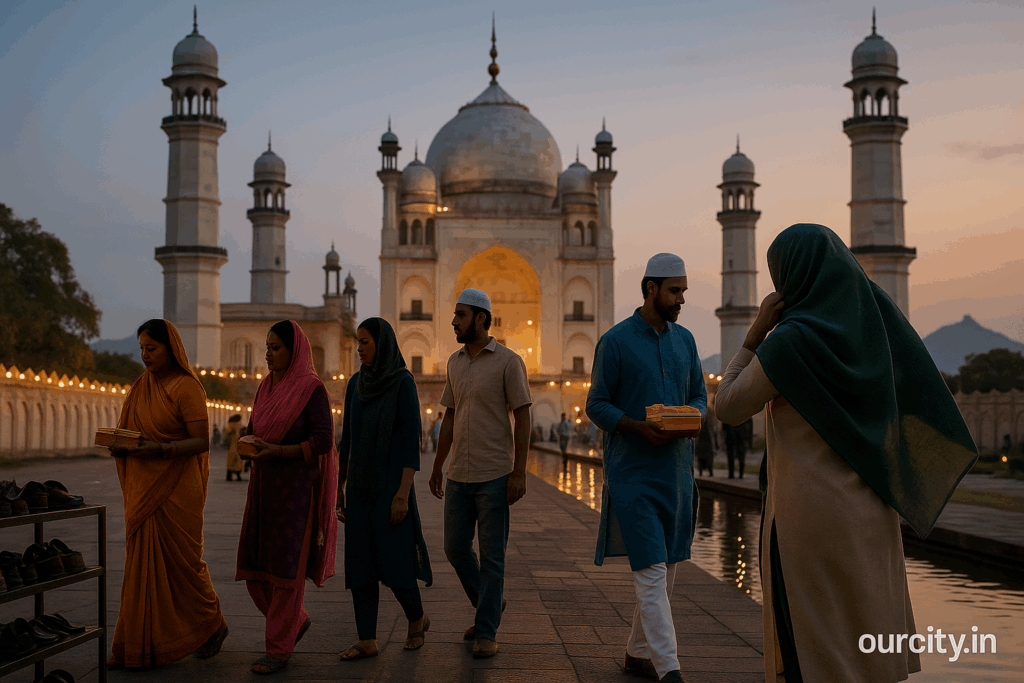
Aurangabad’s sacred map stretches from Bibi ka Maqbara (quiet respect), to inner-city temples, to the Grishneshwar Jyotirlinga near Ellora, to Sufi dargahs around Khuldabad, and modest churches in Begumpura/Osmanpura. Here’s how to fit in gently.
What to Wear & Carry
- Temples: Light cottons; shoulders and knees covered. Floors can be hot—carry thin socks. Keep a small cloth bag for prasad/flowers.
- Gurdwaras: Any modest wear is fine; carry a handkerchief/dupatta to cover your head.
- Dargahs/Mosques: Cover head (cap/dupatta), wear modest, loose clothing. Avoid strong perfume during prayer times.
- Churches: Neat, quiet clothing; avoid flashy outfits at midnight mass.
- Ghats/cremation grounds: Simple, muted clothing; keep a respectful distance.
Carry list (fits in a small sling): scarf/dupatta, socks, refillable bottle, hanky, wet wipes, ₹100–300 in small notes, UPI ready, small biodegradable offering pack.
Offerings/Prasad/Chadar: Ranges & Rules
- Flowers: ₹20–100 for a small to generous bundle (marigold, roses).
- Prasad: ₹20–60 (laddoo/boondi/coconut). Offer with the right hand; wait your turn; receive prasad in cupped palms.
- Oil/ghee packs: ₹50–200, especially for diya offerings during aarti.
- Chadar at dargahs: ₹200–600 for a simple chadar; add it gently, without crowding the resting place. Remove shoes outside; keep phones silent.
- Candles at churches: ₹10–30 each; light and place where indicated.
Daan/Hundi etiquette: Give quietly with the right hand. No showy notes. Digital UPI boxes are common—check the official box; avoid random QR codes. Keep small notes for quick flow at hundis.
Photography & Phone Etiquette
- Ask first. Many spaces allow general photos but not during active prayer. Use: “Photography allowed hai?”
- No flash. No phones raised during aarti/namaz/mass/qawwali head moments.
- Sensitive rites: At cremation grounds or private ceremonies, do not photograph. Step back.
Ask Politely (Ready Scripts)
- “Photography allowed hai?” (Is photography allowed?)
- “Queue kahan se shuru hoti hai?” (Where does the queue start?)
- “Darshan token yahin milta hai?” (Do we get the darshan token here?)
- “Head cover kahaan milega?” (Where can I get a head covering?)
- “Senior/ladies queue alag hai?” (Is there a separate queue for seniors/ladies?)
🪔 Processions, Melas & Community Events
Aurangabad’s processions thread through old gates and new colonies. Muharram tazias in Bhadkal Gate–Shahganj belts; Ganeshotsav idols through Kranti Chowk, Aurangpura, and CIDCO roads; Diwali melas near Connaught and society lawns along Beed Bypass.
Safe Viewing Spots & Exit Plans
- Stand at edges near barricades; never in front of the chariot/tazia/dhol path.
- Spot official volunteers; confirm the nearest exit lane.
- Choose corners with street lighting, especially for kids/elders.
- Fix a meet-up point: “Alag ho gaye to, Connaught main gate ke left waale chai stall pe milte hain.”
Transport Diversions & Crowd Windows
- Old city gates—Bhadkal Gate, Roshan Gate, Shahganj—see diversions during evenings on festival days. Expect 18:00–21:30 surges.
- Kranti Chowk becomes a knot during visarjans—use Beed Bypass or inner CIDCO roads if you just need to cross town.
- E-rickshaws and autos are plentiful; agree on fare or ensure meter/UPI. App cabs can be slower to reach old lanes.
If You Get Separated (Meet-up Scripts)
- “Main Kranti Chowk ke police kiosk ke paas khada/khadi hoon; yahin aa jaiye.”
- “Hum sab Connaught ke gate-2 par 20 minute mein milte hain.”
- For kids: teach them to ask a uniformed officer or a women-led stall for help.
🪔 Seva, Daan & Doing Your Bit
Simple Ways to Volunteer
- Shoe-rack help at temples during peak aarti. Smile and guide—“Line yahan se hai.”
- Langar service at gurdwaras: washing, serving, cleaning. Ask: “Langar kahaan serve ho raha hai? Main seva kar sakta/sakti hoon?”
- Queue management: offer to hold a spot for an elder briefly; keep the line moving.
- Post-event clean-ups: after Ganesh visarjan or Diwali melas, local groups in CIDCO and Aurangpura organise clean-ups—carry gloves.
Hygiene & Clean-up Etiquette
- Carry a small trash pouch; avoid leaving plates/cups near shrines.
- Use designated bins; don’t throw flowers/coins in water bodies.
- If you see spillage, inform a volunteer; don’t lecture—just help.
Digital UPI vs Cash (When & How)
- UPI is fine for official donation boxes and stalls—double-check the name on the QR.
- Keep ₹10–₹50 notes for quick offerings, ₹100–₹200 for prasad/flowers in busy queues.
- Avoid handing cash to aggressive touts; say politely: “Main official hundi/box mein daal dunga/dungi.”
🪔 Arts, Crafts, Music & Dance of Aurangabad
Aurangabad balances Deccan courtly heritage with living craft.
- Paithani (पैठणी) sarees from nearby Paithan: real gold/silver zari; peacock and lotus pallu. It carries a GI tag—ask for loom details and cooperative credentials.
- Himroo & Mashru textiles: cotton-silk blends once favoured by nobles; visit small workshops around Zalta Road and Aurangpura markets to see looms (ask first; not all do demos).
- Stone and wood carving inspired by Ajanta–Ellora motifs: sold in lanes near Bibi ka Maqbara and CIDCO craft outlets.
- Qawwali & baithaks: In the urs season around Khuldabad, you may catch evening qawwali. Keep it phone-light; clap softly in rhythm.
- Classical dance/music sabhas: Housing societies in CIDCO N-2/N-11 and halls near Osmanpura host seasonal shows; simple tickets at the door.
What to See Live (Rehearsals, Sabhas, Baithaks)
- Society grounds during Navratri: watch a bit, join only if invited; stay clear of fast garba circles.
- School/college annual days near Garkheda and Chikalthana often feature lavani or bharatanatyam—quiet applause.
- Ellora-area stages (seasonal): check district announcements for classical nights.
Ethical Souvenir Buying (Quick Tests & GI Mentions)
- Prefer cooperatives and artisan collectives; ask for maker’s name.
- For Paithani, look for selvedge consistency, pallu detailing, and weight. Be wary of ultra-cheap “Paithani print.”
- For Himroo, check the reverse side for clean float threads; handloom has minor unevenness—that’s charm, not defect.
- Ask if the craft bears a GI tag (Paithani does). If unsure, buy small but fair.
🪔 Language, Greetings & Everyday Manners
A few words go a long way. Marathi, Hindi, and Urdu blend easily here.
Local Phrases (Transliteration + Script)
- Hello/Respectful greeting: Namaskar (नमस्कार), Adaab (आदाब/آداب), Sat Sri Akal (ਸਤਿ ਸ੍ਰੀ ਅਕਾਲ).
- Thank you: Dhanyavaad (धन्यवाद), Shukriya (शुक्रिया/شکریہ).
- Please/excuse me: Krupaya/Maaf kijiye (कृपया/माफ कीजिए), Maaf kijiye (معاف کیجیے).
- Asking to join a queue: “Main yahin line mein hoon, theek hai?” (मैं यहीं लाइन में हूँ, ठीक है?)
Right-Hand Giving, Thresholds, Sacred Trees/Animals
- Offer/receive with the right hand (or both hands).
- Don’t step on thresholds of sanctums/doors.
- Don’t touch idols; fold hands from a little distance.
- Be mindful around peepal or neem trees with threads/ties; don’t pull or lean.
What Not to Do (Short List)
- Don’t climb on shrines/vehicles/statues to click.
- Don’t point feet towards sanctums or people in prayer.
- Don’t argue loudly with volunteers—use scripts, keep it cool.
🪔 Seasonal Playbooks (Heat • Monsoon • Winter/Smog • Peak Festive)
What Changes, What to Pack, When to Go
Summer (Apr–Jun)
- When: Earliest slots for darshan (pre-sunrise to ~07:30).
- Pack: ORS, hat/scarf, thin socks, refillable bottle.
- Watch for: Hot flooring at temples, miragey highways to Ellora/Ajanta—start early, rest midday.
Monsoon (Jun–Sep)
- When: Mid-mornings or post-rain windows.
- Pack: Non-slip footwear, compact umbrella, plastic cover for offerings.
- Watch for: Waterlogging near old gates; slower lanes around processions.
Winter (Nov–Jan)
- When: Pre-dawn aarti is pleasant; nights can dip to ~10–12 °C.
- Pack: Light sweater/dupatta for breeze at Daulatabad; shawl for midnight mass.
Peak festive weeks
- Transport: Book autos/cabs in advance for return. Keep a buffer of 30–40 min.
- Quiet hours: Post-lunch 14:30–16:30 is often gentler at many temples.
- Kids: Avoid 18:00–20:00 surge; carry earplugs for loud drums.
Exam & job-hunt season
- Seek calm corners: temple sabha halls in CIDCO, libraries near Osmanpura; step out during low-crowd slots for a quick prayer or focus reset.
🪔 Quick Cheatsheets (Tables)
Festival Months vs Typical Timings
| Festival/Observance | Usual Month(s) | Typical Time Cues |
|---|---|---|
| Makar Sankranti | Jan | Morning terrace kites; temple aarti by 07:00 |
| Mahashivratri | Feb/Mar | Night-long darshan; reach by 05:45 for abhishek |
| Holi/Rangpanchami | Mar | Late morning colours; avoid near shrines |
| Classical fest near Ellora | Mar (varies) | Evenings; check official announcements |
| Ramzan iftar | Shifts annually | Sunset to ~1 hr after; modest dress |
| Eid (al-Fitr/Adha) | Variable | Morning prayers; traffic slows near mosques |
| Muharram (tazia) | Variable | Evenings; quiet observation; ask before photos |
| Ganeshotsav & Visarjan | Aug/Sep | Avoid 18:00–21:00 surge on chowks |
| Navratri & Dussehra | Oct | Evenings; society garba; modest attire |
| Diwali | Oct/Nov | Morning temple queues; diyas post-sunset |
| Gurpurab | Nov | Morning/evening; langar all-day in some gurdwaras |
| Christmas/New Year | Dec | Midnight mass; arrive 40 min early |
Etiquette by Place of Worship
| Place | Footwear | Head Cover | Queue/Token | Photography |
| Temple | Leave at rack; socks ok | Optional (shawl ok at some) | Common at big shrines | Ask; never during aarti |
| Gurdwara | Leave in jora ghar | Mandatory (scarf/handkerchief) | Usually free-flow | Allowed outside sanctum; no flash |
| Dargah/Mosque | Leave outside | Recommended/mandatory | May have gendered areas | Ask; avoid during namaz |
| Church | Keep quiet | Not required | No tokens | Ask; no flash, esp. during mass |
| Ghats/Cremation | Outside area | Not required | No tokens | No photos of rites |
Offering/Donation Ranges (₹)
| Item | Typical Range |
| Flowers | ₹20–100 |
| Prasad | ₹20–60 |
| Oil/Ghee pack | ₹50–200 |
| Chadar | ₹200–600 |
| Candles | ₹10–30 |
| Suggested Daan (quiet) | ₹50–300 for small visits |
Quiet-Hour Windows & Crowd Surges
| Slot | Expect |
| 05:45–07:30 | Calm aarti windows; best for elders |
| 12:30–14:30 Fri (near mosques) | Slower traffic, full lanes |
| 18:00–20:00 | Peak crowds at temples/mandals |
| 20:30–22:00 | Post-peak; better for families, but confirm last darshan |
🪔 FAQs (Real Questions, Crisp Answers)
1) What should I wear for summer darshan?
Light cotton, shoulders/knees covered, thin socks for hot floors, small scarf/dupatta in bag.
2) Are phones allowed during aarti or namaz?
Keep them on silent. Avoid using during aarti, namaz, mass, or qawwali focus moments. Ask first: “Photography allowed hai?”
3) Is cash or UPI better for offerings?
Both work. UPI for official boxes/stalls (verify name); keep ₹10–₹50 notes for quick hundi/prasad lines.
4) How early should I reach Grishneshwar on Mahashivratri?
Aim pre-dawn. Many reach by 05:45 for first abhishek. Check the temple trust’s noticeboard for final timings.
5) Where can families watch Ganesh visarjan safely?
Barricaded corners slightly off the main flow near Kranti Chowk or in CIDCO sectors. Avoid centerline of the route.
6) What do I say if someone asks me to move up in the queue?
“Dhanyavaad, main line mein hoon—apni baari ka wait karunga/karungi.”
7) Can I attend a qawwali at a dargah if I’m not from the community?
Yes—cover head, modest dress, sit respectfully, keep phone low. Offer a small daan quietly if you wish.
8) Are drones allowed during processions?
Generally no in crowded sacred zones. City police advisories may restrict them. Avoid.
9) Late-night travel after festivals—safe?
Prefer app cabs or pre-booked autos. Avoid random lifts. Travel with a group when possible.
10) Can kids handle festival crowds?
Choose morning or post-peak windows, use ear protection around drums, carry water/snacks, write a contact number for emergencies.
11) Are there women-only or senior queues?
At many big temples and sometimes at busy dargahs. Ask: “Senior/ladies queue alag hai?”
12) How to refuse a persistent vendor politely?
“Nahi chahiye, dhanyavaad. Main official stall se le loonga/loongi.”
13) Any special rules for churches?
Enter quietly, remove caps, avoid flash, follow kneel/stand cues. For midnight mass, arrive 30–40 minutes early.
14) What should I bring if I want to help at langar?
Your time and a smile. Tie back hair, wash hands, follow the sevadars’ instructions.
15) Is there a place to step aside and pray quietly near big sites?
Yes—side halls in CIDCO temples, shady corners near Bibi ka Maqbara lawns (non-prayer, quiet reflection), and smaller neighbourhood shrines in Osmanpura or Harsul during non-peak times.
🪔 “Locals Say…” Callouts
- “Reach before sunrise; the lanes near the old gates feel gentler.”
- “Keep your phone down during aarti—you’ll remember the flame better than a shaky video.”
- “Chadar lete ho? Take a simple one and offer quietly.”
- “Ganpati visarjan? Watch from the side—not the middle of the road.”
- “Paithani? Buy from a cooperative; ask who wove it.”
🪔 Wrap-Up: You’ll Fit Right In
Aurangabad runs on simple respect—of time, space, and each other’s ways. If you cover your head where needed, queue with patience, and keep the aarti flame over the selfie lens, you’re already doing it right. Plan around the heat and monsoon, use the ready scripts, and choose family-friendly windows. From Connaught to Kranti Chowk, from CIDCO lanes to Khuldabad evenings—you’ll fit right in.
One last insider tip: Keep a small scarf and thin socks in your bag. Between hot floors, head covers, and surprise rain, these two save the day again and again.