Ahmedabad: Culture Guide
Table of Contents
Ahmedabad Traditions & Culture: Show Up Right
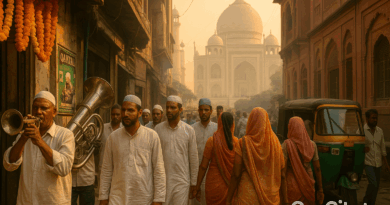
Ahmedabad wears its culture on the street—garba beats in Navrangpura courtyards, incense trails in Kalupur’s pols (old quarters), morning shlokas near Sabarmati, and Friday qawwalis echoing around Sarkhej Roza. The city is proudly Gujarati and warmly cosmopolitan. People will guide you if you ask. Still, first-timers often fumble the simple stuff: arriving during peak aarti, keeping shoes in the wrong corner, waving phones during a flame, or blocking a procession lane. This guide is your friendly shortcut: where to go, when to arrive, what to wear, what to offer, how to ask, and how to enjoy without fuss.
🪔 Why This Culture Guide Works for Ahmedabad
Here’s the thing: Ahmedabad’s big cultural moments—Uttarayan (kite festival), the Jagannath Rathyatra, Ramzan iftar belts, and nine nights of garba—run on rhythm and respect. You need timing cues (reach by 05:45 vs avoid 18:00–20:00), small scripts (“Photo allowed hai?”), and seasonal tricks (carry socks—temple floors heat up). We’ve baked in local habits from Old City lanes—Manek Chowk, Raikhad, Shahpur, Jamalpur, Bhadra, Khadia—to newer hubs like Vastrapur, Thaltej, SG Highway, Prahladnagar, Chandkheda, Motera, and Bopal–Ghuma. Whether you’re here for a day on the Riverfront, a Sunday at Sabarmati Ashram, or a late aarti near Ellis Bridge, this playbook helps you fit right in.
🪔 Festival Calendar: What Happens When (Jan–Dec)
City Highlights Month by Month
January – Uttarayan & International Kite Festival (14–15 Jan)
Skies fill with kites from dawn. Pol rooftops in Kalupur and Khadia are legendary; the Sabarmati Riverfront hosts formal events. Expect manjha (glass-coated string)—walk mindfully, sleeves down. Morning darshan runs lighter because everyone’s on terraces. Evenings see community aartis and prasad sharing.
February–March – Maha Shivratri, Holi/Dhuleti
Shivratri lines form early at neighborhood mandirs; carry a small bilva patra pack and water-resistant bag. Holika Dahan (evening bonfire) is community-led; Dhuleti color play follows—prefer herbal gulal, protect phones.
March–April – Ram Navami, Mahavir Jayanti, Good Friday–Easter
Temples in Paldi, Maninagar, and Navrangpura run morning aartis; Jain derasars expect absolute cleanliness—no leather items, please. Churches in Khanpur and Ashram Road belts have quiet, disciplined Good Friday services; dress soberly.
Ramzan (shifts yearly by lunar calendar)
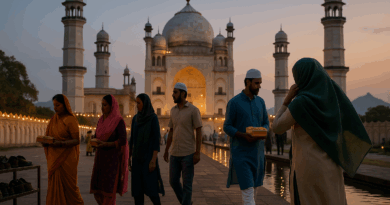
Old City belts—Jamalpur, Shahpur, Relief Road—glow post-iftar. Respect prayer times (maghrib, isha, taraweeh). Ask discreetly before photographing food stalls. Late dinners in Manek Chowk can be lively—mind the queues and keep it tidy.
June/July – Jagannath Rathyatra (Ashadh)
A big day in Ahmedabad. The chariots roll early from the Jagannath Temple (Jamallpur area); processions pass through Old City with tight security. Avoid two-wheelers on the route; use the metro/feeder autos from Ashram Road or Shahibaug sides. Keep water and a cap; no climbing on barriers.
August – Shravan Mondays, Paryushan/Das Lakshan
Shravan Mondays mean fasts, milk/oil offerings at Shiva temples. During Jain Paryushan, be mindful of food choices near derasars; many families observe satvik menus. Speak softly inside shrines; phones on silent.
September–October – Ganesh Visarjan, Navratri, Eid Milad-un-Nabi
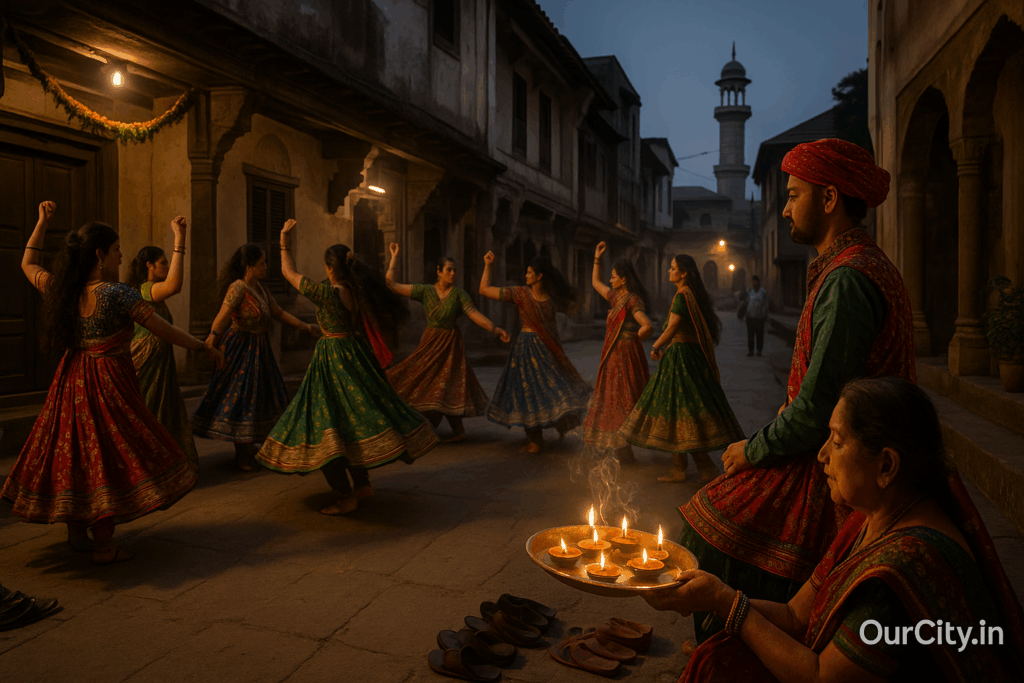
Ganesh visarjan processions head for lakesides and Riverfront ghats—stand beyond barricades. Navratri is peak Amdavadi energy: garba at local societies across Vastrapur, Prahladnagar, Ghatlodia, Thaltej; public grounds in Law Garden and University area buzz till late. Carry a light dupatta or stole; sneakers or mojris work better than heels. During Eid Milad-un-Nabi, respect processions and detours near Sarkhej, Shah Alam, and Old City.
October–November – Sharad Purnima, Diwali & New Year (Bestu Varas), Chhath Puja
Sharad Purnima nights can feature kheer offerings and moon-viewing in society courtyards. Diwali diya rows in pols are beautiful—don’t block doorsteps. Bestu Varas (Gujarati New Year) temple lines form from early morning. Chhath at Sabarmati ghats is serene—maintain distance from the waterline; no loud music.
December – Kankaria Carnival, Christmas & Midnight Mass
Kankaria Carnival brings performances and crafts; evenings get crowded—arrive by 17:00 for a gentle entry. Midnight mass needs modest dress; carry a shawl, winter nights feel sharp (10–12 °C).
Locals say: “Reach before sunrise; the ghat feels gentler.”
Where to Go & When to Arrive (Time Cues)
-
Morning aarti: pre-dawn to ~07:30; arrive by 05:45–06:15 for calm darshan.
-
Evening aarti: post-sunset; avoid 18:00–20:00 surges at popular temples (Kalupur, SG Highway belts).
-
Friday congregational prayers: expect traffic detours near Jama Masjid/Sarkhej Roza areas around 12:30–14:30.
-
Navratri garba: family-friendly windows 20:00–22:00; youth-heavy sets 22:30–01:00.
-
Kite festival: rooftops fill 07:00–11:00 and 15:30–18:30; carry a cap, sunglasses, small first-aid (plaster for finger nicks).
Family-, Senior-, and Child-Friendly Tips
-
Prefer edge seating near barricades; keep a fixed meeting point (e.g., “left of the main gate, under the peepal”).
-
Write a contact number on paper in the child’s pocket; keep a recent photo on your phone.
-
For elders: pick quieter slots (weekday mornings), use metro + short auto for last mile (Ashram Road → Bhadra; Vastrapur → Law Garden).
-
Carry socks (hot marble), refillable bottle, and a folding scarf for head cover.
🪔 Sacred Spaces Etiquette (Temples • Gurdwaras • Dargahs/Mosques • Churches • Ghats)
Ahmedabad holds many traditions close together—Swaminarayan mandirs in Kalupur and Shahibaug belts, ISKCON near SG Highway, neighborhood derasars in Paldi and Ambawadi, gurdwaras around Thaltej/Ellis Bridge corridors, Sufi complexes like Sarkhej Roza, and historic mosques in the Old City. A few simple habits keep you welcome everywhere.
What to Wear & Carry
-
Dress: cover shoulders and knees. Light cottons for heat; add a shawl/stole for head cover where needed.
-
Footwear: easy-to-remove sandals; use the shoe rack (joda ghar at gurdwaras).
-
Carry: small scarf/dupatta, socks, wet wipes, compact cloth bag for offerings, phone on silent.
Offerings/Prasad/Chadar: Ranges & Rules
-
Typical offerings (₹ ranges):
-
Flowers: ₹20–100 (buy near entrances; avoid plastic).
-
Prasad: ₹20–60 (laddoo/bataka poha/boondi; follow venue norms).
-
Chadar at dargahs: ₹200–600 (fold respectfully; don’t drag on ground).
-
Oil/ghee packs: ₹50–200 (for lamps/abhishek, where allowed).
-
Candles at churches: ₹10–30.
-
-
Daan/Hundi: give with the right hand, keep small notes ready. Many sites have UPI QR or donation boxes—use discreetly.
-
Prasad handling: receive in the right hand or cupped hands; don’t waste—share politely.
Photography & Phone Etiquette
-
Ask before clicking—especially during aarti, namaz, bhajan, langar, private prayer.
-
No flash, no drones in sacred zones.
-
Keep phones on silent; if told “no photos,” smile and comply.
Ask Politely (Ready Scripts)
-
“Photography allowed hai?”
-
“Queue kahan se shuru hoti hai?”
-
“Darshan token yahin milta hai?”
-
“Head cover kahaan milega?” (gurdwara/dargah)
Gujarati helps too:
-
“Ahiya photo levi chale? (અહીં ફોટો લેવાં ચાલે?)”
-
“Line kya thi chale chhe? (લાઇન ક્યાંથી ચાલે છે?)”
-
“Darshan token ahiya male chhe? (દર્શન ટોકન અહીં મળે છે?)”
-
“Mare mathu dhakavu chhe—rumal kya male? (મારે માથું ઢાંકવું છે—રૂમાલ ક્યાં મળે?)”
Tradition-wise Notes
-
Temples: Don’t step on thresholds; don’t touch idols. During aarti, stand steady; don’t raise phones over heads. Some have token/queue systems—follow signboards or ask volunteers.
-
Gurdwaras: Cover head (scarves usually available), wash hands, leave shoes in jora ghar, sit in pangat for langar, accept karah prasad with both hands; take only what you can finish. Seva options: serving, cleaning, shoe-rack help.
-
Dargahs/Mosques: Head cover is respectful; women’s and men’s areas may be separate. Offer chadar/attar/flowers where appropriate. For namaz, stay to the sides and avoid walking in front of those praying. Qawwali evenings are soulful—clap softly, keep aisles clear.
-
Churches: Enter quietly, keep modest dress, follow kneel/stand cues by observing the congregation. Sunday morning masses are common; check noticeboards for timings.
-
Ghats/Cremation grounds: Maintain silence, keep distance from ongoing rites, no photography. Use designated donation boxes if you wish to contribute to upkeep.
🪔 Processions, Melas & Community Events
Safe Viewing Spots & Exit Plans
-
Stand along edges, not at turning points where chariots or tazias pivot.
-
Keep exits visible; avoid blocking dancers/drummers.
-
Choose Riverfront stretches or wider junctions along Ashram Road for better dispersal after large gatherings.
-
For children/elders, pick spots near police posts or volunteer kiosks.
Transport Diversions & Crowd Windows
-
On major days (Rathyatra, visarjan, large garbas), expect diversions in Old City arcs (Kalupur–Bhadra–Jamalpur) and towards Sarkhej.
-
Easiest combo: metro + short auto for first/last mile. Keep small change (₹10–50) + UPI ready; confirm drop point with “Bhadra gate se pehle chhod dena.”
-
Crowd windows to avoid: 18:00–20:00 at popular shrines; 22:00–24:00 during headline garbas.
-
Post-event, prefer app cabs from Ashram Road, CG Road, or SG Highway pickup pockets.
If You Get Separated (Meet-up Scripts)
-
“Hum left gate ke peepal ke paas milte hain.”
-
“Main police help desk ke paas wait kar raha/rahi hoon.”
-
For a child: teach “Mera naam __ hai; main yahan kho gaya/gayi hoon.” and to approach uniformed staff.
Locals say: “Don’t chase the front—watch from the side and you’ll see more.”
🪔 Seva, Daan & Doing Your Bit
Simple Ways to Volunteer
-
Shoe-rack management at temples/derasars.
-
Langar service at gurdwaras—ask “Langar kahaan serve ho raha hai? Main seva kar sakta/sakti hoon?”
-
Queue guidance near aarti zones (follow volunteer leads).
-
Post-event cleanups along Riverfront, Kankaria, Law Garden—carry gloves; segregate waste.
Hygiene & Clean-up Etiquette
-
Eco-friendly offerings (loose flowers, banana leaves over plastic).
-
Use designated bins; don’t throw coins/flowers into water bodies.
-
Keep sanitizer; wash hands before prasad/langar.
Digital UPI vs Cash (When & How)
-
Most shrines have UPI boxes; scan quietly.
-
Keep ₹10–₹50 notes for quick-flow donation bowls or shoe-keeping tips.
-
Don’t flaunt cash; give discreetly.
🪔 Arts, Crafts, Music & Dance of Ahmedabad
What to See Live (Rehearsals, Sabhas, Baithaks)
-
Garba & Raas practice in housing societies across Navrangpura, Vastrapur, Ghatlodia—if invited, wear comfortable ethnic, join the circle from the outer ring, mirror steps.
-
Bhajan evenings at neighborhood temples; arrive before aarti to find a corner seat.
-
Sarkhej Roza often hosts thoughtful cultural programs; observe silence and respect sacred areas.
-
Riverfront stages during city festivals (Kankaria Carnival) carry folk sets and school troupes—clap, don’t crowd wings.
Ethical Souvenir Buying (Quick Tests & GI Mentions)
-
Look for hand-work signs: slight irregularities in mirror-work, tied-resist marks in bandhani, handloom selvedges.
-
Prefer co-ops and known craft stalls over nameless bulk. Ask sellers, “Hand-made chhe? (હેન્ડ-મેડ છે?)”
-
GI-tag crafts to look out for when traveling around Gujarat include Patan Patola and Kutch Ajrakh; in Ahmedabad markets (Law Garden, Manek Chowk night stalls) you’ll find versions—ask about process, time taken, and washing care.
-
Mata ni Pachedi ritual cloth painting has strong roots around Ahmedabad; buy from artisan families when possible—ask the maker to sign your piece.
Locals say: “Mirror-work looks best slightly imperfect—that’s the artisan’s touch.”
🪔 Language, Greetings & Everyday Manners
Local Phrases (Transliteration + Script)
-
Kem cho? (કેમ છો?) — How are you?
-
Majama. (મજામાં) — I’m good.
-
Jai Shri Krishna / Jay Swaminarayan — common greetings.
-
Dhanyavaad (ધન્યવાદ) — Thank you.
-
Maaf karjo (માફ કરજો) — Please excuse me.
-
Pehle tame (પહેલે તમે) — You first (polite).
Useful lines:
-
“Line kidhar ban rahi hai?”
-
“Darshan mein kitna samay lagega?”
-
“Maaf kijiye, bheed zyada hai, baad mein aata/ati hoon.”
-
“Photo allowed nahi hai to main phone band kar deta/deti hoon.”
Right-Hand Giving, Thresholds, Sacred Trees/Animals
-
Give/receive with right hand or both hands.
-
Don’t step on thresholds; pause, then step in.
-
Respect peepal, neem trees; don’t tie random threads without local sanction.
-
Don’t feed street animals inside sanctums; follow caretaker instructions outside.
What Not to Do (Short List)
-
Don’t push during aarti or raise phones above heads.
-
Don’t argue loudly near prayer leaders.
-
Don’t climb on vehicles/shrines/statues.
-
No drones in sacred or procession areas.
🪔 Attire, Comfort & Accessibility
-
Dress: airy cottons April–June; shawl in Dec nights. Covered shoulders/knees everywhere.
-
Foot comfort: floors get hot—carry socks.
-
Accessibility: many sites have steps; some newer complexes include ramps. For wheelchairs, call ahead or check the temple trust noticeboard/app.
-
Quieter slots: weekday mornings, non-festival days, post-lunch lull 13:30–15:30.
-
Children: earplugs for loud drums/speakers; keep a light snack and water.
-
Women’s safety: choose well-lit routes (CG Road, Ashram Road, SG Highway) and app cabs after 22:00; share trip.
🪔 Seasonal Playbooks (Heat • Monsoon • Winter/Smog • Peak Festive)
What Changes, What to Pack, When to Go
Summer (Apr–Jun)
-
Go pre-dawn to 08:00; carry ORS sachets.
-
Sun caps, cotton scarves; temple courts can feel 45 °C—socks help.
-
Shorter lines at post-lunch lull; avoid 12:00–16:00 outdoor queues.
Monsoon (Jun–Sep)
-
Watch for waterlogging near Old City lanes—use non-slip footwear.
-
Keep offerings in cloth + plastic cover; prefer covered pandals.
-
Rathyatra or Muharram processions—take the edge, keep a rain sheet, avoid slippery medians.
Winter/Smog (Dec–Jan)
-
Carry a warm layer for pre-dawn aarti and midnight mass.
-
Masks (N95/FFP2) help on dusty days; choose inner-courtyard seating.
Peak Festive Weeks (Navratri, Diwali)
-
Preload metro cards, plan app-cab pickup pockets (Vastrapur Lake, University area, Ashram Road).
-
Identify quiet hours: early mornings for darshan, late afternoons for crafts shopping at Law Garden.
-
With small kids, skip peak garba slots past 23:00; enjoy society garba 20:00–22:00.
Exam & Job-Hunt Season (Mar–Apr, Nov–Dec)
-
Need a calm corner to pray/study? Try mornings at Sabarmati Ashram, quieter neighborhood shrines in Paldi/ Ambawadi, or libraries near Navrangpura. Keep it brief and respectful.
🪔 Quick Cheatsheets (Tables)
Festival Months vs Typical Timings
| Festival | Usual Window | Safer Arrival Tip |
|---|---|---|
| Uttarayan | 14–15 Jan, dawn–sunset | Rooftops by 07:00; sleeves/glasses |
| Maha Shivratri | Feb/Mar, late evening–early morning | Join line by 21:00 or sunrise |
| Ramzan iftar | Lunar month, sunset | Avoid aisles during maghrib; eat after |
| Rathyatra | Jun/Jul, early morning | Reach edges by 06:00; carry water |
| Janmashtami | Aug/Sep, midnight aarti | Arrive by 21:00; exit at 00:30 calmly |
| Navratri | Sep/Oct, 20:00–01:00 | Family slot 20:00–22:00 |
| Diwali/Bestu Varas | Oct/Nov, mornings & evenings | Darshan by 06:00 or 15:00–17:00 |
| Christmas/Mass | 24–25 Dec, midnight & morning | Reach by 23:15; modest attire |
Etiquette by Place of Worship
| Site | Head Cover | Footwear | Food/Prasad | Notes |
|---|---|---|---|---|
| Temple | Optional (women may cover) | Remove at rack | Accept prasad; don’t waste | No touching idols; no flash |
| Gurdwara | Required | Remove at jora ghar | Karah prasad, langar | Sit in pangat, eat fully |
| Dargah/Mosque | Required (scarf/cap) | Remove if entering inner area | Chadar/flowers discreetly | Gendered areas; be mindful |
| Church | Not required | Keep on | Candles (₹10–30) | Silence during prayers |
| Ghats | Not applicable | Footwear okay unless directed | None | No photography of rites |
Offering/Donation Ranges (₹)
| Item | Range |
|---|---|
| Flowers | 20–100 |
| Prasad | 20–60 |
| Oil/Ghee | 50–200 |
| Chadar | 200–600 |
| Candles | 10–30 |
Quiet-Hour Windows & Crowd Surges
| Window | What to Do |
|---|---|
| 05:45–07:00 | Calm darshan, cool floors |
| 13:30–15:30 | Shorter queues, shade |
| 18:00–20:00 | Surge at aarti—avoid if possible |
| 22:30–01:00 | Garba peak—skip with kids/elders |
🪔 FAQs (Real Questions, Fast Answers)
1) Can I wear jeans to temples or churches?
Yes—if they cover knees and you add a modest top. Carry a dupatta/shawl.
2) Are phones allowed during aarti/namaz?
Keep on silent; photography often discouraged. Ask: “Photography allowed hai?”
3) How early should I reach for big processions?
By 06:00 for Rathyatra edges; 90 minutes before major visarjans.
4) Cash or UPI for donations?
Both work. Keep ₹10–₹50 notes for small bowls; use UPI for larger daan discreetly.
5) Where can I experience garba respectfully?
Housing society garbas in Navrangpura, Vastrapur, Prahladnagar, Ghatlodia are welcoming if invited. Public grounds near Law Garden/University host open events—join from the outer ring, follow the flow.
6) Is it okay to eat near prayer areas during Ramzan evenings?
Avoid during maghrib/isha inside mosques/dargahs. Street food after prayers is fine; ask stall owners for space.
7) What should I offer at a dargah?
A simple chadar (₹200–600) and flowers. Keep head covered; move slowly.
8) Can children attend midnight mass or late aarti?
Yes, if they’re warm and fed. Pick aisle seating; exit before crowds tighten.
9) Are drones allowed at processions?
No—generally restricted. City police advisories often ban them on event days.
10) Solo-female tips at night?
Use app cabs, stick to well-lit routes (CG Road, Ashram Road, SG Highway), share trip, and avoid isolated alleys of the Old City after late hours.
11) Where to buy crafts without overpaying?
Try Law Garden (evenings), curated pop-ups during Kankaria Carnival, and craft co-ops. Ask about process and washing care.
12) What’s the rule for prasad?
Accept with right/both hands, don’t waste. If you don’t eat sweets, accept a tiny portion and share politely.
13) Photography in churches and derasars?
Often restricted—especially during services/pooja. Look for signs; when unsure, ask quietly.
14) How do I volunteer?
Ask the nearest volunteer: “Main seva kar sakta/sakti hoon?” Start with shoe-rack, water distribution, or cleanup.
15) What about temporary restrictions?
On major days, sound/traffic/fireworks rules change. Check the temple trust noticeboard/app and city police/municipal advisories for live updates.
🪔 Wrap-Up: You’ll Fit Right In
Ahmedabad rewards simple courtesy—arrive a bit early, dress easy and modest, keep phones low, ask when unsure, and help where you can. From a dawn aarti in Kalupur, a reflective hour at Sabarmati, an evening stroll past Sidi Saiyyed’s jalis, to a late chai after garba in Vastrapur, the city opens up when you move with its rhythm. Bring small notes, a scarf, socks, and patience. You’ll go home with prasad in your bag, songs in your head, and—most likely—two new friends from the queue.
Locals say: “Ahmedabad has space for everyone—just keep your place in the line.”