Amritsar Culture Guide
Table of Contents
Amritsar Traditions & Culture: Show Up Right
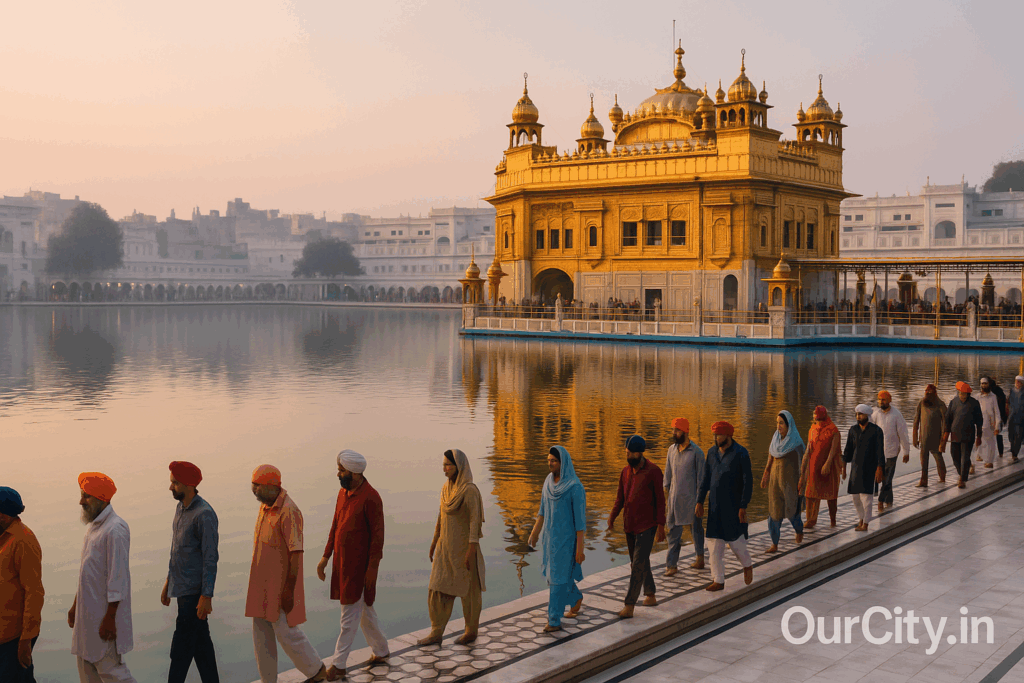
Amritsar runs on warmth. Brass parikrama gleams around a still sarovar, kirtan floats in raags before sunrise, and a hundred small courtesies keep the city’s sacred life moving without fuss. In the old lanes—Katra Ahluwalia, Guru Bazaar, Hall Bazaar, Katra Jaimal Singh—the crowd flows like a well-practised sangat. First-timers usually misread two things: timings (Amritsar wakes early) and etiquette (head cover, phone discipline, food respect). This guide fixes that—plain language, ready-made scripts, and local cues you can trust.
You’ll find month-wise festivals, how to join a procession without blocking anyone, what to carry for a winter night hukamnama, and the right way to sit in langar pangat. We’ll also name-drop neighborhoods—Ranjit Avenue, Lawrence Road, Green Avenue, Verka, Mall Road, Putlighar, Batala Road, Majitha Road, Chheharta—so you can plan routes that make sense.
Locals say: “Reach before sunrise; the sarovar feels gentler.”
🪔 Why This Culture Guide Works for Amritsar
Amritsar is both intimate and busy. The core is walkable, but big days bring lakhs. Customs are simple, yet specific: a dupatta over the head, shoes to the jora ghar, hands washed before pangat, phones down during aarti. You’ll get:
-
Clear month-by-month festival hints with “arrive by” and “avoid” windows.
-
Micro-scripts in simple Hindi/Punjabi-English so you can ask without hesitation.
-
Dress and offering basics (₹ ranges) that match what locals actually do.
-
Crowd, weather, and route notes for the old city and newer pockets like Ranjit Avenue.
-
Practical seva ideas—how to join, whom to ask, what to say.
Locals say: “Phone vaaste time hai, par flame nahi.” (There’s time for phones, not during the flame.)
🪔 Festival Calendar: What Happens When (Jan–Dec)
City Highlights Month by Month
January
-
Guru Gobind Singh Gurpurab (often late Dec/Jan): Nagar kirtans through Heritage Street near Town Hall. Expect early-morning kirtan; carry a warm layer—pre-dawn can hit single digits °C.
-
Lohri (13 Jan): Bonfires in Green Avenue, Ranjit Avenue, and inside mohallas off Lawrence Road. Offer til, revdi, groundnuts; keep kids at safe distance from sparks.
February
-
Maghi: Quiet remembrance; gurdwaras in Katra Sher Singh and Majitha Road quarters see steady sangat.
-
Basant Panchami: Yellow dupattas/safas and kite sightings in Putlighar, Chheharta. Wind is unpredictable—avoid rooftops with low parapets.
March
-
Ramzan/Ramadan (moves by lunar cycle): Khairuddin Masjid near Hall Bazaar is a focal point; iftar lanes offer sharbat and dates. Dress modestly, keep right to allow worshippers to exit.
-
Holi (if March): Not large in the core sacred zone; stick to color-free areas near Durgiana Temple and Heritage Street out of respect.
April
-
Vaisakhi (13/14 Apr): Major day in Amritsar. Gurdwaras begin pre-dawn; Nagar kirtans and gatka showcases around the walled city, Gobindgarh Fort precincts, and along the Mall Road axis. Peak surge 10:00–14:00.
-
Navratri (Chaitra): Jagrans in residential pockets like Ranjit Avenue and Majitha Road; Durgiana Temple sees extra aartis.
May
-
Guru Arjan Dev Shaheedi Diwas: Chabeel (sweetened rose water) stalls across city—Verka corner points, Batala Road intersections. Accept with right hand; don’t waste.
June
-
Ganga Dussehra/Jyeshtha rituals: Quiet in Amritsar (no river), but local temples near Hathi Gate may have short pujas.
-
Heat builds (40+ °C possible). Plan first slots and carry socks for hot marble.
July–August (Monsoon)
-
Muharram (lunar): Tazia processions follow marked routes—respect barricades, avoid tight lanes like those off Katra Ahluwalia during peak.
-
Rakhsha Bandhan/Janmashtami: Durgiana Temple illuminated; lines grow after 18:00—aim for late afternoon.
September–October
-
Navratri (Ashwin): Mata ki chowki/jagran nights in neighborhoods around Court Road and Putlighar.
-
Ramlila & Dussehra: Grounds on city fringes host effigy burnings—check municipal advisories for diversions.
October–November
-
Bandi Chhor Divas/Diwali: Golden Temple complex lights up with lamps and reflections across the sarovar; crowds peak evening to late night. Arrive by 17:00 if you want an unhurried parikrama. Masks help if there’s smoke/smog.
-
Guru Nanak Dev Gurpurab: City-wide nagar kirtans, kirtan from pre-dawn; langar service expands. Quietest darshan is very early.
December
-
Christmas: Churches on Mall Road host midnight and morning masses—dress warm, be quiet on entry.
-
New Year: Many prefer a quiet ardas at gurdwaras after 22:00; avoid unnecessary honking near sacred zones.
Locals say: “Big day? Leave home with extra 30 minutes.”
Where to Go & When to Arrive (Time Cues)
-
Pre-dawn to 07:30: First and calmest darshan window at key gurdwaras.
-
10:00–14:00: Festival surges; if you must, keep to the periphery and follow volunteers’ hand signals.
-
18:00–20:00: Daily evening swell near Heritage Street; shift to post-20:30 if you want more space.
-
Langar: Continuous at major sites; short waits mid-morning and late evening. Ask a sevadar where the current pangat is forming.
Family-, Senior-, and Child-Friendly Tips
-
Use Heritage Street’s even paving but avoid the densest center line; hug the shopfront side for slower pace.
-
For seniors, plan drop-off near Town Hall and use handrails around the sarovar. Carry a folding cane if balance is shaky.
-
Children: write a contact number on a paper in their pocket; agree a meet-up point (e.g., under the large nishan sahib near the shoe area).
🪔 Sacred Spaces Etiquette (Temples • Gurdwaras • Dargahs/Mosques • Churches • Sarovars)
Gurdwaras lead the city’s rhythm, but you’ll find temples, mosques, churches, and historic sarovars (Ramsar, Santokhsar, Bibeksar) woven into daily life. Rules are simple and kind—follow them and you’ll be welcomed like family.
What to Wear & Carry
-
Head covering is non-negotiable in gurdwaras and mosques: dupatta, patka, rumal, or a light scarf. Many sites offer free rumals at entry.
-
Shoulders and knees covered. Avoid shorts and sleeveless tops inside sanctums.
-
Footwear off at the jora ghar; keep socks handy for hot or cold floors. Wash hands and, where provided, rinse feet briefly in the shallow channel before parikrama.
-
Carry light: small cloth bag for offerings, refillable bottle (use designated taps), handkerchief, wet wipes.
-
No tobacco/alcohol in sacred precincts; don’t carry lighters into strict zones.
Offerings/Prasad/Chadar: Ranges & Rules
Realistic ranges in Amritsar (as of this year):
-
Flowers: ₹20–100 (simple marigold to mixed garlands).
-
Karah prasad (temples): ₹20–60 per portion; don’t refuse—receive with both hands, taste a pinch first, share; finish respectfully.
-
Chadar for dargahs: ₹200–600 depending on fabric; fold neatly, keep off the ground, hand over with both hands.
-
Oil/ghee lamps (temples): ₹50–200 packs.
-
Candles: ₹10–30 near church stalls.
-
Hundi/daan: give with the right hand, quietly; UPI boxes are common. Keep small notes for quick flow.
Seva ideas: shoe-rack help, water service (chabeel in summer), langar pangat line management, wiping steps, post-event cleanup.
Photography & Phone Etiquette
-
Ask first: “Photography allowed hai?” If unsure, don’t click.
-
No flash in sanctums, no phones during aarti/hukamnama/ardaas—lower your gaze and be still.
-
Avoid faces during sensitive rites; never photograph ash immersion, prarthana, or private mourning.
-
Drones are a no near sacred zones and processions—respect police/municipal notices.
Ask Politely (Ready Scripts)
-
“Queue kahan se shuru hoti hai?” (Where does the line start?)
-
“Darshan token yahin milta hai?” (Is the token issued here?)
-
“Photography allowed hai?”
-
“Head cover kahaan milega?” (Where can I get a head cover?)
-
“Langar kahaan serve ho raha hai? Main seva kar sakta/sakti hoon?” (Where is langar being served? I can volunteer.)
-
“Maaf kijiye, agar photo allowed nahi hai to main phone band kar deta/deti hoon.”
Churches (Mall Road, Cantonment): enter quietly, follow sit/stand cues, skip clicking during hymn/prayer.
Mosques & dargahs (Hall Bazaar area and inner lanes): head cover, remove shoes well before prayer hall, keep to visitor sections during namaz.
Locals say: “Jo milta hai, pehle shukar—phir share.” (Whatever you receive, first gratitude—then share.)
🪔 Processions, Melas & Community Events
Amritsar’s processions—nagar kirtan, tazia, shobha yatra, Ramlila routes—thread through narrow lanes. Courtesy keeps them safe.
Safe Viewing Spots & Exit Plans
-
Prefer edges near barricades, not corners where flow pinches.
-
Keep exits clear—no standing on steps or platform edges.
-
Don’t climb on parked vehicles, railings, or statues for a better view.
-
Pick a landmark meet-up (e.g., Town Hall clock, Gobindgarh Fort gate, Lawrence Road fountain).
Transport Diversions & Crowd Windows
-
On big days, certain walled-city gates (Hathi Gate, Lohgarh Gate) and Heritage Street go pedestrian-only.
-
Short hops: cycle rickshaw ₹30–60, e-rickshaw ₹20–40 within the core.
-
Auto from Ranjit Avenue to the old city: ₹150–250 depending on time and traffic.
-
Avoid 18:00–20:00 near Heritage Street; prefer post-20:30 or pre-09:00 for a gentle walk.
If You Get Separated (Meet-up Scripts)
-
“Main Town Hall ke saamne ruk raha/rahi hoon.” (I’m waiting outside Town Hall.)
-
“Aap Heritage Street ke right-side shops ki line pakdo; main wahan milta/milti hoon.”
-
Teach children to say: “Mujhe madad chahiye; yeh mera number hai.”
🪔 Seva, Daan & Doing Your Bit
Simple Ways to Volunteer
-
Pangat service: Offer rotis, dal, or water; sit only when asked; keep the line moving.
-
Shoe-rack duty: Pair shoes neatly; guide elders to sitting spots.
-
Clean-up: Join the post-aarti sweep—hand gloves may be provided; if not, ask.
-
Queue guidance: A kind word—“Line yahan se hai, aram se aaiye”—helps more than shouting.
Hygiene & Clean-up Etiquette
-
Wash hands before seva; tie hair back; keep sleeves close.
-
In langar, don’t waste food; ask for small portions, “thoda sa dena.”
-
Use designated bins; never throw flowers or coins into the sarovar—hand them to a sevadar for proper disposal.
Digital UPI vs Cash (When & How)
-
UPI boxes near donation desks speed things up; take a screenshot of your confirmation if you need it for records.
-
For small stalls (garlands, candles), keep ₹10–₹50 notes to avoid blocking with QR confusion.
-
Give with the right hand, discreetly. No flaunting amounts.
Locals say: “Seva shor se nahi, shist se.” (Seva needs grace, not noise.)
🪔 Arts, Crafts, Music & Dance of Amritsar
What to See Live (Rehearsals, Sabhas, Baithaks)
-
Kirtan at dawn and dusk in major gurdwaras—stand still, listen.
-
Gatka displays often pop up around Vaisakhi; look around Gobindgarh Fort and open maidans off Batala Road.
-
Folk: Bhangra and giddha rehearsals sometimes happen in community halls around Putlighar or Majitha Road—ask politely before watching.
-
Sarovar evenings: Sit quietly along the parikrama and let the shabad carry you. It’s the city’s finest “baithak.”
Ethical Souvenir Buying (Quick Tests & GI Mentions)
-
Phulkari (GI-tagged in Punjab): Hand-embroidered pieces show slightly uneven stitch backs; machine work looks too uniform. Expect ₹800–₹3,000+ for dupattas depending on work.
-
Punjabi jutti: Leather should feel supple; stitching tight; ₹400–₹1,500 for solid daily wear.
-
Kadas & steelwork (Guru Bazaar lanes): Ask weight and grade; avoid overly shiny plated pieces.
-
Brass/copper utensils: Real metal feels cool and gains patina; ₹300–₹1,500 for small kalash/lotas.
Locals say: “Nazaakat se lo, nazaakat se pehno.” (Buy with care, wear with care.)
🪔 Language, Greetings & Everyday Manners
Local Phrases (Transliteration + Script)
-
Sat Sri Akal (ਸਤਿ ਸ੍ਰੀ ਅਕਾਲ): Everyday respectful greeting.
-
Formal Sikh greeting: “Waheguru ji ka Khalsa, Waheguru ji ki Fateh” (ਵਾਹਿਗੁਰੂ ਜੀ ਕਾ ਖਾਲਸਾ, ਵਾਹਿਗੁਰੂ ਜੀ ਕੀ ਫਤਹਿ).
-
Namaste (नमस्ते / ਨਮਸਤੇ) works across spaces; Adaab (اداب) in Muslim settings.
-
Polite lines:
-
“Dhanyavaad/Thank you, main line mein hoon.”
-
“Maaf kijiye, bheed zyada hai; baad mein aata/ati hoon.”
-
“Zara side denge?” (Please give way?) with a smile.
-
Right-Hand Giving, Thresholds, Sacred Trees/Animals
-
Use the right hand to give/receive prasad or donations.
-
Don’t step on thresholds of sanctums; pause, touch lightly with right hand to heart if that’s your practice.
-
Be mindful of sacred trees (peepal, neem) and animals; don’t feed monkeys or stray cattle inside tight lanes.
What Not to Do (Short List)
-
No smoking, no chewing tobacco, no alcohol near sacred areas.
-
Don’t wear revealing clothing in sanctums.
-
Don’t raise your phone over people’s heads during aarti.
-
No loud arguments near prayer leaders; step away if you need to take a call.
Locals say: “Halka bolo, zyada suno.” (Speak softly, listen more.)
🪔 Seasonal Playbooks (Heat • Monsoon • Winter/Smog • Peak Festive)
What Changes, What to Pack, When to Go
Summer (Apr–Jun)
-
Plan earliest slots. Carry ORS, keep a scarf/socks for hot marble. Use shaded corridors along Heritage Street.
-
Use cotton suits/kurtas; avoid heavy synthetic dupattas—they trap heat.
-
Chabeel stalls are common; take small sips, say “Dhanvaad.”
Monsoon (Jul–Sep)
-
Non-slip footwear, plastic covers for offerings, and a light rain layer.
-
Waterlogging can hit pockets off Hall Bazaar; stick to raised edges and watch for slippery mosaic near sarovars.
-
Prefer covered pandals; avoid pressing into the center of a crowd under umbrellas.
Winter/Smog (Nov–Jan)
-
N95/FFP2 mask helps when smoke increases (Diwali, cold weather).
-
Pre-dawn darshan needs a shawl/wool cap; gloves if you feel the marble chill.
-
Fog can slow roads on Tarn Taran Road and Batala Road in early morning—add buffer.
Peak Festive Weeks
-
Recharge metro cards or keep app-cab credits set; share ride details.
-
Identify quiet hours (pre-07:30, post-20:30).
-
Don’t bring very small kids to the tightest moments—choose a calmer slot and watch processions from edges.
Exam & Job-Hunt Season
-
Need calm? Sit by the outer parikrama edges, or visit smaller gurdwaras in Chheharta or Verka mid-mornings. Libraries off Mall Road often allow quiet study before evening crowds.
🪔 Quick Cheatsheets (Tables)
Festival Months vs Typical Timings
| Festival/Occasion | Typical Months | Calmer Window | Crowd Surge Window |
|---|---|---|---|
| Vaisakhi | April | 05:00–08:00 | 10:00–14:00 |
| Bandi Chhor Divas/Diwali | Oct–Nov | 16:00–18:00, post-21:00 | 18:00–21:00 |
| Guru Nanak Gurpurab | Nov | pre-07:00 | 08:00–12:00 |
| Eid (ul-Fitr/ul-Adha) | Lunar | Post-namaz dispersal 07:30–08:30 | Namaz congregation |
| Navratri (Chaitra/Ashwin) | Mar–Apr, Sep–Oct | 15:00–17:00 | 18:00–21:00 |
| Muharram | Lunar | Early afternoon | Evening processions |
| Christmas | Dec | Morning mass | Midnight mass |
Always check the official noticeboard/app at the venue for live timings.
Etiquette by Place of Worship
| Place | Head Cover | Footwear | Offerings | Phone |
|---|---|---|---|---|
| Gurdwara | Mandatory | Off at jora ghar | Karah prasad, daan | Silent; no calls; no photos in sanctum |
| Temple | Respectful (scarf helpful) | Off before steps | Flowers, sweets, oil/ghee | Silent during aarti; ask before photos |
| Mosque/Dargah | Mandatory | Off before prayer area | Chadar, flowers | Silent; no photos during namaz |
| Church | Not required | Keep on unless asked | Candles, quiet prayer | Silent during hymns/sermon |
| Sarovar precincts | Mandatory in some areas | Off near parikrama | None; keep clean | Quiet; avoid faces |
Offering/Donation Ranges (₹)
| Item | Typical Range |
|---|---|
| Flowers/garland | ₹20–₹100 |
| Karah prasad portion | ₹20–₹60 |
| Chadar (dargah) | ₹200–₹600 |
| Oil/ghee pack (temple) | ₹50–₹200 |
| Candles (church) | ₹10–₹30 |
| Hundi/daan (quiet giving) | Your comfort; keep small notes |
Quiet-Hour Windows & Crowd Surges
| Slot | Window | Why It Helps |
|---|---|---|
| Dawn calm | pre-07:30 | Cooler floors, shorter lines |
| Afternoon lull | 14:30–16:30 | Post-lunch dip, easier pangat seating |
| Late-evening ease | post-20:30 | Families with kids head home; space opens |
| Avoid peak | 18:00–20:00 | Shift change + working crowd + tourists |
🪔 FAQs (Real Questions, Straight Answers)
1) Do I need to cover my head everywhere?
In gurdwaras and mosques/dargahs—yes. In temples, a scarf is respectful though not always required. Churches don’t require head cover.
2) What should I wear?
Modest clothing covering shoulders and knees. Light cottons in summer; a shawl in winter pre-dawn. Easy, slip-off footwear.
3) Is langar really open to all?
Yes. Sit in pangat as equals. Accept whatever is served; finish politely. If you can, volunteer—“Main seva kar sakta/sakti hoon.”
4) Can I take photos at the Golden Temple complex?
Ask a sevadar and follow signage. No photos in sanctum, none during ardaas or while prasad is being offered. Keep phones on silent.
5) What time is the calmest darshan?
Pre-dawn to ~07:30 and late evenings post-20:30, outside major festival days.
6) Cash or UPI for donations?
Both work. UPI boxes are common; for small stalls keep ₹10–₹50 notes ready. Give quietly with the right hand.
7) What about kids and elders in crowds?
Choose edges, set a meet-up point, and avoid peak 18:00–20:00. Carry a light shawl for elders in air-cooled halls.
8) Can I wear shorts?
Avoid. Knees should be covered in sanctums; you may be turned away or asked to drape a cloth.
9) Are drones allowed?
No, not around sacred areas or processions. Follow police/municipal advisories.
10) Is late-night travel safe post-festivities?
Prefer known app cabs; share trip details. Stick to lit routes—Mall Road, Lawrence Road—and avoid isolated alleys of the inner lanes after dispersal.
11) Can non-Sikhs take karah prasad?
Yes. It’s shared with love. Receive with both hands, taste a pinch first.
12) Where can I watch processions without getting squeezed?
Edges near Town Hall, outside Gobindgarh Fort lawns, and broader stretches along the Heritage Street shopfronts.
13) What if I’m on my period—can I enter?
Follow your personal practice; most gurdwaras do not bar entry. Respect local norms and your comfort.
14) Any eco-friendly tips for offerings?
Buy small, natural flowers; avoid glitter plastic. Don’t toss anything in water—hand to a sevadar or use marked bins.
15) What if I can’t hear announcements well?
Ask a volunteer: “Announcement kya tha? Line yahan hai?” They’ll guide you.
🪔 Wrap-Up: You’ll Fit Right In
Amritsar values simple grace—cover your head, keep your phone quiet, accept prasad with thanks, and give way with a smile. Plan early slots, carry socks for the marble, and choose edges over the center of any crowd. If you’re unsure, ask—“Photography allowed hai?”, “Queue kidhar ban rahi hai?”, “Langar kahaan serve ho raha hai?” The city will answer with warmth.
One last insider tip: reach just before sunrise from the Lawrence Road side and walk Heritage Street as the lamps dim and the day’s first kirtan rises. That’s Amritsar at its softest—and it sets the tone for everything that follows.