Surat Shopping Guide
Table of Contents
Surat Markets & Shopping: Fair Prices, Real Finds
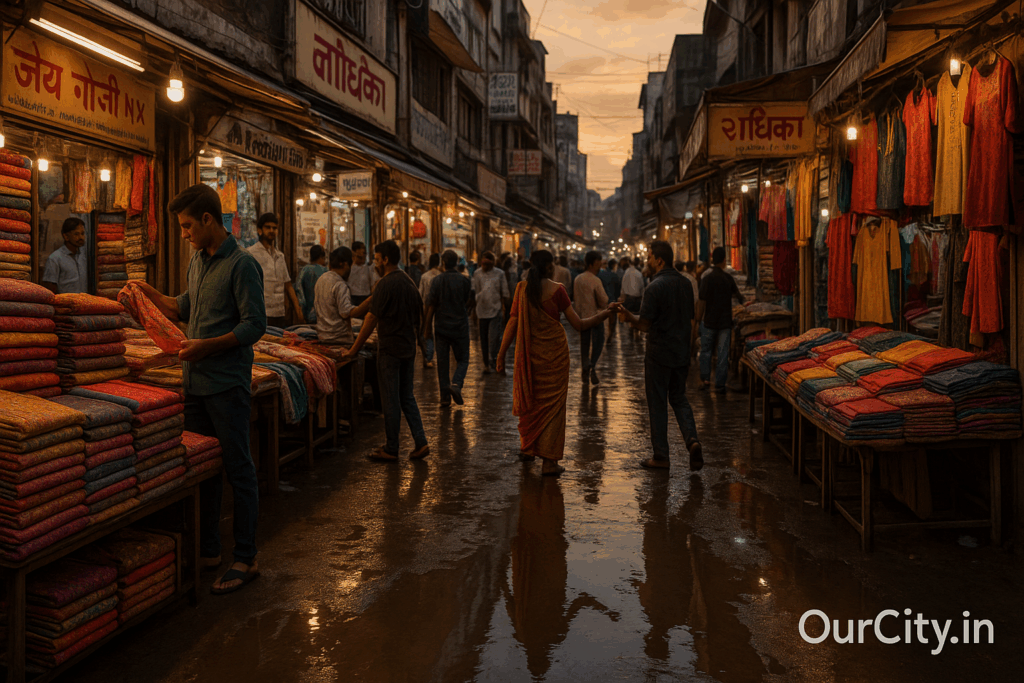
Surat is India’s powerloom engine and diamond polishing capital. On the ground, that means two things: astronomical variety and serious wholesale energy. New prints land here before they hit most city malls. Prices can be sweet—if you show up at the right time, ask the right questions, and keep your bills tidy. Many first-timers get two things wrong: they arrive late (post-lunch crowds = chaos) and they don’t ask for a proper GST bill when it matters (warranty, returns, shipping). This guide fixes both—so you shop like a local, save money, and carry home things you’ll actually use.
🧭 Why Shop Surat
What Surat is truly famous for: synthetic and blended fabrics (georgette, chiffon, crepe, satin), lace and borders (gota, zari, dabka), sarees and lehengas in every budget, dress materials, ready-to-stitch kurtis, and diamond jewellery (buy from reputed showrooms only). You’ll also find spice lanes, pooja items, home textiles (curtains, bedsheets), and accessories from hairpins to handbag chains.
How to move without fuss:
-
Reach early. 10:30–13:00 is calmest; 18:00–20:00 is peak crush near Ring Road and Athwa.
-
Carry UPI and some cash. Cash sometimes nudges a better rate on add-ons (pico, fall, lacing).
-
Ask for a GST invoice for electronics, jewellery, high-value garments, or if you plan shipping.
-
Keep your phone charged; verify UPI merchant name before paying.
-
Monsoon plan: prefer indoor textile markets (Ring Road belts), avoid suede/leather outdoors.
Locals say: “Trial room mil jaye to pehle wahan jao—warna evening mein line banegi.”
Neighborhood name-drops you’ll see in this guide: Ring Road, Salabatpura, Umarwada (Bombay Market), Udhna, Sachin, Pandesara, Katargam, Varachha, Gopipura, Chowk/Chauta Bazaar, Nanpura, Athwa Gate/Athwalines, Bhagal, Adajan, City Light, Vesu, Parle Point, Ghod Dod Road, Mahidharpura, Muglisara, Rander.
🗺 Market Map in Words
The Big 5–9 Areas
1) Ring Road Textile Belt (Salabatpura–Surat Textile Market cluster)
Best for: sarees, dress materials, laces, dupattas, fabric by metre.
Vibe: wholesale-first, fast-talking, sample swatch heaven.
Weekly off: mostly Sunday (varies shop-to-shop; some shut early Saturday).
Best hours: 10:30–13:00 for browsing; 15:30–17:30 for billing/alterations.
2) Bombay Market, Umarwada
Best for: budget lehengas, semi-stitched sets, kids ethnic, festive borders.
Vibe: value hunting, narrow lanes, seasonal surges before Navratri and Diwali.
Weekly off: generally Sunday.
Best hours: 11:00–14:00; avoid after 18:00 on weekends.
3) Katargam & Pandesara Powerloom Clusters
Best for: bulk fabric (art-silk, chiffon, georgette), plain + printed rolls.
Vibe: mills and godowns; B2B heavy, some retailers entertain small buyers.
Weekly off: Sunday typical.
Best hours: 10:00–12:30 (owners on floor; easier to get accurate stock info).
4) Varachha & Mahidharpura Jewellery Axis
Best for: gold & diamond jewellery at reputed showrooms, silver anklets/toe rings.
Vibe: serious buying, bright lighting, certification talk.
Weekly off: varies; many open all 7 days, shorter hours on Sunday.
Best hours: 12:00–16:00 on weekdays for attentive service.
5) Chowk / Chauta Bazaar (Old City: Gopipura–Muglisara)
Best for: pooja items, utensils, spices, imitation jewellery, craft knick-knacks, kites pre-Uttarayan.
Vibe: heritage lanes, footpath finds, festival pop-ups.
Weekly off: many shops Sunday; some close Monday afternoon.
Best hours: 10:30–13:00; shade helps in summer.
6) Athwa Gate / Nanpura / Bhagal
Best for: readymade apparel, tailoring notions, some electronics & homeware.
Vibe: mix of old-school stores and newer boutiques; easier parking than old city.
Weekly off: mixed; many open daily.
Best hours: 11:00–15:00.
7) Ghod Dod Road – City Light – Parle Point – Vesu
Best for: boutiques, branded sarees, designer blouses, curated accessories.
Vibe: comfortable trial rooms, card/UPI friendly, newer collections.
Weekly off: mostly open daily; individual boutiques may pick a weekday off.
Best hours: 12:00–16:00 (parking easier), or 19:00–20:00 for try-and-buy.
8) Adajan & Rander
Best for: neighborhood fashion, kidswear, silver, seasonal fairs.
Vibe: family shopping, evening bustle.
Weekly off: mixed; check signage.
Best hours: 17:00–20:00 (post-work crowd, but lively and fun).
9) Udhna–Sachin Industrial Side
Best for: bulk orders, accessories by carton (zari rolls, thread, elastics).
Vibe: trader-to-trader; some counters sell to retail if you’re polite and patient.
Weekly off: Sunday typical.
Best hours: 10:00–12:00.
How Crowds Flow by Time/Day
-
Weekday mornings (10:30–12:00): calm browsing, best for fabric checks.
-
Lunchtime (13:00–15:00): shutters half-down in some wholesale pockets.
-
Evenings (17:30–20:00): peak crush near Ring Road, Athwa, City Light.
-
Weekends: Saturday evening feels like a mela; Sunday many wholesale shutters down.
🛒 What to Buy & Price Bands
City-Special Buys (₹ ranges)
(₹ = street | ₹₹ = budget stores | ₹₹₹ = boutique/branded)
-
Sarees (synthetic, printed, party-wear):
₹350–1,200 (₹) | ₹1,200–3,500 (₹₹) | ₹4,000–15,000+ (₹₹₹)
Tip: Check pallu/pleat finishing and blouse piece length. -
Lehenga (semi-stitched):
₹1,800–7,000 (₹/₹₹) | ₹8,000–28,000+ (₹₹₹)
Tip: Ask “cancan included?” and confirm lining quality. -
Dress Material (per metre):
Georgette/Chiffon: ₹90–250 (₹) | ₹250–600 (₹₹) | ₹700–1,200 (₹₹₹)
Tip: Hold to light; check weave consistency. -
Kurtis (ready-to-wear):
₹250–900 (₹) | ₹900–2,200 (₹₹/₹₹₹)
Tip: Confirm shrinkage notes; read wash-care. -
Zari/Gota/Lace Borders (per metre):
₹12–60 (₹) | ₹80–220 (₹₹) | ₹250–600 (₹₹₹)
Tip: Lightly tug at embroidery ends; check for loose glue. -
Dupattas (art-silk/net/embroidered):
₹150–800 (₹) | ₹800–2,000 (₹₹₹ for heavy work)
Tip: Inspect sequin stitching; avoid pieces shedding glitter. -
Home Textiles (curtains per metre / bedsheets per piece):
Curtains: ₹140–450 (₹) | ₹450–1,000 (₹₹₹)
Bedsheets: ₹350–900 (₹) | ₹900–2,000 (₹₹₹) -
Jewellery (imitation/fashion):
Earrings/sets: ₹80–600 (₹) | ₹700–2,000 (₹₹)
Tip: Check clasp quality; do the “wobble test.” -
Silver anklets: weight-priced + making; budget ₹800–3,000+ depending on weight/design.
Tip: Look for proper purity stamp; buy from reputed jewellers. -
Spices (whole):
₹450–1,200/kg (quality & season).
Tip: Prefer whole over powder; aroma should be clean, not dusty. -
Kites & Manjha (pre-Uttarayan):
₹150–600 per bundle (quality varies); buy early January.
What Not to Buy Here (or When to Skip)
-
Very fragile mirror-work during peak crush (evenings/weekends). It will snag.
-
Suede/leather in monsoon months (June–Sep). If you must, choose sealed packaging and ask for moisture protection.
-
“Pure zari” claims at throwaway rates. If it sounds unreal, it likely is.
-
Open-box electronics without brand warranty. Surat is great for fabrics, not for no-bill gadgets.
🤝 Bargaining Scripts & Payment Norms
Discount Ranges & Fixed-Price Zones
-
Textile streets & accessory lanes: 10–20% if you’re picking multiple pieces.
-
Touristy souvenir belts/footpaths: up to 25–30% possible.
-
Wholesale counters (single piece): little to no bargaining; ask for “retail price.”
-
Reputed jewellery showrooms & cooperatives: fixed or very slim negotiation; focus on certification, making charges, and buyback policies.
Scripts (English / Hindi / Gujarati)
English:
-
“Bhaiya, best price please—cash/UPI okay, and I need basic packing.”
-
“Price thoda less? I’m taking 2 pieces.”
-
“Is this fixed-price? You’ll give a bill, right?”
Hindi:
-
“भैया, best price bolo, cash/UPI करूँगा/करूँगी, packing भी चाहिए।”
-
“थोड़ा कम कीजिए, 2 पीस ले रहा/रही हूँ।”
-
“फिक्स्ड-प्राइस है क्या? GST बिल देंगे न?”
Gujarati (script + simple transliteration):
-
“ભાઈ, સચો ભાવ આપો. કેશ/યુપીઆઈ કરું છું. પેકિંગ આપજો.”
(Bhāī, sacho bhāv āpo. Cash/UPI karũ chũ. Packing āpjo.) -
“ભાવ થોડો ઓછો કરો, બે પીસ લઈશ.”
(Bhāv thoḍo ochcho karo, be piece laīś.) -
“ફિક્સ પ્રાઇસ છે? બિલ મળશે ને?”
(Fix price chhe? Bill maḷśe ne?)
Polite refusals (to exit a pushy stall):
-
“Nahi chahiye, bas dekh rahe the.”
-
“Already bought, thank you.”
-
Gujarati: “હવે ન લેવું, ધન્યવાદ.” (Have na levũ, dhanyavād.)
Cash vs UPI, GST Bills & Receipts
-
Cash: Sometimes wins you ₹10–₹30 off per metre on trims or a small add-on (free pico). Don’t push if store says no.
-
UPI: Very common. Verify merchant name on the app before paying. If name mismatches board, ask: “Name different dikh raha hai—owner ka naam?”
-
Split bill tip: “Gift separate bill bana dijiye; personal billing alag.” Helps with warranty/gifting.
-
GST invoice: Ask when buying jewellery, electronics, or anything with warranty/return. A simple cash memo is fine for small accessories, but make sure the shop name and date are clear.
🧪 Quick Quality Checks
Textiles/Handloom
-
Hold fabric to light: uniform weave? No thin patches?
-
Rub a damp white cloth on a hidden corner: if colour bleeds, skip.
-
Printed sarees: align motifs at pallu and border; misprints show at folds.
-
Care labels: if missing, ask wash instructions on bill.
Zari/Silk Blends
-
Check for a polyester sheen on “silk” at very low price—likely a blend.
-
Light thread-pull test on inner seam; weak embroidery comes off quickly.
-
Borders/laces: flip to see backing; good ones have neat finish, not clumpy glue.
Jewellery/Metals
-
Imitation: clasp strength, stone wobble, even plating.
-
Silver/Gold: look for BIS hallmark (gold) and purity marks (silver). For diamonds, prefer reputed showrooms; ask about GIA/IGI certificates on high-value buys. Avoid alley “deals.”
Leather/Footwear
-
Even stitching, finished edges, no glue stains.
-
In monsoon, choose sealed boxes; request moisture-proof packing.
Spices/Tea/Coffee
-
Buy whole; grind at home.
-
Aroma should be strong and clean, not dusty.
-
Tea: open a sample; leaf shape consistent? Too many stems = lower grade.
Electronics/Books/Homeware
-
Electronics: sealed box, IMEI/serial matches the bill, brand warranty mentioned.
-
Books: check edition/print clarity; count pages; in second-hand, haggle confidently.
-
Homeware (trolleys, zips, wheels): test in store.
🕒 Best Hours, Weekly Offs & Festive Sales
Off-Day Table (indicative—check signage/app for live info)
| Area/Market | Weekly Off | Notes |
|---|---|---|
| Ring Road Textile Belt (STM, nearby markets) | Sunday (widely), some Sat half-day | Wholesale rhythms; mornings best |
| Bombay Market, Umarwada | Sunday | Gets packed pre-festivals |
| Katargam/Pandesara clusters | Sunday | Many are mills/godowns |
| Varachha–Mahidharpura jewellery | Mostly open daily | Shorter Sunday hours in some stores |
| Chowk/Chauta Bazaar (old city) | Sunday common; some Monday half-day | Narrow lanes; midday shade helps |
| Athwa/Nanpura/Bhagal | Mixed | Many family stores open daily |
| City Light/Ghod Dod/Parle Point/Vesu | Open daily (boutique-dependent) | Evenings good for trials |
| Adajan/Rander | Mixed | Evening family crowd |
City Sale Weeks & Wedding Season
-
Navratri (Sep/Oct): chaniya-choli rush; lace/zari prices climb. Shop weekday mornings.
-
Diwali–Wedding season (Oct–Feb): heavy saree/lehenga buys; tailor queues grow—place orders 2–3 weeks ahead.
-
Uttarayan (Jan): kite stalls pop up around old city lanes; buy early to avoid last-minute price spikes.
-
Summer (Apr–Jun): light, airy fabrics rule; reach by 10:30 before heat builds.
-
Monsoon (Jun–Sep): switch to indoor markets; carry a tote + zip pouches.
🧭 Getting There, Parking & Accessibility
(Surat currently runs strong bus/BRTS connectivity; local trains at Surat & Udhna. Use app cabs for last-mile.)
Metro/Bus/App-Cab Tips
-
Buses/BRTS (Sitilink): Major stops around Ring Road, Athwa Gate, Nanpura, Adajan Patiya, Udhna Darwaja. Check the city bus app or stop boards.
-
Rail: Surat Junction for old city/Ring Road; Udhna Junction closer to Umarwada–Udhna clusters.
-
App cabs/autos: Safer to board from a main road (Ring Road/Athwa Gate). For autos:
-
Hindi: “मीटर पर चलेंगे? ज़्यादा से ज़्यादा कितना?”
-
Gujarati: “મીટર પર જશો? કેટલું લેશો?” (Meter par jasho? Ketlū̄ leśo?)
-
Parking & Last-Mile
-
Ring Road/Salabatpura: SMC pay-and-park lots fill by 11:30; choose morning slots.
-
Athwa/Nanpura/City Light: Street parking in marked bays; carry small change for attendants.
-
Old city (Chauta/Gopipura): Best to park near a main artery and walk 7–10 min.
Wheelchair/Stroller Notes
-
Textile complexes often have freight lifts; ask attendants.
-
Old city lanes are narrow with steps; go early and take a helper if needed.
-
Boutiques (Ghod Dod/City Light) usually have ramps or short steps; call ahead if possible.
🧷 Alterations, Packaging & Shipping
Tailors/Repairs Near Markets (ballpark)
-
Saree fall + pico: ₹80–200 per saree (ask TAT; often same day if early).
-
Blouse stitching: ₹450–900 basic; ₹1,200–2,000 designer.
-
Lehenga cancan/lining: ₹300–700 add-on.
-
Pant hemming/zips: ₹60–180.
Script: “Bhaiya, kal tak ho jayega? Trial kab deoge? Bill pe likh dijiye.”
Packing for Monsoon/Fragile Items
-
Ask for extra plastic sleeve + paper wrap; for heavy zari, request butter paper between folds.
-
For gift sarees, request separate boxes (helps in transit).
-
Keep silica gel sachets for leather/metal items.
Courier vs India Post (basics)
-
Courier is faster but costlier for bulky fabrics; India Post reliable for labeled parcels.
-
Get invoice copy inside the parcel; write your phone number on the box.
-
Avoid “Pay now, ship later” unless dealing with a known store. If you must, write the promised dispatch date on bill.
🧾 Returns, Exchanges & Warranty Basics
What’s Typical in Bazaars
-
Exchange-only within 2–7 days is common. Fabric cuts may be no-return once altered.
-
Try garments before purchase where possible. For homeware, open and test zips, buckles, wheels in-store.
How to Document Your Purchase
-
Ensure shop name, date, item description, price on bill. For jewellery/electronics: add GSTIN, model/serial, hallmark/certification details.
-
Write “exchange valid till ___” on the bill—many counters oblige if you ask nicely.
🛡 Safety & Scam Shields
Common patterns:
-
“Best friend price” followed by a switch during packing—recheck size/colour before sealing.
-
QR swap: a different UPI QR pasted over the real one—verify merchant name on your screen.
-
“Free gift” then upsell to a pricier set—smile, refuse.
-
Short-meter lace: measure yourself; keep a small tape.
Polite one-liners:
-
“Nahi chahiye abhi, bas dekh rahe hain.”
-
Gujarati: “હાલ માટે નહિ, ફક્ત જોઈ રહ્યા છીએ.” (Hāl māṭe nahi, fakta joī rahyā chhīe.)
Night tips: stick to well-lit lanes around Athwa, Ring Road, City Light; book app cabs from main roads.
Emergencies: Dial 112 (national). For traffic/bus info, check the city’s official transport app or kiosk boards.
🌿 Sustainable & Ethical Picks
-
Support Khadi/handloom cooperatives and women-led units; fixed-price but authentic.
-
Choose durable over disposable: higher GSM bedsheets, sturdy blouse linings, repairable zips.
-
Care to extend life:
-
Handloom/sarees: air out, fold with butter paper, avoid damp cupboards.
-
Leather: condition after monsoon; keep desiccants.
-
Lacquered jewellery: store in soft pouches; avoid perfumes.
-
✅ Quick Cheatsheets (Tables)
Best Hours by Area
| Area | Best Hours | Skip Window |
|---|---|---|
| Ring Road/Salabatpura | 10:30–13:00 | 18:00–20:00 (billing queues) |
| Bombay Market, Umarwada | 11:00–14:00 | Sat 18:00–20:00 |
| Varachha–Mahidharpura | 12:00–16:00 | Sun evenings (crowds) |
| Chauta/Gopipura | 10:30–13:00 | Afternoon heat in summer |
| Athwa/Nanpura/Bhagal | 11:00–15:00 | 19:00–20:00 (parking) |
| City Light/Ghod Dod/Vesu | 12:00–16:00 | Festival weekends |
| Adajan/Rander | 17:00–20:00 | Festival peaks |
Bargaining Ranges by Category
| Category | Typical Room |
|---|---|
| Street fabrics, trims | 10–20% |
| Souvenir/footpath items | 20–30% |
| Wholesale single piece | 0–5% |
| Boutiques/co-ops | Mostly fixed |
| Jewellery (reputed) | Focus on making charges/certification |
BRTS/Bus Landmarks for Key Markets
| Market Cluster | Nearby Landmark/Stop (indicative) | Walk |
|---|---|---|
| Ring Road Textile Belt | Ring Road main stops / Salabatpura circle | 5–10 min |
| Bombay Market (Umarwada) | Udhna Darwaja side | 7–12 min |
| Varachha showrooms | Varachha main road stops | 3–8 min |
| Chauta/Chowk | Chowk/Athwa Gate approach | 8–12 min |
| Athwa/Nanpura/Bhagal | Athwa Gate / Nanpura stops | 5–10 min |
| City Light/Ghod Dod | Parle Point/Ghod Dod landmarks | 5–10 min |
| Adajan/Rander | Adajan Patiya/Rander road stops | 5–12 min |
Price Bands Snapshot
| Item | ₹ (Street) | ₹₹ (Budget) | ₹₹₹ (Boutique/Branded) |
|---|---|---|---|
| Sarees | 350–1,200 | 1,200–3,500 | 4,000–15,000+ |
| Lehenga (semi-stitched) | 1,800–5,000 | 5,000–7,000 | 8,000–28,000+ |
| Dress fabric (per m) | 90–250 | 250–600 | 700–1,200 |
| Kurti | 250–600 | 600–1,200 | 1,200–2,200 |
| Zari/Lace (per m) | 12–60 | 80–220 | 250–600 |
| Dupatta | 150–400 | 400–800 | 800–2,000 |
| Bedsheet | 350–700 | 700–1,200 | 1,200–2,000 |
❓FAQs
1) What time should I reach Ring Road?
By 10:30. You’ll browse calmly, and tailors accept same-day small jobs.
2) Are Sundays good for shopping?
Wholesale textile belts are largely shut on Sundays; boutique areas (City Light/Ghod Dod) are open.
3) Is bargaining okay in boutiques?
Usually no. Ask for seasonal discount or ask about free alterations instead.
4) UPI or cash—what gets the better deal?
Both work. Small trims/alterations sometimes shave a bit off for cash, but don’t push.
5) How do I check if zari is decent quality?
Flip it—backing should be neat, not clumpy. If “pure” at unbelievable price, it’s likely not pure.
6) Can I buy loose diamonds directly?
Surat is a B2B diamond hub. For retail, stick to reputed showrooms; ask for certification and hallmarking on gold.
7) Returns possible for fabric?
Often exchange-only within 2–7 days if uncut/unused. Get it written on the bill.
8) Where do I find kites before Uttarayan?
Old-city lanes near Chowk/Gopipura see seasonal stalls. Buy early January, mornings.
9) Are there trial rooms in wholesale markets?
Some have basic ones; boutiques on Ghod Dod/City Light have better trial rooms.
10) Monsoon plan?
Shop indoors (Ring Road complexes), wear quick-dry footwear, ask for moisture-proof packing.
11) Can I ship sarees home from the shop?
Yes—many stores help. Put an invoice copy inside, and write your number on the parcel.
12) Any student discounts?
Occasionally on accessories/footwear; carry an ID and ask politely.
13) Photography okay in stores?
Always ask first. Many wholesale counters restrict photos of designs.
14) What about tailoring time for blouses?
Basic blouse: 2–4 days off-season; festival weeks can stretch to 7–10 days. Ask for a clear promise date on the bill.
15) Auto fare hacks?
Ask for meter or fix fare first. Gujarati: “મીટર પર કે ફિક્સ? કેટલું?” (Meter par ke fix? Ketlū?)
🔚 Wrap-Up: Shop Smart, Support Local
Surat rewards early birds and polite negotiators. Respect fixed-price counters, pay fair for real handwork, and keep your paper trail clean. Carry a cloth tote, hydrate, and give yourself time for fittings. From Ring Road swatches to Varachha sparkle and Chauta spice lanes—shop thoughtfully, and your buys will last well beyond the festive season.