Coimbatore Culture Guide
Table of Contents
Coimbatore Traditions & Culture: Show Up Right
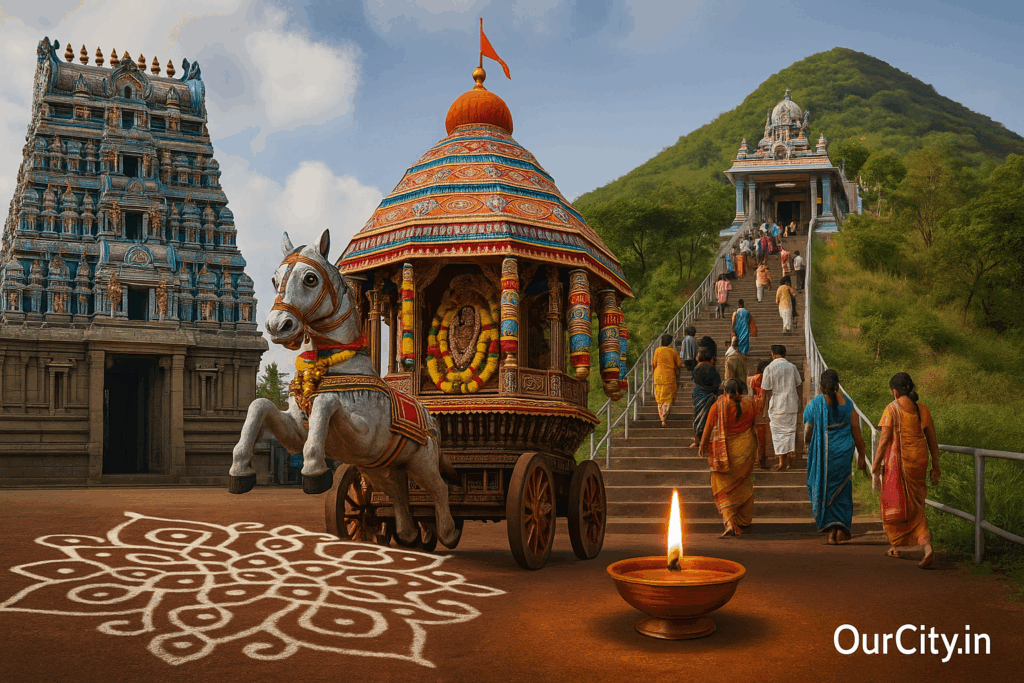
Coimbatore (Kovai) moves on ritual rhythm. Pre-dawn lamps at Perur, milk-pot paal kudam lines up Marudhamalai hill, and a city-wide smile follows the Koniamman chariot through Town Hall. Households build Navaratri golu steps, Onam pookalam blooms in Saravanampatti flats, and Christmas choirs echo along Race Course. First-timers often turn up at peak hours, forget head covers, or click photos where it isn’t okay. This guide keeps it simple—what happens when, how to ask politely, what to carry, and where to stand—so you can participate without fuss.
You’ll see places and names across the city: Perur, Town Hall–Big Bazaar Street, R.S. Puram, Gandhipuram, Ukkadam–Kottaimedu, Saibaba Colony, Vadavalli, Peelamedu, Singanallur, Ganapathy, Kovaipudur, Kalapatti, Avinashi Road, Saravanampatti, Race Course, Town Hall, Selvapuram, Tatabad, Sidhapudur, and Periyanaickenpalayam. Keep these in your mental map; they’ll pop up below.
🪔 Why This Culture Guide Works for Coimbatore
Ritual life here is steady, not showy. Queues are orderly, prasad is simple, and families often bring elders and children together. But Kovai has its crowd surges—Thaipusam (Thaipoosam) at Marudhamalai, Panguni Uthiram at Perur, and the Koniamman ther (car festival) in Town Hall. We offer:
-
Clear arrival windows (e.g., “reach by 05:45 for first aarti”).
-
Respect scripts in Tamil + Hindi/English.
-
Modest dress cues that actually work for heat and floors.
-
Quick ₹ ranges for offerings, daan, and seva.
-
Senior/child-friendly spots and exit plans.
-
Seasonal swaps for summer, monsoon, and festival peaks.
(Koniamman car festival and Perur Panguni Uthiram are cornerstone events; the Koniamman temple is widely regarded as the city’s guardian shrine, and Perur hosts Panguni Uthiram with a chariot procession.) Wikipedia+1
🪔 Festival Calendar: What Happens When (Jan–Dec)
City Highlights Month by Month
January
-
Pongal / Thai Pongal (14–17 Jan): House kolam/ரங்கோலி, paal pongal, cattle decor in peri-urban belts (Thondamuthur side). Temples start pre-dawn aarti.
-
Thai Poosam (Jan/Feb): Marudhamalai sees kavadi and paal kudam vows; hill temple open late. Arrive before sunrise or post-noon lull. The New Indian Express+1
February
-
Thaipusam spillover & local utsavs continue at hill and Subramanya shrines.
-
Kongu-region cattle fairs in the larger district attract families (weekend day trips from Gandhipuram bus nodes).
March
-
Panguni Uthiram (Mar/Apr): Perur Pateeswarar ther (chariot) and rituals; expect riverside crowds and traffic diversions near Perur–Aathupalam. Wikipedia
-
Koniamman Car Festival (early March): The city’s big day through Big Bazaar Street–Town Hall; traffic diversions around Raja Street, Chetty Street, and Ukkadam stretch; community water points and drum troupes. Reach by 14:00 for shade; avoid 16:00–19:00 surge if you’re with kids/elders. The Times of India+1
April
-
Tamil New Year (Puthandu mid-Apr): Quiet temple visits; bring small flower offerings.
-
Rama Navami programs at city shrines.
May–June
-
Church feasts: Notably St. Anthony’s (Puliyakulam) draws large gatherings; evening novenas, candle processions; bring a scarf and water. Coimbatore District
July–August (Aadi month)
-
Aadi Velli (Fridays) & Aadi Perukku: River-side prayers, amalanaidu family visits; carry socks for hot floors.
-
Varalakshmi Vratham: Heavier evening crowds at neighborhood temples in Saibaba Colony, Vadavalli.
August–September
-
Vinayaka Chaturthi: Eachanari Vinayagar is especially busy; modakam prasad queues are fast moving; late evening is calmer after 20:30. Tamil Nadu Tourism+1
-
Onam: Malayali families across Saravanampatti–Peelamedu put up pookalam; community sadhya at select halls.
-
Muharram: Processions in traditional pockets; be traffic-aware, stay to the edges.
September–October
-
Navaratri & Golu: Sabha-side music in R.S. Puram, household golu viewing (by invite). Ayudha Puja vehicle/tool pujas; avoid evening honking lines—go 15:00–17:00.
-
Milad-un-Nabi: Mosque events; watch for advisories around Kottaimedu–Ukkadam. (Athar Jamad Masjid and nearby dargahs see high footfall.) Wikipedia
November–December
-
Karthigai Deepam: Lamps at Murugan/Amman temples; carry a small matchbox if candles run out.
-
Christmas: Midnight Mass along Race Course and Kovaipudur draws families; plan rides in advance; modest dress, covered shoulders. (CSI All Souls’ Church–Race Course and Infant Jesus Shrine–Kovaipudur are well-known venues.) Wanderlog+1
Where to Go & When to Arrive (Time Cues)
-
Hill temple days (Marudhamalai): Reach 05:30–06:00 for cool air and quick darshan; or 13:00–14:30 for a trough before evening build-up. (Official timing windows vary; check the temple noticeboard/app.) Maruthamalai
-
City chariots (Koniamman/Perur): For front-row view without squeeze, pick side streets near the turn; arrive 60–90 min before the chariot reaches you. City police issue diversion notices—scan morning bulletins on event day. The Times of India
-
Major Fridays (Aadi Velli, Thai Friday): Choose 10:30–12:00 or 15:00–16:30; avoid 18:00–20:00 surge.
Family-, Senior-, and Child-Friendly Tips
-
Elders: Use temple dharmashala benches or shaded corridors near shoe-racks (Perur, Eachanari).
-
Kids: Give them a wristband or paper with a parent number tucked in pocket; teach “Naan miss aana, kovil entrance-la nikaren” (If I’m lost, I’ll wait near the temple entrance).
-
Mobility: Prefer Race Course and Gandhipuram feeder roads for cab pickup post-event; avoid pushing towards the main junction right after aarti.
🪔 Sacred Spaces Etiquette (Temples • Gurdwaras • Dargahs/Mosques • Churches • Ghats)
Temples across Perur, Marudhamalai, Eachanari, Koniamman (Town Hall) anchor city life. Major mosques and dargahs cluster near Kottaimedu–Ukkadam; churches line Race Course and Kovaipudur. When in doubt: ask softly, follow the queue, keep the phone low.
Temples (Shaiva, Shakta, Vaishnava):
-
Footwear: Use chappal racks; keep a token or photo your slot.
-
Lines: Regular vs special darshan; buy tokens only at counters; avoid middle-cutting.
-
Prasad: Receive with right hand; step aside before eating; don’t discard leaf plates near sanctum.
-
Aarti: Don’t raise phones over heads; step forward, take warmth, step aside.
(Perur Pateeswarar and Koniamman are city pillars; Marudhamalai is the hill shrine; Eachanari is a famed Vinayagar temple.) Tamil Nadu Tourism+3Wikipedia+3Wikipedia+3
Gurdwara: Cover head with scarf/handkerchief; wash hands; sit in pangat for langar and finish what you take. Offer to help in cleaning or roti service. (If you’re new, follow the volunteer’s hand signals; they’ll guide you to a spot.)
Dargahs/Mosques:
-
Head cover, modest dress, and silence near the sanctum (maqbara).
-
Use separate areas if indicated; avoid blocking prayer rows near namaz times; skip photography during prayers. (Athar Jamad Masjid near Big Bazaar Street is historically significant and linked to nearby dargahs.) Wikipedia
Churches:
-
Enter quietly; follow stand/sit cues; cover shoulders and knees; for midnight services (Race Course, Kovaipudur), pre-book rides and avoid post-service bottlenecks. (CSI All Souls’ Church and Infant Jesus Shrine are popular.) Wanderlog+1
River ghats/cremation grounds:
-
Keep distance, no photos, and speak softly; give daan discreetly if you wish; leave the area clean.
What to Wear & Carry
-
Dress: Covered shoulders/knees; light cottons; carry a small scarf/dupattā for head cover; socks for hot granite; simple jewelry only.
-
Carry: Refillable bottle, handkerchief, wet wipes, tiny cloth bag for offerings, and ₹10–₹50 notes for quick daan.
-
Monsoon: Foldable umbrella, non-slip footwear, plastic cover for flowers/camphor.
Offerings/Prasad/Chadar: Ranges & Rules
-
Flowers/garlands: ₹20–₹100 (street stalls near Perur Gate, Town Hall, Eachanari).
-
Prasad boxes / laddu/modakam: ₹20–₹60.
-
Oil/ghee packs / candles: ₹10–₹200.
-
Chadar at dargah: ₹200–₹600 (buy modest, avoid flaunting).
-
UPI vs cash: Many shrines have UPI QR or digital hundi; keep small notes for quick flow.
Photography & Phone Etiquette
-
Ask first; never shoot faces during sensitive rites.
-
No flash around aarti flames; don’t block priests/volunteers; put the phone away if told.
Ask Politely (Ready Scripts)
-
Hindi/English: “Photography allowed hai?” / “Is photography allowed?”
-
“Queue kahan se shuru hoti hai?”
-
“Darshan token yahin milta hai?”
-
“Head cover kahaan milega?”
-
Tamil (translit + script):
-
“Photo edukkalāmā?” — புகைப்படம் எடுக்கலாமா?
-
“Line eṅga ārambikkuthu?” — லைன் எங்கே ஆரம்பிக்குது?
-
“Darshan-ukku tōkan iṅge thāna?” — தர்ஷனுக்கு டோக்கன் இங்கே தானா?
-
“Talai mūdi/cover eṅga kidaikkum?” — தலை மூடி எங்கே கிடைக்கும்?
-
🪔 Processions, Melas & Community Events
Safe Viewing Spots & Exit Plans
-
Edges over center: Stand along the outer barricade near lane mouths (Town Hall side streets, Perur secondary lanes).
-
Shade logic: For March car festivals, pick east-side shade after 14:30; carry a cap for the last turn onto Big Bazaar Street.
-
Exit: Fix a meet-up point (“under the neem near the shoe-rack” / “bus stop opposite the arch”) before the event.
Transport Diversions & Crowd Windows
-
On Koniamman day, expect diversions around Chetty Street, Raja Street, Big Bazaar Street (10:00–22:00). Check morning advisories from city police; auto/OMNI drivers around Selvapuram and Ukkadam know the workarounds. The Times of India
If You Get Separated (Meet-up Scripts)
-
“Phone network slow hai—main entrance par khada/khadi hoon.”
-
“Naanga kovil gate-la nikarom; neenga anga vandhuruṅga.” (We’re waiting at the temple gate; come there.)
-
Teach kids: “Uncle/Aunty volunteer kitte sollu—‘Appa number paper-la irukku’.”
🪔 Seva, Daan & Doing Your Bit
Simple Ways to Volunteer
-
Shoe-rack help for 15–20 minutes during peak.
-
Water distribution: Buy a carton of small bottles or bring a can with paper cups; hand over to a volunteer in charge.
-
Queue guidance: Stand at turning points and signal gently; ask the gurukkal/maulana/volunteer first.
Hygiene & Clean-up Etiquette
-
Carry a small trash bag; collect camphor wrappers and flower strings after use; use municipal bins at Perur and Town Hall cul-de-sacs.
Digital UPI vs Cash (When & How)
-
Digital hundi/QR is common; still keep ₹10–₹50 for basket tips and small daan.
-
Give with the right hand, quietly; avoid counting out loud.
🪔 Arts, Crafts, Music & Dance of Coimbatore
What’s “Kovai” to buy? The city is famed for Kovai Kora (Cora) cotton sarees—a GI-tagged blend of silk and cotton with crisp drape—and for the Coimbatore Wet Grinder, also GI-tagged and arguably the city’s most practical cultural souvenir for kitchens. Ask for GI assurance at Co-optex or trusted counters in R.S. Puram/Gandhipuram. Wikipedia+1
-
Where it lives: Handloom clusters spill toward Sirumugai and the Kongu belt; in-city, look for government-linked showrooms for authenticity (prices vary by weave and zari). (Kovai Kora received GI recognition in 2014–15; Wet Grinder in 2005–06.) Wikipedia+1
-
Music & dance: Sabha circuits around R.S. Puram–Saibaba Colony host classical evenings; Perur has a tradition of classical dance festivals aligned to temple calendars (Natyanjali-style programs have been noted). Wikipedia
-
Idol workshops: Ahead of Vinayaka Chaturthi, clusters around Town Hall–Selvapuram see clay Ganesha making; buy eco-friendly, small idols and immerse responsibly.
What to See Live (Rehearsals, Sabhas, Baithaks)
-
Pre-festival rehearsals: Catch drum troupes in Gandhipuram bylanes evenings before major ther.
-
Sabha evenings: Keep an ear on local posters near R.S. Puram parks; many shows are donation-based.
Ethical Souvenir Buying (Quick Tests & GI Mentions)
-
Ask for GI mention on tags for Kovai Kora (or buy from Co-optex).
-
Handloom tells: Irregularities are normal; price reflects labor.
-
Wet grinder: Confirm ISI mark, warranty card, and service center address (Peelamedu/Avinashi Road belt has many showrooms). Wikipedia
🪔 Language, Greetings & Everyday Manners
Local Phrases (Transliteration + Script)
-
Hello: Vanakkam — வணக்கம்
-
Thank you: Nandri — நன்றி
-
Please: Dayavu seithu… — தயவு செய்து…
-
Sorry/Excuse me: Mannikkavum — மன்னிக்கவும்
-
Where is the queue starting? Line eṅga ārambikkuthu? — லைன் எங்கே ஆரம்பிக்குது?
-
Can I take a photo? Pugaippadam edukkalāmā? — புகைப்படம் எடுக்கலாமா?
Also common greetings: Namaste/Pranam, Adaab, Sat Sri Akal—use as appropriate.
Right-Hand Giving, Thresholds, Sacred Trees/Animals
-
Give/receive with right hand; don’t step on thresholds; don’t touch idols or the inner sanctum barriers. Be mindful around sacred trees (peepal/banyan) and temple cattle.
What Not to Do (Short List)
-
Don’t climb on vehicles/shrines/statues for a better view.
-
No drones near processions or sanctums.
-
Don’t argue loudly with volunteers; ask once, step aside.
🪔 Seasonal Playbooks (Heat • Monsoon • Winter/Smog • Peak Festive)
Summer (Apr–Jun):
-
Target 05:30–07:30 darshan windows; carry ORS sachets; socks for hot floors; shaded sides along Big Bazaar Street if you must wait midday.
Monsoon (Jun–Sep, also Oct showers):
-
Non-slip footwear; plastic covers for offerings; choose covered pandals; avoid standing under loose shamiana edges.
Winter/Smog (Dec–Jan):
-
Light layer for pre-dawn aarti; N95/FFP2 if you’re dust-sensitive near busy junctions.
Peak Festive Weeks (Mar chariots, Sep–Oct Navaratri):
-
Pre-load metro/bus cards (or app wallets) the previous day; book autos for post-event 21:00 pickups from quieter cross-streets (e.g., behind Race Course walking track, side lane near Sidhapudur bus stand).
Exam & Job-hunt Season:
-
Calm pockets for prayer/reading: smaller neighborhood temples at Saibaba Colony/Vadavalli, chapels near Kovaipudur, and silent corners of larger campuses (ask security politely).
🪔 Quick Cheatsheets (Tables)
Festival Months vs Typical Timings
| Festival / Event | Usual Month(s) | Typical Window | Notes |
|---|---|---|---|
| Pongal / Thai Pongal | Jan 14–17 | Pre-dawn – 10:00 | House kolam, simple temple visits |
| Thai Poosam (Marudhamalai) | Jan/Feb | All day; peak dawn & evening | Kavadi, paal kudam, very heavy footfall The New Indian Express |
| Koniamman Car Festival | Early Mar | Afternoon–evening | City guardian’s chariot through Town Hall–Big Bazaar; diversions apply Coimbatore District+1 |
| Panguni Uthiram (Perur) | Mar/Apr | Daytime chariot | Temple car & rituals at Perur Wikipedia |
| Church Feasts (Puliyakulam etc.) | May–Jun | Evenings | Candle processions; family-friendly Coimbatore District |
| Aadi Fridays / Perukku | Jul–Aug | Mornings & evenings | Women’s vows; avoid 18:00–20:00 |
| Vinayaka Chaturthi (Eachanari focus) | Aug/Sep | All day | Idol queues; late night calmer Tamil Nadu Tourism |
| Navaratri / Golu | Sep/Oct | 18:00–21:00 | Sabha music; Ayudha Puja vehicle lines |
| Milad-un-Nabi / Muharram | Varies | Evenings | Respect prayer times, processions |
| Karthigai Deepam | Nov/Dec | After sunset | Lamp rituals; carry matches |
| Christmas / New Year | 24–25 Dec / 31 Dec | Midnight Mass | Race Course & Kovaipudur churches Wanderlog+1 |
Etiquette by Place of Worship
| Space | Head Cover | Footwear | Food/Prasad | Photo? |
|---|---|---|---|---|
| Temple | Optional (women often carry dupatta) | Remove at rack | Receive with right hand; step aside | Ask; never during aarti |
| Gurdwara | Mandatory | Remove; wash feet if facility | Langar—finish what you take | Avoid; ask caretakers |
| Dargah/Mosque | Mandatory (scarf/cap) | Remove if asked; follow mats | Offer chadar, flowers discreetly | Generally no during prayers |
| Church | Shoulders/knees covered | Keep on unless told | No eating inside; candles okay | Ask; avoid during service |
Offering/Donation Ranges (₹)
| Item | Typical Range |
|---|---|
| Flowers/garlands | ₹20–₹100 |
| Prasad/sweet boxes | ₹20–₹60 |
| Oil/ghee/camphor/candles | ₹10–₹200 |
| Chadar at dargah | ₹200–₹600 |
| Digital hundi / UPI | As you wish (keep small notes too) |
Quiet-Hour Windows & Crowd Surges
| Venue Type | Go Early | Avoid |
|---|---|---|
| Hill temples (Marudhamalai) | 05:30–06:30 | 18:00–20:00 |
| City chariots (Perur/Koniamman) | 60–90 min before arrival | When chariot turns into main bazaar |
| Neighborhood pujas | 10:30–12:00 | 18:00–20:00 |
🪔 FAQs (Real Questions)
1) What should I wear for most temples in Coimbatore?
Light cottons, covered shoulders/knees. Carry a small scarf; socks help on hot floors.
2) Are phones allowed?
Often yes in outer areas; keep them down near sanctum or during aarti. Ask: “Photo edukkalāmā? — புகைப்படம் எடுக்கலாமா?”
3) How early should I reach Marudhamalai for Thaipusam?
Before sunrise is best. Expect all-night footfalls and milk-pot/kavadi vows; hill buses run frequently. (Timings vary; check the temple’s noticeboard.) The New Indian Express+1
4) Can I use UPI for donations?
Yes, many shrines offer digital hundi/QR. Keep small notes (₹10–₹50) for quick basket offerings.
5) Where do big processions happen?
Koniamman chariot runs through Town Hall–Big Bazaar Street; Perur runs chariot during Panguni Uthiram. Police announce diversions on event day. The Times of India+1
6) Is the Isha Yoga Center “like a temple”? Any special etiquette?
It’s a spiritual center with the Dhyanalinga and the Adiyogi statue. Dress modestly; keep voices low; follow volunteer guidance; some free sessions run by day. Isha Foundation
7) Are there famous churches for Christmas midnight mass?
Yes—CSI All Souls’ Church along Race Course and Infant Jesus Shrine in Kovaipudur draw large congregations. Wanderlog+1
8) What about mosques/dargahs?
Athar Jamad Masjid near Big Bazaar Street is historic; head cover required; avoid photos during prayers. Wikipedia
9) What gifts/offerings are culturally safe?
Flowers (₹20–₹100), simple sweets (₹20–₹60), oil/ghee packs (₹50–₹200); avoid flashy items; give discreetly with the right hand.
10) I’m with seniors—where should we stand for chariots?
Choose barricaded edges near lane mouths for quick exits; fix a meet-up point and leave before the final crush at main turns.
11) Are there special women-focused days?
Aadi Fridays (Jul–Aug) and Karthigai Deepam evenings see many women’s vows; carry water and plan for crowds.
12) Can I attend Onam events though I’m not Malayali?
Of course. Respect pookalam spaces, queue calmly for sadhya if open to public, and follow volunteers.
13) Are Kovai Kora sarees “real handloom”?
Many are; check GI mentions or buy at Co-optex; expect variations in weave. Wikipedia
14) Is the Koniamman festival date fixed?
Locally it’s guided by the Tamil calendar; the district page notes March 1 as a typical car festival day, but always check the year’s official notice. Coimbatore District
15) What’s a respectful way to refuse prasad if I have dietary restrictions?
Smile and say, “Nandri, naan konjam appuram saappidaren” (Thank you, I’ll have it later), or “Thank you—family-ku eduthundu poren.”
🪔 Wrap-Up: You’ll Fit Right In
Here’s the thing: Kovai culture is calm, steady, and welcoming. Arrive a little earlier than you think, dress simple, ask softly, and stand at the edges when crowds swell. Keep a scarf in your bag, a few ₹10 notes in your pocket, and a smile for the volunteer managing your lane. Whether you’re watching the Koniamman ther in Town Hall, greeting dawn at Perur, climbing Marudhamalai, offering chadar near Kottaimedu, or singing carols on Race Course—show up right, and the city will carry you along.