Jabalpur Culture Guide
Table of Contents
Jabalpur Traditions & Culture: Show Up Right
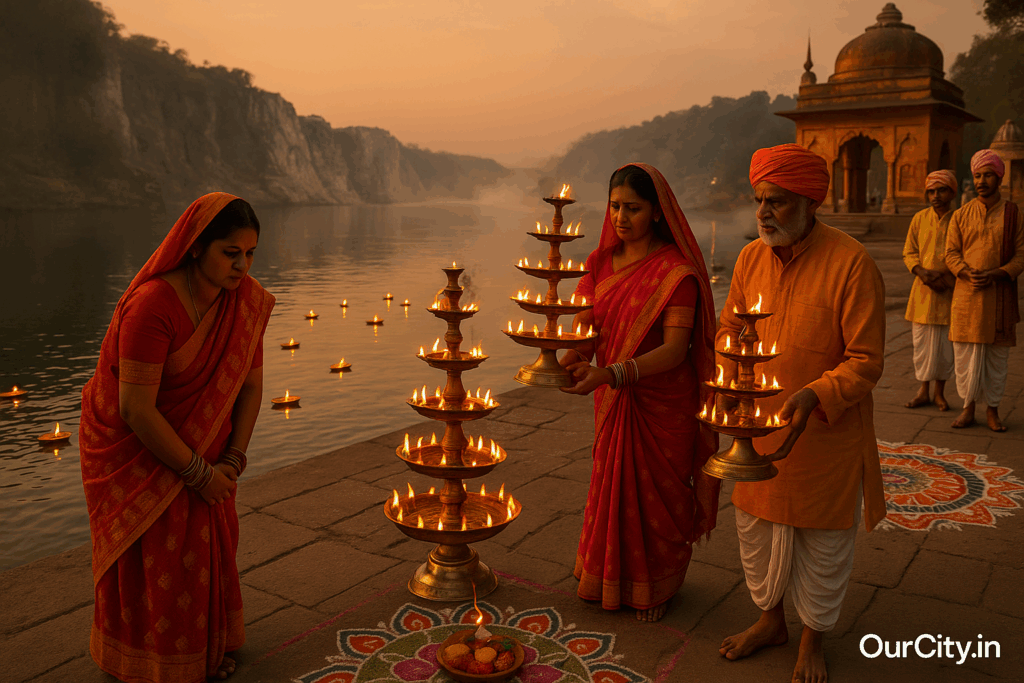
Jabalpur runs on the rhythm of the Narmada. Dawn aartis glow on the ghats, brass bells travel across Bhedaghat’s marble walls, and evenings end with chai near Gwarighat. Locals move with quiet efficiency—slippers off at the right spot, head covered where needed, small notes ready for daan. First-timers often fumble: phones up during aarti, blocking processions, or skipping simple courtesies like right-hand giving. This guide fixes that. It’s your no-fuss, Indian-first handbook to join Jabalpur’s festivals and sacred spaces with respect.
🪔 Why This Culture Guide Works for Jabalpur
We keep it practical: month-wise festivals, when to arrive, what to wear, and what to carry. We also give quick scripts in Hinglish/Hindi so you can ask politely—“Photography allowed hai?”—and move along without drama. Seasonal hints are built in, because April heat at Hanumantal or monsoon spray at Dhuandhar can change everything. We also call out neighborhood names—Madan Mahal, Wright Town, Napier Town, Adhartal, Ranjhi, Sadar, Garha, Civil Lines, Vijay Nagar, Hanumantal, Kachnar City, Katanga, Damoh Naka, Gwarighat, Tilwara, Bhedaghat, Bargi—so locals feel seen and visitors know where the action lives.
🪔 Festival Calendar: What Happens When (Jan–Dec)
City Highlights Month by Month
January
-
Makar Sankranti: Kites over Civil Lines, poha–jalebi stalls by morning (₹30–60). Offer til (sesame) sweets; modest wear.
-
Lohri & Pongal pockets: Small community bonfires in Sadar and Vijay Nagar; greet with “Sat Sri Akal” or “Vanakkam” where relevant.
-
Narmada Parikrama walkers pass through ghats—give way, speak softly.
February
-
Narmada Jayanti (Magh Shukla Saptami, variable): Lamp-lit ghats at Gwarighat, Tilwara, Lamheta. Reach by 18:00 for evening aarti. Keep earplugs for drums if you’re sensitive.
-
Mahashivaratri (some years Feb/Mar): Queues at Kachnar City Shiva Temple and Chausath Yogini near Bhedaghat. Carry a small bilva patra bundle (₹10–30).
March
-
Mahashivaratri (if in March) and Holi: Water colours in Garha and Katanga lanes; keep distance from elders and worship zones. Rang Panchami processions can be loud—earplugs help.
-
Churches begin Lent—quiet zones in Wright Town; dress modestly.
April
-
Ram Navami and Navratri (Chaitra): Morning aarti 05:45–07:30 slots at temples in Hanumantal and Damoh Naka. Heat climbs—cotton wear, socks for hot floors.
-
Ramzan may begin: Iftar lanes in Sadar and Ranjhi glow 18:30–19:15 (check prayer calendar). Be discreet during Maghrib.
May
-
Ramzan continues: Dates, sharbat near mosque belts (₹10–30 for nimbu pani). Respect prayer timings; no loud chatter near the entrance.
-
Bargi backwaters evening satsangs sometimes happen; mosquito repellent helps.
June
-
Eid-ul-Fitr (date varies): Morning namaz; offer “Eid Mubarak” with a smile. Dress simple; carry a scarf/handkerchief.
-
Monsoon starts: Slippery steps at Gwarighat/Bhedaghat. Non-slip footwear, plastic cover for prasad.
July
-
Guru Purnima: Seek blessings at ashrams and maths; carry flowers (₹20–80).
-
Muharram may fall between July–September: Tazia processions in Adhartal–Ranjhi belts—stand aside, avoid blocking routes.
August
-
Raksha Bandhan, Janmashtami: Midnight bhajans at neighborhood mandirs in Vijay Nagar and Garha. Reach by 22:30 if you want front benches; bring light shawl for late night.
-
Independence Day cultural shows at community halls in Wright Town.
September
-
Ganesh Chaturthi: Pandals pop up in Napier Town, Garha, and Damoh Naka. Peak darshan 18:00–21:00; quieter 14:00–16:00. Eco-friendly visarjan advice: follow police advisory routes.
-
Shraddh/Pitru Paksha: Quiet, respectful behavior at ghats; no selfies near rites.
October
-
Navratri (Sharad): Garba evenings in Vijay Nagar and Katanga grounds. Dress modest, comfortable footwear. Queue calmly for aarti.
-
Dussehra: Ravana effigies in open fields near Sadar or Civil Lines—stand behind barricades, hold kids’ hands.
November
-
Diwali: Oil-lamp rows along neighborhood temples; fireworks time-bands per city advisory. Visit ghats early morning (05:45–07:00) to avoid smoke layer.
-
Guruparab (Guru Nanak Jayanti): Gurdwara Gwarighat Sahib sees steady sangat. Cover head, sit in langar pangat; don’t waste food.
December
-
Christmas: Midnight mass at churches around Wright Town and Napier Town (23:30–00:30). Arrive by 23:00 to find seating.
-
New Year ghats: Dawn prayers on 01 January—calmer than midnight crowds.
Locals say… “Sunrise beats any queue.”
Where to Go & When to Arrive (Time Cues)
-
Gwarighat evening aarti: Arrive 30–45 minutes before sunset (around 18:00 winter; later in summer). Best view from steps near central lamp row; avoid blocking the pujari’s path.
-
Bhedaghat temples + Dhuandhar: Early morning 06:00–08:00 for soft light and fewer hawkers; avoid cliff edges and obey railings.
-
Kachnar City Shiva Temple: Post-sunset aarti slots fill fast on Mondays; arrive by 18:15 winter / 18:45 summer.
-
Ganesh pandals (Napier Town/Damoh Naka): Quiet windows 14:00–16:00.
-
Gurdwara langar (Gwarighat): Lunch pangat often 12:30–14:30; ask “Langar kis samay serve ho raha hai?”
-
Church Sunday mass: Common slots 06:30–07:30 and 08:30–09:30; confirm at the noticeboard.
Family-, Senior-, and Child-Friendly Tips
-
Benches first: Check side aisles at Hanumantal and Civil Lines mandirs; volunteers usually guide seniors to front rows.
-
Shade & water: Carry a refill bottle; most temples have water points near shoe racks.
-
Meet-up point: Before entering a mela, pick a visible spot (e.g., “under Madan Mahal flyover staircase”/“pandal main gate”). Write a contact number on a slip in a child’s pocket.
-
Sound care: Drums and loudspeakers can be intense; simple earplugs help kids and elders.
🪔 Sacred Spaces Etiquette (Temples • Gurdwaras • Dargahs/Mosques • Churches • Ghats)
Temples in Jabalpur are warm and orderly. Gurdwaras welcome all with langar. Mosques and dargahs request quiet presence and modest dress. Churches prefer silence and simple attire. Ghats are shared sacred spaces—walk mindfully, speak softly, and never photograph cremation rites.
Temples
-
Shoes: Use the juta-stand; keep a small token (₹2–5) handy.
-
Dress: Shoulders/knees covered; dupatta or shawl is useful.
-
Queues: Many big temples use ropes/tokens—ask “Queue kahan se shuru hoti hai?”
-
Aarti: Hold lamps steady distance; don’t raise phones above shoulder height.
-
Prasad: Receive with right hand cupped; step aside to eat.
-
Abhishek timing: Early mornings or special slots on Mondays—confirm at the board.
Gurdwaras
-
Head cover: Mandatory. Carry a handkerchief, or ask “Head cover kahaan milega?”
-
Shoe & jora ghar: Wash hands, rinse feet if required, place footwear neatly.
-
Karah prasad: Accept with both hands; don’t waste.
-
Langar: Sit in pangat line, finish completely, return plate, offer to help—“Main seva kar sakta/sakti hoon?”
Dargahs & Mosques
-
Head cover: Men often cover head; women commonly use dupatta/scarf.
-
Offerings: Flowers or chadar at dargahs (₹200–600 standard). Ask where to place; don’t block pathways.
-
Namaz: Be discreet around prayer times; avoid entering main hall during salah if you’re not participating.
-
Qawwali evenings: Keep aisles clear; don’t clap over hymns unless the mehfil invites it.
Churches
-
Quiet entry: Silence phones; watch kneel/stand cues.
-
Dress: Simple, modest.
-
Confession/private prayer: Respect closed doors; sit away from confessionals.
River Ghats & Cremation Grounds
-
Silence: Keep distance from rites. No photography.
-
Footing: Steps can be slippery in monsoon—hold railings, avoid crowding the edge.
-
Donations: Use official boxes; avoid touts.
Micro-scripts to ask politely
-
“Photography allowed hai? / “फोटोग्राफी अलाउड है?”
-
“Queue kahan se shuru hoti hai? / “क्यू कहाँ से शुरू होती है?”
-
“Darshan token yahin milta hai? / “दर्शन टोकन यहीं मिलता है?”
-
“Head cover kahaan milega? / “हेड कवर कहाँ मिलेगा?”
🪔 Offerings, Daan & Seva (Practical Ranges)
-
Flowers: ₹20–100 (marigold/rose malas).
-
Prasad boxes: ₹20–60 (ladoo/peda).
-
Chadar at dargah: ₹200–600 (simple cloth with floral motifs).
-
Oil/ghee packs: ₹50–200 for diya.
-
Candles/incense: ₹10–30.
Etiquette
Give with your right hand. Don’t flaunt cash. Many places now have UPI donation boxes—use them for transparency and speed. Keep small notes (₹10–50) to avoid change delays at crowded counters.
Seva ideas
-
Shoe-rack assistance at Hanumantal or Damoh Naka temples.
-
Queue guidance near Kachnar City on peak nights.
-
Langar service at Gurdwara Gwarighat Sahib—washing utensils, serving water, cleaning.
-
Post-event clean-ups near Gwarighat/Tilwara jetsam zones (ask local volunteers).
Simple line: “Main seva kar sakta/sakti hoon—kahaan zaroorat hai?”
🪔 Attire, Comfort & Accessibility
Dress codes
-
Shoulders and knees covered work everywhere.
-
Light cottons in heat (April–June).
-
Carry a scarf/dupatta for head covering.
-
Easy-to-remove footwear—you’ll step in/out often.
Carry list
Small scarf • socks (hot tiles!) • refillable water bottle • handkerchief • wet wipes • ORS sachet (summer) • small cloth bag for offerings • compact rain cover (monsoon).
Accessibility
-
Many temples have steps; some newer complexes provide ramps—check the noticeboard/app.
-
Quieter slots: 05:45–07:30 and 14:00–16:00 on non-festival weekdays.
-
Senior seating: Look for side aisles in Wright Town/Napier Town prayer halls.
Sensory-friendly tips
-
Earplugs for dhols and loudspeakers.
-
Keep snacks and water for kids; step out briefly if aarti feels overwhelming.
🪔 Language, Greetings & Everyday Manners
Greetings
-
Namaste/Pranam (नमस्ते/प्रणाम)—palms together.
-
Sat Sri Akal (ਸਤਿ ਸ੍ਰੀ ਅਕਾਲ)—at gurdwaras.
-
Adaab (आदाब)—polite Urdu greeting at dargahs/mosques.
-
“Narmade Har!” (नर्मदे हर!)—heard around the ghats.
Polite lines
-
“Dhanyavaad/Thank you, main line mein hoon.”
-
“Maaf kijiye, bheed zyada hai, baad mein aata/ati hoon.”
-
“Photo allowed nahi? Theek hai, phone band karta/karti hoon.”
-
“Langar kahaan serve ho raha hai? Main seva kar sakta/sakti hoon?”
Manners that matter
-
Use your right hand to give/receive.
-
Don’t step on thresholds of shrines.
-
Don’t touch idols/murtis.
-
Be mindful of sacred trees (peepal) and animals (cows) near temple courtyards.
🪔 Processions, Melas & Community Events
Jabalpur’s processions—Navratri, Muharram, Ganesh visarjan—wind through Sadar, Ranjhi, Napier Town, and Damoh Naka. Respect barricades and volunteer instructions.
Safe Viewing Spots & Exit Plans
-
Edges, not centers: Stand along barricades near side lanes; avoid tight bottlenecks at chowks.
-
Doorways clear: Don’t block temple/mosque/gurdwara entrances.
-
Exit memory: Note one alternate lane (e.g., “side road behind Civil Lines park”).
-
Kids & elders: Keep them on the inner side (away from road edge), hand-held.
Transport Diversions & Crowd Windows
-
Diversions: Expect closures near Madan Mahal bridge, Wright Town chowk, Gwarighat road, and Bhedaghat approach on peak days.
-
Best movement times: 06:00–08:00 and 14:00–16:00.
-
After 21:00: Prefer app cabs or known autos; avoid random lifts.
If You Get Separated (Meet-up Scripts)
-
“Hum main gate pe milte hain—5 minute ruk jao.”
-
“Police volunteer ke paas khade raho; main yahin aa raha/rahi hoon.”
-
“Phone low battery hai—pandal ke left side wale banner ke niche milte hain.”
What not to do
-
Don’t climb vehicles/shrines/statues.
-
Don’t fly drones near processions or sacred zones.
-
Don’t argue loudly near ritual leaders.
Aftercare
-
Exit calmly; avoid pushing.
-
If it’s late, choose app cabs over informal rides.
🪔 Seva, Daan & Doing Your Bit
Simple Ways to Volunteer
-
Water seva at pandals—hand out cups near queue ends.
-
Footwear racks—keep rows tidy; elders appreciate it.
-
Waste segregation—dry/wet bins at Gwarighat, Tilwara; keep flowers for compost, no plastic in the river.
-
Stage support—at cultural sabhas in Garha/Vijay Nagar, help with chairs or signage.
Hygiene & Clean-up Etiquette
-
Carry a small trash pouch during processions.
-
Avoid throwing coins/flowers in the Narmada; use designated collection points.
-
Wash hands before prasad/langar service.
Digital UPI vs Cash (When & How)
-
UPI: Faster, traceable; many trusts display QR codes.
-
Cash: Keep small notes (₹10–₹50) for quick counters or small vendors.
-
Don’t hand cash to touts. Look for official boxes or trust counters.
🪔 Arts, Crafts, Music & Dance of Jabalpur
What to spot
-
Marble craft around Bhedaghat—ask for hand-carved pieces; avoid super-shiny mass-polish giveaways.
-
Brass puja ware in Sadar and Ranjhi markets—check weight and finishing.
-
Bhajan & kirtan baithaks in Wright Town community halls—early evenings.
-
Folk drumming and Garba during Navratri in Vijay Nagar/Katanga grounds.
Rehearsal peek-ins (with permission)
-
Temple bhajan rehearsals after 19:00 in neighborhood halls—ask: “Aaj rehearsal hai? Baahar se sun sakte hain?”
Ethical Souvenir Buying (Quick Tests & GI Mentions)
-
Handmade vs mass-produced: Slight asymmetry is a good sign; ask the artisan their process.
-
Fair price: Simple figurines ₹200–500; medium puja thalis ₹300–800; marble tealight holders ₹250–600.
-
Receipts: Ask for a basic bill; support local co-ops where possible.
Locals say… “Buy small, buy real.”
🪔 Language, Greetings & Everyday Manners
Local Phrases (Transliteration + Script)
-
“Line kidhar ban rahi hai?” (लाइन किधर बन रही है?)
-
“Darshan mein kitna samay lagega?” (दर्शन में कितना समय लगेगा?)
-
“Langar kahaan serve ho raha hai?” (लंगर कहाँ सर्व हो रहा है?)
-
“Maaf kijiye, photo allowed nahi hai to main phone band kar deta/deti hoon.” (माफ़ कीजिए, फ़ोटो अलाउड नहीं है तो मैं फोन बंद कर देता/देती हूँ।)
Right-Hand Giving, Thresholds, Sacred Trees/Animals
-
Offer and receive with right hand (or both hands).
-
Don’t step on the threshold of shrines or houses.
-
Respect peepal trees and Nandi/cow areas—no littering, no loud chatter.
What Not to Do (Short List)
-
No selfies during aarti or near cremation rites.
-
Don’t touch murtis/idols.
-
Don’t feed animals packaged snacks; ask caretakers what’s appropriate.
🪔 Seasonal Playbooks (Heat • Monsoon • Winter/Smog • Peak Festive)
Heat (Apr–Jun)
-
Go early: 05:45–08:00 darshan; evening after 19:00.
-
Pack: ORS, cap, scarf, light cotton, socks for hot floors.
-
Food: Light snacks—chana, fruits; skip heavy fried right before aarti.
Monsoon (Jun–Sep, varies)
-
Footwear: Non-slip sandals; avoid heels on ghats.
-
Covers: Plastic for prasad and phone; compact umbrella.
-
Routes: Bhedaghat steps and Gwarighat stone can be slick—move slowly.
Winter/Smog (Dec–Jan)
-
Layer: Light sweater/shawl for pre-dawn aartis and midnight mass.
-
Mask: N95/FFP2 helps on smoky nights around Diwali.
-
Hot drink: Chai or kaadha from clean vendors (₹10–25).
Peak Festive Weeks
-
Plan transport: Expect diversions around Madan Mahal, Wright Town, Sadar, Napier Town.
-
Cards & cash: Keep metro-style travel cards? (Not applicable here.) Use app cabs/e-rickshaws; keep change for autos.
-
Kids: Avoid 18:00–21:00 surges; try 14:00–16:00 darshan windows.
Exam & Job-Hunt Season
-
Quiet pockets: Morning slots at smaller temples in Garha or Adhartal; libraries near Civil Lines often calmer.
-
Prayer corners: Side aisles, ten-minute sit, phone on silent.
🪔 Quick Cheatsheets (Tables)
Festival Months vs Typical Timings
| Month | Highlights | Typical Time Cues |
|---|---|---|
| Jan | Makar Sankranti, Narmada Parikrama walkers | 06:00–08:00 calm; avoid 18:00–20:00 |
| Feb | Narmada Jayanti | Arrive 30–45 min before sunset |
| Mar | Holi, (Mahashivaratri some years) | Morning 07:00–10:00 safer with kids |
| Apr | Chaitra Navratri, Ramzan begins (varies) | Pre-dawn to 07:30; iftar 18:30–19:15 |
| May | Ramzan | Respect Maghrib; iftar lanes busy |
| Jun | Eid-ul-Fitr | Morning namaz 06:30–08:00 typical |
| Jul | Guru Purnima, Muharram (varies) | Evenings calm 19:00–20:00 (non-procession days) |
| Aug | Janmashtami, community shows | 22:30 arrival for midnight events |
| Sep | Ganeshotsav | Quiet 14:00–16:00; surge 18:00–21:00 |
| Oct | Navratri, Dussehra | Garba 20:00–23:00; go early for seating |
| Nov | Diwali, Guruparab | 05:45–07:00 low smoke; langar 12:30–14:30 |
| Dec | Christmas/New Year | Midnight mass 23:30–00:30; arrive by 23:00 |
Etiquette by Place of Worship
| Place | Footwear | Head Cover | Offerings | Photography | Typical Slots |
|---|---|---|---|---|---|
| Temple | Leave at rack | Optional (carry dupatta) | Flowers, prasad | Ask first; avoid during aarti | 05:45–07:30, 18:00–20:00 |
| Gurdwara | Jora ghar | Mandatory | None needed; accept karah prasad | No flash; be discreet | Langar 12:30–14:30 (varies) |
| Dargah | Outside gate | Men cap; women scarf | Flowers, chadar | Discreet; avoid faces | Evenings post-Maghrib |
| Mosque | Outside gate | Recommended | None unless guided | No photography in prayer hall | Namaz times only |
| Church | Outside or keep silent | Not required | Candles | Usually restricted; ask | Sunday masses morning |
| Ghats | Keep with you | Not required | Diyas, flowers (eco-friendly) | No photos of rites | Sunrise/sunset aarti |
Offering/Donation Ranges (₹)
| Item | Typical Range | Notes |
|---|---|---|
| Flower mala | ₹20–100 | Marigold/rose near gates |
| Prasad box | ₹20–60 | Ladoo/peda; step aside to eat |
| Chadar | ₹200–600 | Simple cotton/satin at dargahs |
| Oil/Ghee | ₹50–200 | For diyas |
| Candles/Incense | ₹10–30 | Churches/temples |
| Boat ride (Bhedaghat)* | ₹100–300 pp | Seasonal; confirm at counter |
*Seasonal and subject to official advisories. Check the board at the ticket point.
Quiet-Hour Windows & Crowd Surges
| Venue Type | Quiet Window | High Surge |
|---|---|---|
| Major temples (Kachnar City, Hanumantal) | 06:00–07:00, 14:00–16:00 | Mon evenings, festival nights |
| Ghats (Gwarighat, Tilwara) | Sunrise; 11:00–15:00 | Sunset aarti; festival eves |
| Gurdwara (Gwarighat) | 09:30–11:30 | Sunday midday, Guruparab |
| Ganesh/Navratri pandals | 14:00–16:00 | 18:00–21:00 |
| Churches (Wright Town/Napier Town) | Weekday afternoons | Sunday mornings, Christmas Eve |
🪔 FAQs (Real Questions, Short Answers)
1) Can I take photos during aarti at Gwarighat?
Ask first: “Photography allowed hai?” If yes, keep the phone chest-level, no flash, and don’t block anyone.
2) What should I wear to Kachnar City Shiva Temple?
Modest clothes with shoulders/knees covered. Carry a dupatta/scarf. Easy footwear you can remove quickly.
3) Is langar open to non-Sikhs at Gurdwara Gwarighat Sahib?
Yes. Cover your head, wash hands, sit in pangat, finish your meal, and thank the sevadars.
4) How early for midnight mass in Wright Town?
Be seated by 23:00. Follow stand/kneel cues and keep phones silent.
5) Where can I watch Ganesh visarjan safely?
Behind barricades near Napier Town or Damoh Naka routes. Keep children on the inner side, pick a meet-up point in advance.
6) Are drones allowed during processions?
No. Avoid drones near processions and sacred precincts.
7) Cash or UPI for donations?
UPI boxes are common and safer. Keep small notes (₹10–50) for small counters.
8) Solo-female tips for evening darshan?
Choose early evening 18:00–19:00 on non-peak days, stand near families/volunteers, use app cabs for late returns.
9) Can I carry prasad into the boat at Bhedaghat?
Avoid loose items that can fall into the river. Follow boat staff instructions and official guidelines.
10) How do I ask for queue info without sounding rude?
“Queue kahan se shuru hoti hai? Dhanyavaad.” Short and polite.
11) What to do if a child gets separated at a mela?
Go to the nearest police/volunteer post. Use: “Bacha alag ho gaya hai—help please.” Agree on a meet-up point before entering.
12) Can I join abhishek on Mahashivaratri?
Often yes, in designated slots. Ask at the counter: “Abhishek ka samay kab hai?” Follow the line and use small containers.
13) Are there quiet prayer corners near Civil Lines?
Yes—smaller temples and churches often have side aisles. Weekday afternoons are calm.
14) Food near ghats—what’s safe?
Pick busy, clean stalls. Poha (₹30–50), chai (₹10–20). Carry your own bottle; avoid single-use plastic.
15) Will there be traffic diversions during Navratri?
Likely near Vijay Nagar, Katanga, Wright Town. Check the city police advisory on the day.
🪔 Wrap-Up: You’ll Fit Right In
Show up early, dress simple, keep your voice low around the Narmada, and carry small notes for daan. Ask calmly, queue patiently, and pack light. If you remember one line, make it this—“Jaldi aao, pyaar se pucho, aur saaf rakho.” Jabalpur notices and welcomes that.
Locals say… “Reach before sunrise; the ghat feels gentler.”