Amritsar: City Guide
Table of Contents
Amritsar: Your Smart, Local Guide
Amritsar is warmth in a bowl of chole, marble under your feet at sunrise, and “ਸਤਿ ਸ੍ਰੀ ਅਕਾਲ (Sat Sri Akal)” everywhere you turn. The city moves on seva, early mornings, late dinners, and strong opinions about kulchas. First-timers often cram everything into one day and miss the rhythm: early darshan, slow old-city walks, late evening ceremonies. This guide keeps it real—prices, phrases, neighborhoods, and a doable plan that respects the city.
🧭 Why This Guide Works for Amritsar
Most folks ask the same things: Where to eat without getting sick? How to handle queues and head coverings? Which markets are worth the crowd? How to reach Wagah (Attari) without drama? And what to do when the weather swings from 44 °C to foggy single digits?
Here’s the thing: you need clean shortcuts, polite scripts, and a season-aware plan. That’s what you’ll get below—street-hygiene checks, bargaining lines that don’t feel rude, realistic budget bands, and time-cues (“reach by 07:30”). It’s written India-first, with local words and neighborhood name-drops so it feels like a friend walking with you.
🥘 Food & Eateries: Eat Well, Eat Smart
Must-Try, Locally Loved
Amritsar’s greatest hits are simple and satisfying.
-
Amritsari kulcha + chole: Crisp outside, soft inside, brushed with makkhan. Pair with lacha pyaaz and imli or mint chutney. Locals gravitate to lanes off Maqbool Road, around Ranjit Avenue, and eateries near Katra Jaimal Singh and Town Hall (Heritage Street end).
-
Amritsari fish (seasonal, cooler months best): Besan-coated, fried fresh; look for shops with fast turnover near Lawrence Road and Queens Road.
-
Sarson da saag & makki di roti (peak: Dec–Feb): Ghee on top is normal; ask for less if you like.
-
Punjabi lassi: Thick, sometimes topped with malai. Morning lassi near Hall Gate or Cooper Road hits different.
-
Kulfa (Amritsari-style frozen dessert): Creamy, nutty, perfect post-dinner around Lawrence Road.
-
Langar at Sri Harmandir Sahib (Golden Temple): A humble, moving meal. Dress modestly; follow volunteers’ instructions.
Neighborhoods to pin for food: Heritage Street, Katra Ahluwalia, Hall Bazaar, Lawrence Road, Ranjit Avenue, Queens Road, Maqbool Road, Batala Road, Putlighar, Chheharta, Green Avenue, Mall Road.
Street-Food Hygiene Hacks
-
Oil check: Fresh oil is clear to light golden and doesn’t smoke sharply. Dark, sticky kadhai = skip.
-
Turnover test: Short queues that move fast are safer than empty counters.
-
Water watch: Choose stalls using sealed water for chutneys and ice-free drinks; avoid cut fruits in peak monsoon and summer afternoons.
-
Utensils & hands: Look for tongs/spoons, covered chutneys, paper plates from a sealed stack.
-
Fish rule: Prefer cooler months or evenings; ask, “Veerji, aaj di fresh aayi hai?” (Brother, is this today’s fresh catch?)
Order Like a Local (Scripts)
-
Kulcha: “Veerji, do kulche crispy bana do, makkhan halka rakhna, mirch thodi kam.”
(Brother, make two kulchas crispy, light on butter, less chilli.) -
Lassi: “Bhenji, ek lassi bina malai, cheeni normal.”
(Sister, one lassi without cream, normal sugar.) -
Fish: “Half plate theek rahegi; sabse taaza dena.”
-
Langar etiquette (quiet tone): “Sat Sri Akal ji, kithhe baithna?” (Where should I sit?)
-
Allergies: “Mujhe nuts se allergy hai—please batana kismein hai.”
Budget Bands & Late-Night Eats
-
₹ (street): ₹50–150 per plate (kulcha/chole, tikki, jalebi).
-
₹₹ (casual): ₹200–400 per person (thali, fish half plate, rotis, sabzi).
-
₹₹₹ (sit-down): ₹600–1,200 per person (multi-course Punjabi meals).
Late-night belts: Lawrence Road, parts of Ranjit Avenue, segments near Queens Road. After 22:30, prefer app cabs or known autos; avoid isolated lanes behind markets.
🛍 Markets & Shopping: Fair Prices, Real Finds
What to Buy & Where
-
Phulkari dupattas & suits: Katra Jaimal Singh and Katra Ahluwalia (embroidery density drives price).
-
Gold jewellery: Guru Bazaar (go with a known jeweller or compare across 2–3 shops).
-
Punjabi jutti: Lanes off Hall Bazaar and around Town Hall.
-
Papad–wadiyan & masalas: Stalls near Chheharta, Batala Road, and old-city spice lanes.
-
Steel kada & kirpan replicas (souvenir only): Around Heritage Street and Hall Gate—buy respectfully; ask what’s permitted for travel.
-
Woollens & shawls (winter): Shastri Market, pockets off Mall Road.
City map in words: Hall Bazaar (everything lane), Katra Jaimal Singh (textiles), Katra Ahluwalia (traditional wear), Guru Bazaar (jewellery), Town Hall/Heritage Street (souvenirs, cafes), Lawrence Road (bakeries/eateries), Ranjit Avenue (newer boutiques), Chheharta (local staples).
Bargaining Scripts & Receipts
-
Opening line (polite): “Rate kya best doge? Do cheezein loonga, UPI karunga.”
-
If price feels high: “Thoda theek karo ji, main local hoon; quality achchi ho toh regular aaunga.”
-
Finalize cleanly: “Pakka yahi final hai? Bill bana do, QR de dena.”
Typical bargain room in non-branded bazaars: 10–20% depending on item and season. Fixed-price boards usually mean… fixed.
UPI vs cash: UPI is widely accepted. Cash may fetch a small discount; always ask for a bill for bigger buys (especially jewellery and high-quality phulkari).
Quality Checks & Best Hours
-
Phulkari: Turn inside out—clean threads, even stitch tension.
-
Spices: Smell for brightness, not mustiness. Whole spices > pre-ground.
-
Jutti: Flex sole gently; look for neat stitching; try with socks you’ll wear.
-
Jewellery: BIS hallmark; compare making charges.
-
Best hours: 11:00–13:00 (calmer), 16:00–19:00 (lively). Weekly offs vary—old city often active daily; individual shops may shut on Sunday evenings. Pre-festival weeks are crowded; go before 12:00.
🎉 Traditions & Culture: Show Up Right
Festivals You’ll Actually Enjoy
-
Vaisakhi (13/14 Apr): Harvest + Khalsa celebration. Processions, kirtan, bustling markets. Dress light cotton; carry a scarf for head cover.
-
Gurpurab (Guru Nanak Jayanti, Nov): Illuminated Sri Harmandir Sahib; long queues but incredible peace. Arrive pre-dawn or late night for calmer moments.
-
Diwali (Oct/Nov, varies): Golden Temple lit beautifully; heavy crowds.
-
Lohri (Jan): Bonfires, groundnuts, rewari, family gatherings.
Visitor tips: Festival days = traffic diversions near Heritage Street, Hall Gate, Lohgarh Gate. Use the BRTS (MetroBus) or walk from designated parking (e.g., Saragarhi multi-level parking near the old city).
Etiquette in Sacred Spaces (Gurdwaras)
-
Head covered: Carry a scarf/handkerchief; free cloth often available at entrances.
-
Shoes & feet: Leave shoes at joda ghar; wash hands/feet in the flowing trays.
-
Dress: Shoulders and knees covered.
-
Photography: Allowed in outer areas; avoid near sanctum unless clearly permitted.
-
Parshad: Accept with both hands; don’t waste.
-
Queues: Move calmly, no pushing. Volunteers (sevadars) will guide you.
Everyday Manners & Phrases
-
Greetings: “ਸਤਿ ਸ੍ਰੀ ਅਕਾਲ (Sat Sri Akal),” “Namaste ji.”
-
Polite asks: “Kirpa karke” (please), “Dhanvaad/Shukriya” (thank you).
-
Tipping: Casual eateries ₹20–50 or round-up; sit-down 5–10%; porters ₹30–50 per bag depending on effort.
-
Queuing: Straight lines at counters; let elders go first—people will notice and appreciate.
City quirk locals love: “Langar te seva sab layi” — food and service are for everyone.
🏞 Places & Activities: One Day or a Weekend
One Great Day (Practical Route)
05:00–07:30 — Golden Temple (Sri Harmandir Sahib)
-
Pre-dawn or sunrise darshan is calm and cool. Carry a scarf; leave shoes at the joda ghar; keep your phone volume off. If you can, sit quietly by the sarovar for 10 minutes.
-
Optional: partake in langar; follow line etiquette.
08:00–09:30 — Breakfast near Heritage Street / Katra Jaimal Singh
-
Kulchas or a light poori-chole. Ask for less oil if you prefer.
09:45–10:45 — Jallianwala Bagh
-
A quiet walk through history; maintain silence where people are reflecting.
11:00–12:30 — Partition Museum (Town Hall)
-
Thoughtful exhibits. Plan at least an hour; check ticket windows; photography may be limited in some sections.
13:00–14:30 — Lunch around Lawrence Road or Queens Road
-
Thali or fish; hydrate (ORS in summer).
15:00–19:00 — Wagah (Attari) Border Ceremony
-
Carry a government ID; arrive early for seating (aim 15:00–15:30; exact ceremony time shifts with sunset). Avoid touts promising “VIP.” App cab or a clearly-priced auto from city; confirm return.
-
Evening can feel electric—clapping, patriotic songs. Follow security rules strictly.
19:45–21:30 — Dinner near Ranjit Avenue / Mall Road
-
Sit-down Punjabi fare; try kulfa for dessert.
Optional night loop — Return to the Golden Temple area for a late-night darshan (post 22:30 is calmer, still many devotees) if energy allows.
Weekend Sampler
Day 1: Golden Temple + Jallianwala + Partition Museum + Lawrence Road lunch + Gobindgarh Fort (evening cultural show; check day-wise schedule) + old city night stroll on Heritage Street.
Day 2: Khalsa College campus (architecture) + Rambagh (Company Bagh) + shopping in Katra Jaimal Singh/Hall Bazaar + evening border ceremony + dinner in Ranjit Avenue.
Under-the-radar moments:
-
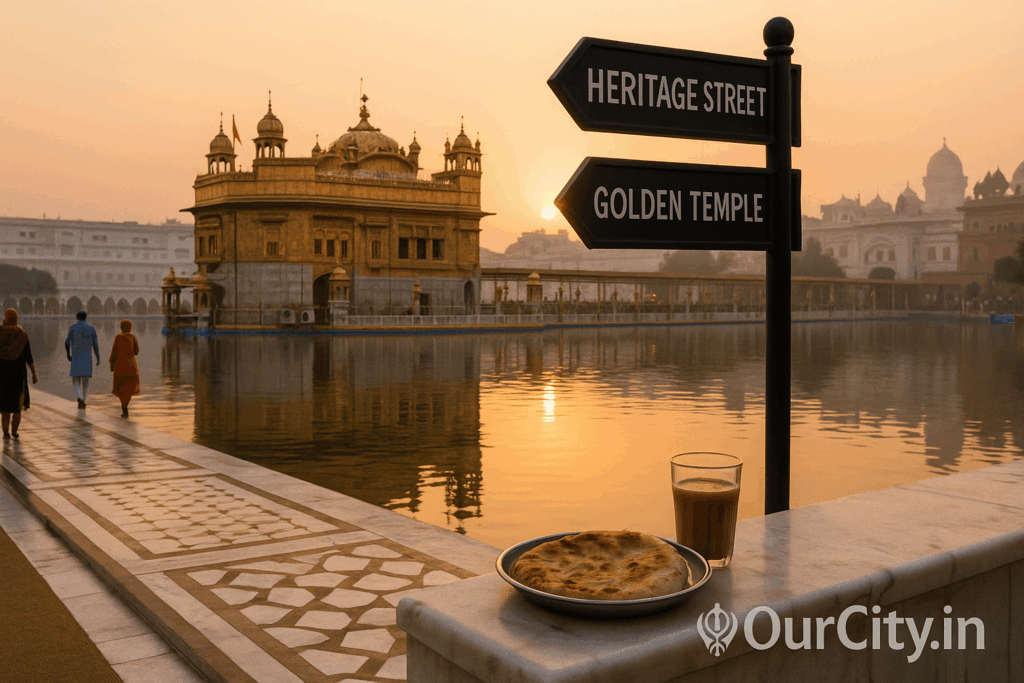
Heritage Street at 07:00: polished marble, soft sunlight, fewer crowds.
-
Company Bagh tree-shade: take a slow chai break.
-
Putlighar early mornings: watch the city set up for the day.
Photo-Friendly Times & Safer Nights
-
Sunrise: Golden Temple reflections; pastel skies.
-
Blue hour (post-sunset): Heritage Street lights, Town Hall façade.
-
Nights: Prefer main roads—Mall Road, Queens Road, Ranjit Avenue. Use app cabs after 21:00; avoid deserted back lanes around closed bazaars.
🧰 Life Hacks & Survival: Move, Breathe, Stay Safe
Metro/Bus/Auto Cheat Codes
-
BRTS (MetroBus): Dedicated-lane buses on major corridors; typical short hops ₹20–60. Smart for Ranjit Avenue ↔ Old City stretches. Check the official app/site for live timings and cards.
-
E-rickshaw & autos: Quick for 2–3 km hops.
-
Script: “Veerji, meter se? Nahi? ₹80 theek rahega Heritage Street tak—UPI kar dunga.”
-
Typical per-km ask: ₹15–25/km; confirm before boarding.
-
-
App cabs (Ola/Uber/Rapido): Reliable for Wagah (Attari) and late nights.
-
Walking: Old city is pedestrian-first near Heritage Street; wear closed, comfortable footwear.
Park & Walk: Use multi-level parking near Saragarhi for Golden Temple zone; walk the last stretch.
Heat/Monsoon/Smog Plans
-
Summer (Apr–Jun):
-
Carry ORS; sip every hour outdoors.
-
Pick shade routes (Heritage Street arcades); avoid 12:30–16:30 for long walks.
-
Fabrics: cotton/linen; a light scarf doubles as head cover.
-
-
Monsoon (Jun–Sep):
-
Quick-dry footwear; small umbrella; keep phone in a zip pouch.
-
Street-food: choose fried fresh items; avoid raw salads and cut fruits in open air.
-
-
Winter & smog (Dec–Jan):
-
N95/FFP2 mask helps on smoggy days; fog delays affect late-night/early-morning travel.
-
Layers: thermal + shawl; warm socks for marble floors at gurdwaras.
-
Emergencies & Scams to Dodge
-
Pan-India: 112 (emergency), 108 (ambulance).
-
Punjab Police: City control room handles non-emergency queries and assistance; look for marked booths near Heritage Street and Town Hall.
-
BRTS customer care: For routes, cards, and lost items—at main depots/stations.
-
City civic helpline / Smart City app: For cleanliness and street-light complaints.
Common ruses (and polite exits)
-
“VIP darshan / VIP border pass”: “Official counter se hi lunga, dhanvaad.”
-
Overfriendly “guide” insisting on shop commissions: “Main khud dekh lunga ji, time kam hai.”
-
Currency exchange at bad rates near border: Use banks/authorized counters in city instead.
-
Auto fare spikes: “Meter ya fixed? UPI hai, pehle bata do.”
🛒 Products & Picks: What’s Worth Buying in Amritsar
City-Special Buys (₹ Ranges)
-
Phulkari dupatta: ₹400–2,000 (work density, fabric).
-
Punjabi jutti: ₹600–1,500 (leather quality, handwork).
-
Papad–wadiyan: ₹120–350 per pack (brand, size).
-
Chole masala / garam masala: ₹80–180 per 100 g (buy whole spice blends if possible).
-
Steel/iron cookware & kada: ₹200–800 (weight, finish).
-
Souvenir kirpan (non-functional): ₹300–1,200 (check travel rules).
Climate Helpers & Local Apps
-
Summer: Copper/stainless water bottle (₹400–1,000), mini ORS sachets (₹20–30 each).
-
Monsoon: Anti-slip sandals (₹500–1,200), quick-dry sling bag (₹600–1,500).
-
Winter: Lightweight thermals (₹700–1,500), woollen cap (₹200–500).
-
Apps: Ola/Uber/Rapido, official BRTS/MetroBus info, IRCTC Rail Connect, and a standard maps app. UPI is ubiquitous (PhonePe/Paytm/GPay).
Packing Tips for This City
-
A scarf/handkerchief for gurdwara visits.
-
Closed shoes for long walks; socks for winter marble floors.
-
Power bank (border days can stretch).
-
Small tote for quick market buys; keep receipts handy.
✅ Quick Cheatsheets (Tables)
Sample City Transport & Fares
| Mode | Typical Use | Ballpark Fares/Notes |
|---|---|---|
| BRTS (MetroBus) | Ranjit Ave ↔ Old City | ₹20–60 short hops; check official app for live fares/timings |
| E-rickshaw | 1–3 km old-city hops | ₹30–120 depending on distance & crowd |
| Auto-rickshaw | 2–6 km | ₹15–25/km ask; confirm fare + UPI before start |
| App cab | City ↔ Wagah (Attari) | Dynamic; budget ₹900–1,600 round-trip depending on time/season |
Market Off-Days & Timing Cues (Typical)
| Market Area | Usual Vibe | Off-Day/Tip |
|---|---|---|
| Hall Bazaar | All-purpose, everyday | Some shops shut Sunday evenings |
| Katra Jaimal Singh | Textiles/phulkari | Mornings calmer; 11:00 best start |
| Katra Ahluwalia | Traditional wear | Before 12:00 for trial rooms |
| Guru Bazaar | Jewellery | Weekdays easier for comparisons |
| Town Hall/Heritage Street | Souvenirs, cafes | Evenings photogenic; expect crowds |
Festival Months (Indicative)
| Festival | Month |
|---|---|
| Lohri | January |
| Vaisakhi | April |
| Diwali | Oct/Nov (lunar) |
| Gurpurab (Guru Nanak Jayanti) | November (lunar) |
Popular Dishes & Price Bands
| Dish | ₹ Street | ₹₹ Casual | Notes |
|---|---|---|---|
| Kulcha–chole | 60–120 | 150–220 | Ask makkhan “halka” if you prefer |
| Amritsari fish (half) | 150–250 | 250–400 | Cooler months best |
| Lassi (glass) | 40–90 | 120–180 | Malai optional |
| Saag–makki roti (plate) | 120–180 | 220–350 | Seasonal peak in winter |
“Arrive By” Time Cues
| Place/Activity | Arrive By | Why |
|---|---|---|
| Golden Temple (sunrise) | 05:00–05:30 | Calmer lines, soft light |
| Jallianwala Bagh | 09:45 | Quieter reflection |
| Partition Museum | 11:00 | Avoid post-lunch crowd |
| Wagah (Attari) ceremony | 15:00–15:30 | Seating + security checks |
| Heritage Street (photos) | Sunset − 20 min | Blue hour lights soon after |
❓FAQs
1) Is one day enough for Amritsar?
You can touch the highlights in one day—Golden Temple, Jallianwala, Partition Museum, Wagah—but two days feel humane. Day two gives you Gobindgarh Fort, Khalsa College, and slower market time.
2) What should I wear for darshan?
Cover shoulders and knees; carry a scarf/handkerchief for your head. Socks help on cold marble in winter.
3) Is the langar open to everyone?
Yes. Sit, eat what’s served, and avoid wasting food. Return utensils as guided; you can volunteer for seva if you wish.
4) How early should I go to the border ceremony?
Aim for 15:00–15:30 (earlier on long weekends). Carry an ID and avoid bags you don’t need.
5) Cash or UPI in markets?
UPI is common. Cash may get a small discount in non-branded lanes. For big buys, always ask for a bill.
6) Where do locals actually eat kulchas?
Around Maqbool Road, parts of Ranjit Avenue, and old-city lanes near Katra Jaimal Singh. Ask a shopkeeper, “Sabse crisp kahan milta hai yahan paas?”
7) Any safe areas to stay?
Ranjit Avenue, Queens Road, Mall Road, and around Lawrence Road give you food options and better-lit streets at night.
8) How do I avoid getting sick from street food?
Pick fast-moving stalls, clear oil, covered chutneys, sealed water, and hot-off-the-tawa items. In monsoon, skip cut fruits.
9) Can I photograph inside the Golden Temple?
Outer parikrama usually okay; avoid near sanctum unless clearly allowed. Keep phone silent; be respectful.
10) What’s the smartest way to reach Heritage Street?
Park at Saragarhi multi-level (or as directed during festivals) and walk, or take BRTS to the closest stop and walk the last stretch.
11) Solo-female tips?
Stick to main roads at night (Mall Road, Ranjit Avenue). Use app cabs after 21:00. In crowded bazaars, keep valuables zipped and front-facing.
12) What to buy as edible souvenirs?
Papad–wadiyan, masalas, winter rewari/gajak. Pack airtight and label if flying.
13) Are autos reliable late at night?
Many are; confirm fare and route, share ride details with someone, or use app cabs.
14) Fog delays in winter—how bad?
Early mornings and late nights can see delays. Keep buffers for flights/trains, and prefer daytime intercity travel.
15) Any quick phrases that help?
“Sat Sri Akal ji,” “Kirpa karke,” “Dhanvaad,” “Thoda theek rate lagao ji,” “Meter se chalo?”
🔚 Wrap-Up: You’ll Do Great Here
Move with patience, speak with warmth, and keep your scarf handy. Start early, eat clean, and don’t rush the old city—Heritage Street at sunrise is a quiet joy, and a late-night darshan can stay with you for years. When in doubt, ask a shopkeeper or a sevadar. People here will point you right.
Locals say: “Amritsar aake langar, laasi, te pyar—teeno jaroor chakh ke jao.” (When you come to Amritsar, taste the langar, lassi, and the love.)