Agra Life Hacks & Survival Guide
Table of Contents
Agra Life Hacks & Survival Guide
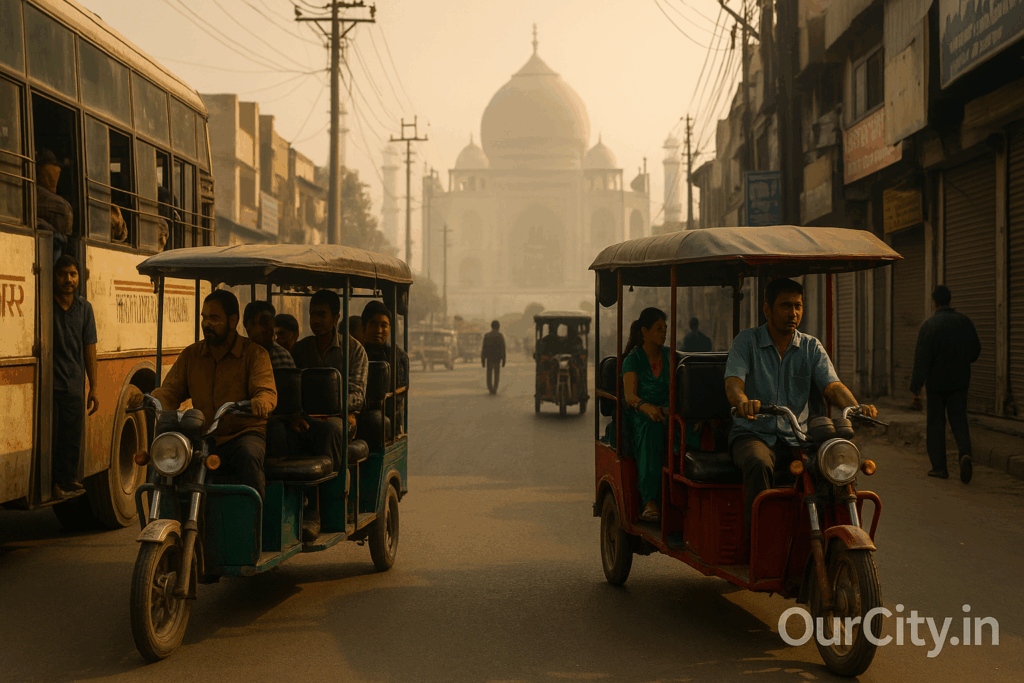
Agra moves on early mornings, short hops, and quick decisions. It’s a city of world icons—yes, the Taj—but also of everyday jugad: e-rickshaws weaving through Tajganj, bus conductors calling out at Belanganj, parents timing school runs along Fatehabad Road, and shopkeepers opening shutters near Sadar Bazaar right on cue. Newcomers often misjudge two things: how the seasons bend your day (April sun is unforgiving; November smog can be sneaky), and how short-distance travel (1–6 km) dominates most routines. This guide keeps you nimble—clear scripts, realistic price bands, season kits, and calm safety habits. Use it like advice from a neighbour in Civil Lines or Kamla Nagar who’s seen a few monsoons and still keeps an ORS sachet in the wallet.
🧭 Why These Survival Hacks Matter in Agra
On Day 1, you’ll need quick wins: how to get from Agra Cantonment to Tajganj without being overcharged, what to say if an auto refuses the meter, and which hours to avoid around Sadar flyovers. By Week 4, the rhythm changes: you’ll plan grocery runs around heat spikes, carry exact change for e-rickshaws near Shahganj, and know the smarter exit at Agra Cantt for cabs. This guide gives you:
-
Clarity: what usually costs ₹ and how long it actually takes.
-
Scripts: quick Hindi lines that keep things fair and polite.
-
Seasons: heat/monsoon/smog plans you can repeat every year.
-
Safety: low-drama steps for nights, festivals, and busy markets.
Locals say… “Sunscreen aur chhota bottle—Agra ka rule.” (Sunscreen and a small bottle—Agra’s rule.)
🚇 Move Smart Every Day
Metro/Train/Bus Basics
Metro status & mindset: Agra Metro is being rolled out in phases. Sections may operate while more stations open. Treat it as a bonus when it’s near you, but build your daily plan around city buses, e-rickshaws, autos, and app cabs. For live timings, routes, and any day-specific notices, check the “Agra Metro” official app or announcements at stations.
Trains for within-city hops:
-
Agra Cantt (AGC) is the main long-distance station; Raja Ki Mandi and Agra Fort stations serve different corridors. For cross-city travel, sometimes a short rail hop beats road traffic—especially mornings.
-
Keep a soft copy of ID. Arrive 20–30 minutes earlier if you’re new to the station layout.
City buses:
-
You’ll find frequent services along MG Road, Fatehabad Road, Dayal Bagh–Kamla Nagar–Khandari axes and up to Sikandra.
-
Typical fares: ₹10–30 for short to medium hops; longer runs may go higher. Carry small notes/UPI ready.
-
Women, elders, and persons with disabilities (PWD) usually get priority seating—check seat markings.
-
Last-mile from bus stops: e-rickshaws (common near Tajnagri, Sadar Bazaar, Belanganj, Nai Ki Mandi).
Women-friendly choices:
-
On buses, use marked seats and sit closer to the front when possible.
-
In the metro (where available), look for women-designated areas/coach indicators; staff will guide you.
-
Night moves? Favour app cabs over street hails after 21:00.
Tickets & cards:
-
Metro: If smart cards are sold at your station, they’re worth it for tap-and-go and small discounts. Expect refundable deposits and recharge in ₹100–500 blocks.
-
Buses: Cash + UPI are common. Keep ₹10/₹20 notes—conductors appreciate speed.
-
Always: For exact fares and first/last train timings, check the official app on the day.
Auto/Taxi Fair-Play (Scripts + Price Cues)
Autos and e-rickshaws are king for 1–6 km. Near Taj East Gate (Tajganj), Fatehabad Road, Sadar Bazaar, Civil Lines, fixed quotes are common; meters may be “not working” by coincidence.
Scripts to use:
-
“Bhaiya, meter se chaliye.” (Please go by meter.)
-
“Fixed rate kitna? Receipt dena.” (What’s the fixed rate? Please give a receipt.)
-
“Mujhe [area] jana hai, left se nikaalna.” (I need to go to [area], please exit from the left.)
-
If overquoted: “Main app se book kar raha/rahi hoon.” (I’ll book via an app.)
Price cues (typical ranges):
-
E-rickshaw short hops: ₹15–40 (1–3 km), shared routes even cheaper.
-
Auto: Often ₹12–18/km equivalent; many quote lumpsum—negotiate aim: ₹60–120 for 3–5 km depending on time and traffic.
-
App cabs (sedan/hatch): Base fare + per km; can beat autos midday and late night when surge is low.
-
Airport/train station pickups may have stand fees or surcharges—ask clearly: “Surcharge include hai?”
Number-plate & SOS habits:
-
Match plate in the app; send live location to family/friend.
-
Use Share Trip in ride apps. Keep 112 ready for any emergency.
-
If something feels off, end the trip in a busy, lit area; that’s your call.
Peak Hours & Platform Positions
Peak windows to avoid where possible:
-
08:30–10:00 (office + school overlap)
-
18:00–20:00 (market + office close)
Where to stand:
-
For buses: queues form near Sadar Bazaar and Belanganj; stand where the bus will halt (watch the regulars).
-
For metro (when you use it): look for Exit signs and station maps. If your exit is on the north side, pick the coach aligning with that staircase to cut walking time. Ask staff: “Exit 2 ke paas wali bogie?” (Which coach stops near Exit 2?)
-
Rail: At Agra Cantt, check platform LED boards early; position near the foot overbridge if you need quick interchange to autos/cabs.
Locals say… “Line mein khade raho; sabki gaadi jaldi aati hai.” (Stand in line; everyone gets a ride faster.)
🌤 Weather Playbooks That Actually Work
Agra swings between hard sun (Apr–Jun), monsoon bursts (Jun–Sep), and smoggy winter spells (Nov–Jan). Your kit decides your day.
Heatwave Kit & Day Plan
Kit (keep it light):
-
ORS (1 sachet per 1 L water mixing rule)
-
500–750 ml bottle (refill at offices/malls/metro)
-
Cap/UV umbrella, sunglasses, SPF 30+
-
Cotton/linen tops; avoid thick synthetics
-
Hand towel + small talc (anti-chafe)
-
Electrolyte tablet backup
Day plan (repeatable):
-
06:30–09:30: Errands, walks, school drops—fast lane.
-
10:00–16:30: Shade-first thinking. Choose mall corridors on MG Road or Fatehabad Road for breaks.
-
14:00–15:00: Heat peak—avoid standing queues.
-
16:30–19:00: Second wind; sunscreens re-applied.
-
19:00+: App cabs over walking long distances.
Heat stress signs: headache, dizziness, fast heartbeat, dry mouth, low urine output. Action: sit in shade/AC, sip ORS slowly, cool forehead/neck, see a hospital if symptoms persist.
Monsoon Kit, Routes & Food Safety
Monsoon kit:
-
Quick-dry sandals or anti-slip shoes
-
Rain cover for bag, zip pouches for docs
-
Small microfiber towel
-
Anti-fog wipes for glasses/helmet visor
-
Pocket sanitizer (street splash risk)
Route habits:
-
Expect waterlogging in low-lying pockets and near underpasses on busy corridors (MG Road, approaches to Sadar).
-
If water rises past ankle: don’t wade; look for e-rickshaw.
-
Keep a backup line: if Fatehabad Road clogs, try Shahganj–Rakabganj inner roads, or postpone non-urgent trips by 30–45 minutes—water drains surprisingly fast.
Food/water:
-
Prefer boiled/filtered water. Street chai is fine if cups are clean; skip cut fruits in the rain.
-
After a heavy spell, watch for potholes and open drains near Lohamandi and Trans Yamuna pockets.
Winter/Smog Masking & Indoor Air
Masks: Use N95/FFP2 with a snug seal.
Timing: Walks are better late afternoon (14:00–17:00) when AQI often eases.
Home air: One room with a HEPA purifier (or DIY box fan with a good filter), damp mop, and a rolled towel at door gaps.
Warmth: Layer with a light thermals-plus-sweater combo; Agra mornings can be chilly.
AQI Actions (Quick Reference):
| AQI Band | Meaning | What You Do in Agra |
|---|---|---|
| 0–50 | Good | All clear. Open windows in the afternoon breeze. |
| 51–100 | Satisfactory | Normal outdoor errands. Keep mask handy if sensitive. |
| 101–200 | Moderate | Mask for long rides; keep kids’ outdoor time shorter. |
| 201–300 | Poor | N95/FFP2 outdoors; close windows during peak hours. |
| 301–400 | Very Poor | Avoid runs; use indoor air room; essential trips only. |
| 401–500 | Severe | Stay indoors; purifier running; reschedule non-urgent visits. |
Locals say… “Dhoop teekhi hai par kaam rukta nahi.” (The sun is sharp but the work doesn’t stop.)
🩺 Health & Emergencies Without Panic
Hospitals, Ambulance, First Aid
-
Nationwide emergencies: 112 (all emergencies), 108 (ambulance).
-
City help: For traffic or civic incidents, contact traffic police or district control room via their official channels/apps. For metro-related issues, use station helpdesks or the official metro app.
Hospital choices:
-
Government hospitals handle high load; private hospitals/clinics can be faster but pricier.
-
Triage tip: Say clearly: “Casualty/ER kis taraf hai?” (Where is the emergency room?)
-
Carry one paper ID + digital insurance (and a photocopy if possible). Ask: “Cashless panel mein ho kya?” (Are you on my cashless insurance panel?)
Quick first aid mini-guides:
-
Dehydration/heat exhaustion: shade + ORS sips; loosen clothing; see a hospital if vomiting or confusion.
-
Minor cuts/sprains: clean with safe water, apply basic antiseptic; compression bandage for sprain; see a doctor if deep or swelling increases.
-
Dog/cat bites: wash with soap and water; go to hospital immediately for anti-rabies protocol.
-
Food poisoning: hydrate with ORS; avoid milk/greasy food; see a doctor if high fever, blood in stool, or persistent vomiting.
Pharmacy & Safe Self-Care
-
City pharmacies often run till late around Sadar Bazaar, Kamla Nagar, Civil Lines, Fatehabad Road.
-
Keep at home: ORS, paracetamol, basic antiseptic, thermometer, small bandages, rehydration salts, and any personal prescription meds.
-
Reminder: This guide is not medical advice. When in doubt, see a doctor/hospital.
🛡️ Night & Solo Safety
Women’s Compartment/Coach Pointers
-
If using metro segments, look for women-marked zones on platforms/coach ends. Ask staff; they’re used to guiding first-timers.
-
On buses, front seats are typically reserved; sit where the conductor is visible.
-
Night after 21:00: app cabs beat street hails; share trip status.
App Cab vs Street Hail (When & Why)
-
App cab wins: late evening, unfamiliar lanes in Trans Yamuna, Shastripuram, Dayal Bagh, or when carrying bags/electronics.
-
Street hail OK: short daytime hops in crowded stretches (Belanganj, Nai Ki Mandi, Tajganj)—but ask price first, stay near shopfronts.
-
Always match number plate, sit behind the driver, and keep a message drafted to share location quickly.
Polite Refusal Scripts & Red Flags
-
“Nahi chahiye, thank you.” (No thanks.)
-
“Main app se book kar raha/rahi hoon.”
-
“Police se confirm kar leta/leti hoon.” (I’ll confirm with the police.)
-
Red flags: hard sell on “special tours,” demand for cash before starting, detours without reason, or QR scans pushed aggressively. Walk away.
Locals say… “Sharafat se bolo; zarurat padey to seedha.” (Speak politely; be direct when needed.)
🏠 Housing, PGs & Utilities
Deposits, Clauses & Broker Scripts
-
Brokerage norms: Typically ½–1 month’s rent. Ask upfront: “Fees kitna aur kab?”
-
Deposits: Often 1–2 months, partly or fully refundable. Script: “Deposit kitna refundable hai, aur kab?”
-
Clauses to expect: 30-day notice, minor repairs under tenant, painting on exit if walls are marked.
-
Ask before signing:
-
Water timings? Municipal vs borewell?
-
Power backup (inverter), and who maintains batteries?
-
FTTH availability (Civil Lines, Khandari, Kamla Nagar, Dayal Bagh have decent options), and speed.
-
Cook/maid timings in Tajganj, Sikandra, Bodla clusters (if you rely on them).
-
Power/Water Outage Playbook
-
Inverter etiquette: Don’t run heavy appliances. Set fan at 1–2, 1 light per room.
-
Surge protectors for your router/TV.
-
Keep two power banks; rotate charging.
-
Water: Use a covered drum for nights with uncertain supply.
-
RO/UV upkeep: service filters every 6–12 months; keep spare pre-filters in dusty months.
Pest & Mosquito Control That Works
-
Mosquito nets/screens on bedroom windows.
-
Liquid vaporizer at dusk; coils in balconies if open.
-
Drain check: Balcony/roof outlets can clog in monsoon; ask landlord to clear.
-
For ants/roaches: regular gel bait works better than sprays in kitchens.
📄 Paperwork That Saves You Time
Tenant Verification & Receipts
-
Police/tenant verification may be requested by landlords. Fill forms, attach ID, and ask for an acknowledgement. Script: “Acknowledgement slip mil jayega?”
-
Keep rent receipts (digital PDF is fine) for official proof.
E-Challan & Civic Apps
-
For traffic fines (e-challans), check via UP Traffic Police portals/apps—pay digitally and keep receipts.
-
Civic grievances (streetlights, roads, garbage): use the Agra Smart City or relevant municipal complaint app; attach photos, note ticket numbers.
💸 Daily Costs & Cash-UPI Rhythm
Sample Budgets & Top-Ups
A realistic weekday (solo officegoer, Fatehabad Road ↔ Civil Lines):
-
Breakfast & tea: ₹60–100
-
Commute (e-rickshaw + bus or app cab share): ₹40–150
-
Lunch thali near Sanjay Place or Sadar: ₹120–220
-
Evening tea/snack: ₹30–80
-
Total: ₹250–550, depending on travel mode and where you eat.
Top-ups:
-
Metro card (if you use it): keep ₹300–600 loaded.
-
UPI: Set a daily limit to reduce risk.
-
Keep ₹200–500 small cash for days when QR is down or for fast exits at Nai Ki Mandi or Belanganj.
Emergency Cash & ID Copies
-
Rule: ₹1,000 at home + ₹200–300 in transit pouch.
-
Docs: One laminated ID photocopy in your bag; digital copies in DigiLocker/mobile wallet.
Locals say… “Chhutta rakho; gaadi jaldi milti hai.” (Carry change; you get moving faster.)
📱 Must-Have Apps & Offline Backups
Official Transport & Traffic Tools
-
Agra Metro official app: live timings, station info (when available).
-
UPSRTC / City bus info: schedules and ticketing where supported.
-
Ride-hailing: Ola, Uber; bike taxi apps if available in your area.
-
Maps: Save offline areas for Tajganj, Sikandra, Trans Yamuna, and Sadar Bazaar—useful during patchy data.
ICE Contacts & Document Lockers
-
ICE widget on phone lock screen (names + numbers).
-
DigiLocker for IDs; mParivahan for DL/RC.
-
Keep a shared family note (encrypted) with blood groups, allergies, and hospital preferences.
Network quirks: Basements in malls and thick-walled buildings near old quarters (e.g., Rakabganj) can drop to E/1 bar; step outside for stable UPI.
🚗 Driving, Parking & Towing Traps
Rain Riding & Helmet Basics
-
Helmet with ISI/BIS mark; visor clean.
-
In first heavy shower, assume oil film on roads; avoid hard braking.
-
Reflective tape at the back of two-wheelers helps in winter haze.
-
Puddles can hide potholes near Trans Yamuna and outer Sikandra roads—slow down.
No-Parking Pockets You’ll Want to Know
-
Expect strictness near Taj East Gate and Taj West Gate zones—stick to designated parkings (e.g., Shilpgram parking for East Gate) and use e-rickshaw to reach the gate area.
-
Busy commercial stretches—Sadar Bazaar, Sanjay Place, Belanganj—have marked slots and time windows. Read signs; tow trucks circle often.
-
If towed, check the Agra Traffic Police notice boards/helpline/app for yard location and payment steps. Keep RC/insurance handy.
Airport & railway pickups:
-
Agra Airport (Kheria): follow pickup lane rules; there’s usually a short grace period but don’t risk idling.
-
Agra Cantt: Use designated pickup/drop bays; if crowded, loop around rather than blocking.
🌊 Disaster Readiness (City-Specific)
Agra isn’t coastal but faces heat waves, heavy rain pockets, and the occasional seismic tremor (North India zone awareness). Preparedness is simple.
Flood/Cyclone/Earthquake Notes
-
Flooding: Localized waterlogging after cloudbursts; underpasses and low-lying inner roads can fill quickly. Avoid wading; water can hide open drains.
-
Earthquake: Drop-Cover-Hold under a sturdy table; avoid lifts; use stairs after shaking stops; meet family at a pre-agreed spot.
-
Power cuts: Keep a torch in each room and one under the main switchboard.
Go-Bag & Family Plan
Family plan basics:
-
WhatsApp group for “We’re safe” check-ins.
-
Two rendezvous points: near home (e.g., a known shopfront) and away from home (e.g., a park in Dayal Bagh or Kamla Nagar).
-
A card in kids’ bags: Name, two phone numbers, blood group.
Compact Go-Bag (Quick Checklist):
| Item | Why it matters |
|---|---|
| Copies of ID + small cash | Network/payments can fail temporarily. |
| Power bank + cables | Keep phones live for updates. |
| ORS + small water bottle | Dehydration hits fast in heat. |
| Basic meds & bandages | Minor injuries or headaches. |
| Torch | Night outages, stairwells. |
| Light rain jacket | Monsoon bursts between stops. |
👥 Special Playbooks
Students & Freshers
-
PG clusters: Look around Khandari, Kamla Nagar, Dayal Bagh, Tajnagri. Visit at 19:00–20:00 to check water pressure, noise, and power backup live.
-
Cheap mess & tiffin: Spot tiffin posters near college gates; try 1-week trial before committing.
-
Study spots: Library rooms around Civil Lines and coaching hubs in Shahganj/Khandari pockets.
-
Exam weeks: Keep 2 print/scan shops pinned (different lanes) for emergency forms.
Solo Women
-
After 21:00, choose app cabs; sit behind the driver; Share Trip.
-
In quiet buildings, choose elevator over dark stairwells; if both are quiet, call someone before entering.
-
Keep small snack + water to avoid stopping in dim stretches.
-
Two reliable night routes (examples):
-
Sadar → Civil Lines via main roads.
-
Fatehabad Road → Tajganj using lit corridors and known e-rickshaw stands.
-
Parents with Kids
-
Stroller-friendly parks: broader paths near Dayal Bagh and portions of Civil Lines parks.
-
Safe play hours: 07:00–09:00 (summer) and 16:30–18:30 (winter).
-
Festival days: Use child-ID wristband (name + two numbers).
-
Monsoon rule: If water crosses ankle, carry, don’t wade—open drains risk near market lanes in Rakabganj/Nai Ki Mandi.
Elders & PWD
-
Step-free entries: Newer malls/complexes along Fatehabad Road and Sanjay Place have better ramps.
-
Lift reliability: Check before committing to upper floors in older buildings.
-
Low-floor buses: Ask conductor before boarding; e-rickshaw is often smoother for door-to-door within 2–4 km.
Locals say… “Aaram se niklo, sahi raasta milta hai.” (Start calmly; you’ll find the right route.)
✅ Quick Cheatsheets (Tables)
Fares & Passes Snapshot
| Mode | Typical Cost | Notes |
|---|---|---|
| E-rickshaw (1–3 km) | ₹15–40 | Shared routes cheaper; confirm price before boarding. |
| Auto (3–5 km) | ₹60–120 | Ask for meter or settle fair lump sum. |
| City Bus | ₹10–30 | UPI + cash; keep change. |
| App Cab (short intra-city) | ₹120–220 | Off-peak wins; check surge at night. |
| Metro (where available) | ₹20–60 | Smart card deposit + recharge; check official app for live fares. |
Reminder: Fares vary by distance, time, and traffic. Check official apps for day-of prices.
Peak Crowds by Corridor (Guidance)
| Corridor/Route | Peak 1 | Peak 2 | Tip |
|---|---|---|---|
| Sadar ↔ Civil Lines | 08:45–09:45 | 18:15–19:30 | Leave by 08:15 to breeze through. |
| Fatehabad Rd ↔ Tajganj | 09:00–10:00 | 18:30–20:00 | Use e-rickshaw + short walk near markets. |
| Sikandra ↔ Kamla Nagar/Khandari | 08:30–09:45 | 18:00–19:30 | Early bus = seat; after 19:45 lanes ease. |
Monsoon Mini-Kit
| Item | Check |
|---|---|
| Bag rain cover | ☐ |
| Quick-dry sandals | ☐ |
| Zip pouches for documents | ☐ |
| Microfiber towel | ☐ |
| Anti-fog wipes | ☐ |
Heatwave Mini-Kit
| Item | Check |
|---|---|
| ORS sachet | ☐ |
| 500–750 ml bottle | ☐ |
| Cap/UV umbrella | ☐ |
| SPF 30+ | ☐ |
| Hand towel | ☐ |
Go-Bag (Home)
| Item | Check |
|---|---|
| ID copies + ₹1,000 cash | ☐ |
| Power bank + cables | ☐ |
| Torch | ☐ |
| ORS + meds | ☐ |
| Light rain jacket | ☐ |
“Arrive By” Timing Cues
| Place/Task | Best “Arrive by” | Why |
|---|---|---|
| Agra Cantt for outstation train | 45–60 min earlier | Platforms change; baggage checks; smoother cab exit. |
| Sadar Bazaar shopping | 18:15 | Before peak footfall; easier parking/standby. |
| Fatehabad Road dinner | 20:00 | Beat 20:30–21:30 table rush. |
| Tajganj morning errand | 08:00 | Cooler air; quick e-rickshaw. |
❓ FAQs
1) Do autos run by meter in Agra?
Some will, many quote lumpsum—especially near touristy stretches. Use “Bhaiya, meter se chaliye” first, then settle a fair fixed price if needed.
2) What’s safer late at night—auto or app cab?
App cab. Share trip, match plate, sit behind the driver, and keep 112 handy.
3) Where do crowds spike on weekends?
Sadar Bazaar, Fatehabad Road, Tajganj. Go earlier, and use designated parking near Taj zones.
4) How to handle touts offering “special tours”?
Smile and decline: “Nahi chahiye, thank you.” Walk to a busier spot or book via app.
5) What if my QR payment fails?
Have ₹200–300 cash. Step outside to improve network and retry.
6) Best months for comfortable walking?
Oct–Feb are cooler but watch smog; afternoons often have better AQI than foggy mornings.
7) How do I check e-challans?
Use official UP Traffic Police portals/apps. Pay digitally; keep the PDF.
8) Are there women-only coaches?
Metro systems often mark women’s coaches/areas—ask station staff. Buses have reserved seats; sit up front.
9) What to do after a minor crash?
Move to a safe, lit spot, exchange numbers, click photos, call 112 if needed, and inform insurance. Avoid arguments.
10) Is water safe in monsoon?
Prefer filtered/boiled. Carry a bottle; add ORS if you feel drained.
11) How do I avoid parking fines near the Taj?
Use designated parkings (e.g., Shilpgram for East Gate), then last-mile e-rickshaw. Read signs.
12) What’s a smart daily budget?
₹250–550 for a solo office day, depending on commute and food choices.
13) How do I keep mosquitoes away at home?
Window screens + evening vaporizer, and ensure balcony drains aren’t clogged.
14) What do I do if I lose my phone/wallet?
Use a friend’s phone to track/lock if possible, block UPI, call 112 for theft or safety concerns, and visit a police station to file a report.
15) Which neighborhoods are easier for newcomers?
Civil Lines, Kamla Nagar, Dayal Bagh, Khandari, Tajnagri—better utilities and straightforward commutes. Prices vary—visit at night before finalizing.
🔚 Wrap-Up: You’ll Be Fine Here
Agra rewards those who plan a little and carry light. Keep your ORS, respect the sun, choose app cabs at night, and talk to people—drivers, conductors, guards—they’ll tell you what’s working today. Once you learn the lanes from Sadar to Civil Lines, understand Fatehabad Road’s dinner rush, and feel the breeze near Balkeshwar, the city shrinks in a good way. Move smart, stay kind, and you’ll do great.