Jaipur Survival Guide
Table of Contents
Jaipur Life Hacks & Survival Guide
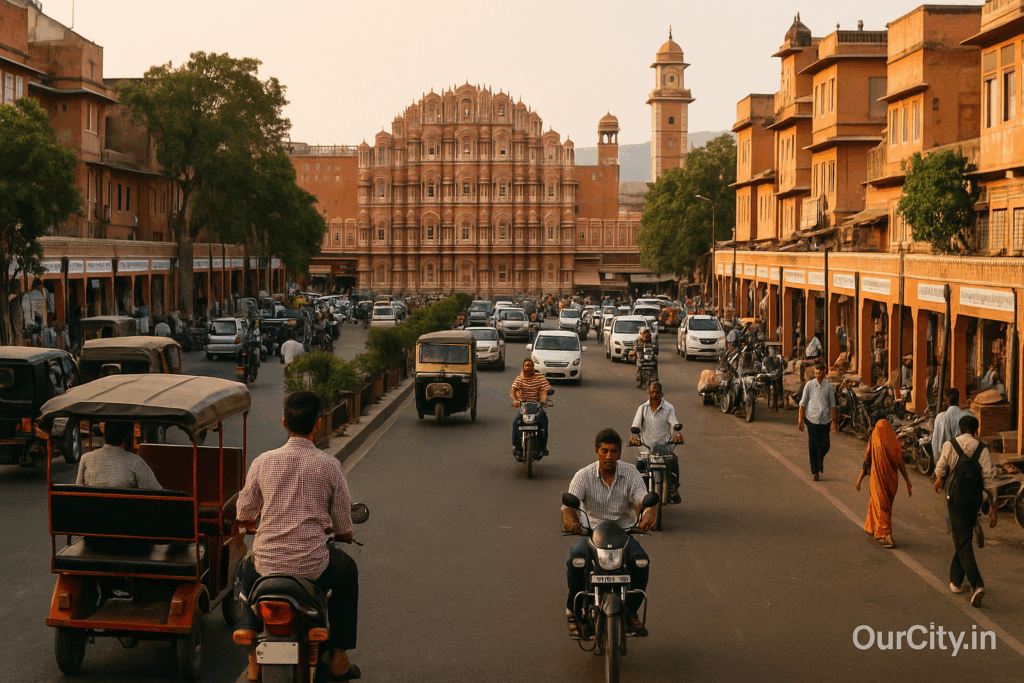
Jaipur is charming and practical at the same time. The walled city’s pink facades, the bustle around Badi Chaupar, and wide avenues on JLN Marg and Tonk Road make life feel relaxed—until April heat hits, a sudden monsoon shower slows traffic near the gates, or an auto bhaiya refuses meter. Newcomers usually misjudge two things: how strong the sun is (even in March) and how far places really are (city looks compact, but Mansarovar to Jagatpura is a proper cross-town haul). This guide keeps it real with scripts, price cues, seasonal kits, and neighborhood-specific habits. Read once, save a copy, and you’ll feel settled by Week 2.
Locals say: “Savera nikal jao, shaam tak kaam niptao.” (Start early; finish the important stuff before evening.)
🧭 Why These Survival Hacks Matter in Jaipur
Day 1, you need simple, trustworthy cues—how to get from Sindhi Camp to C-Scheme, how much to pay an auto, and where to refill water without fuss. By Week 4, you’ll want deeper rhythms—peak-hour windows, where traffic actually bunches during a drizzle, which metro gates land you near Bapu Bazaar, and how to keep a clean air corner at home in winter. This guide cuts through the guesswork: practical scripts, price ranges, season-wise checklists, and calm safety habits you’ll actually use.
🚇 Move Smart Every Day
Metro/Train/Bus Basics
Jaipur Metro (JMRC) is your reliable spine between Mansarovar side and the walled city around Chandpole–Badi Chaupar. Trains are clean, air-conditioned, and predictable. Coaches have reserved seating zones (women, elderly, PWD)—watch the signage. For exact train timings and any service alerts, check the Jaipur Metro official app or website before you step out.
Tickets & Cards
-
Single journey tokens: Good for occasional hops (typical short hops ~₹20–60; check live fares in the official app).
-
Stored-value smart card: Pay a small refundable deposit, top up ₹100–₹1,000 as needed. Handy if you ride 3–5 days a week.
-
Daily/weekly passes (when available): Useful during internship weeks or festival errands. Always verify the latest pass options in the official app.
Buses & last-mile
-
Feeder buses and e-rickshaws cluster near major metro stops like Mansarovar, Civil Lines, Chandpole, Badi Chaupar.
-
For the walled city (Johari Bazaar, Bapu Bazaar, Tripolia), short walks through pols (city gates/lanes) often beat motorised last-mile during peak hours.
Sindhi Camp bus station is the intercity hub. Keep your backpack in front and use a small cable lock if you’re solo with a laptop.
Women-only comfort: While there isn’t a separate women’s coach on every train, reserved seats are enforced and respected. Use the first/last coach near station masters if you want more staff presence.
Scripts that work
-
Auto: “भैया, मीटर से चलिए।” / Bhaiya, meter se chaliye.
-
If they insist on fixed: “फिक्स्ड रेट कितना? रसीद देना।” / Fixed rate kitna? Receipt dena.
-
Directions: “मुझे राजापार्क जाना है, लेफ्ट से निकालना।” / Mujhe Raja Park jana hai, left se nikaalna.
Auto/Taxi Fair-Play (Scripts + Price Cues)
Autos should start the meter. Typical per-km feel for Jaipur hovers around ₹12–20 depending on time and traffic. Short intra-old-city hops can look “cheap,” but waiting and crawling lanes add up.
-
Starting line: “Bhaiya, meter se chaliye.”
-
If meter ‘broken’: “Theek hai, nearest police booth pe poochh leta/leti hoon.”
-
Airport to city: Expect a surcharge or app-cab fare around what you’d pay for 10–15 km in daytime. Check your app for a live estimate.
-
App cabs (Ola/Uber) vs autos: App cabs win during late evening (post 21:00) and cross-town rides (e.g., Mansarovar ↔ Jagatpura), while autos are quicker for short hops in Bapu Bazaar, MI Road, C-Scheme.
Safety habit: Before boarding, match number plate with the app and share trip with a friend/family group.
Peak Hours & Platform Positions
-
Avoid crowd windows: 08:30–10:00 and 18:00–20:00 on metro and key corridors (Tonk Road, Ajmer Road, JLN Marg).
-
Shortcuts: In the walled city, walking two blocks via inner lanes around Badi Chaupar often beats a 10-min auto detour.
-
Platforms: If you plan to exit near the front station gate (watch signage), stand toward the front two coaches to shave a minute off your walk. Reverse if your exit usually aligns with the rear.
🕔 Commuter Cheat Codes
Interchange logic (time-savers)
-
Heading to Hawa Mahal/Johari Bazaar? Alight at Badi Chaupar; follow signage toward the bazaar side—don’t cross the main road again; the inner lanes are faster.
-
For MI Road/C-Scheme, Civil Lines is a good bet; look for auto/e-rickshaw stands just outside, or walk 10–12 minutes on a broad pavement.
Park-and-Ride sweet spots
-
Mansarovar, Vivek Vihar, Civil Lines, Chandpole, New Aatish Market typically have easier parking in the daytime compared to inner walled city. Park, ride metro, and walk the last 400–800 m.
Rain-day reroutes
-
If a shower starts, skip underpasses on Tonk Road near Gopalpura and low-lying gates around the old city—choose slightly longer but open routes on higher ground.
-
Give yourself an “arrive by” buffer (e.g., target 09:15 for a 10:00 appointment during monsoon weeks).
Sample patterns
-
Morning eastbound: Mansarovar → Civil Lines → Ajmeri Gate/Badi Chaupar for old-city work. Walk last 600 m to beat bazaar traffic.
-
Evening southbound: C-Scheme/MI Road → Tonk Road → Malviya Nagar/Jagatpura; book an app cab before peak to avoid surge.
Locals say: “Gate pe mat अटकना; andar wali gali पकड़ लो.” (Don’t get stuck at the main gate; take the inside lane.)
🌤 Weather Playbooks That Actually Work
Heatwave Kit & Day Plan (Apr–Jun)
Jaipur’s dry heat is serious. Plan like you would for a trek, not a mall run.
Carry
-
Water + ORS: 1 sachet per 1 L. If you sweat a lot, add a second sachet by late afternoon.
-
Loose cotton/linen, cap/hat, UV umbrella.
-
ORS + paracetamol, teeny sunscreen tube (Stick to basics; see a doctor if feeling unwell).
Day plan
-
Step out before 10:00, wrap outdoor work by 12:00; restart after 16:30.
-
Refill at metro stations, malls (World Trade Park), offices—discreet, safe.
-
Signs of heat exhaustion: dizziness, headache, heavy sweating → move to shade/AC, sip ORS slowly, cool wrists/neck, and see a hospital if symptoms persist.
At home
-
Cross-ventilate early morning; pull curtains by 11:00.
-
A simple cool corner: fan + bowl of water below + damp cotton cloth near airflow.
Monsoon Kit, Routes & Food Safety (Jun–Sep; varies)
Jaipur’s rain can be patchy: a sudden cloudburst turns gate-areas slushy while MI Road stays manageable.
Carry
-
Quick-dry footwear or anti-slip sandals; a spare pair of socks in a zip pouch.
-
Rain cover for laptop/bag, two zipper bags for documents.
-
Anti-fog wipe for glasses/helmet visor.
Avoid
-
Waterlogging belts near Ajmeri Gate/Sanganeri Gate, Badi Chaupar approaches, and underpasses off Tonk Road when the shower is intense.
-
Open drains in dim light; use your phone torch.
Health
-
Dengue prevention: fit window screens, use coils or plug-in repellents at dusk, remove stagnant water from balcony planters.
-
Street food is fun; on heavy rain days, prefer hot, freshly fried items at known shops (think pyaaz kachori, mirchi vada from places locals trust) and skip cut fruit.
Winter/Smog Masking & Indoor Air (Dec–Jan peak)
Jaipur winters are cooler than you’d expect and air can slip to Poor at night.
Masking
-
Use N95/FFP2 with a snug nose clip.
-
Morning walks: 10:00–16:00 window has better sun and often better AQI than dawn.
DIY clean corner
-
A room with closed windows at night, a basic HEPA purifier if you can budget it, or a fan pointed through a DIY box filter (avoid candles/incense inside).
Home kits (micro-checklists)
-
Heat kit: Cap, UV brolly, ORS x4, 1-L bottle, light scarf, lip balm.
-
Monsoon kit: Foldable raincoat, quick-dry sandals, bag cover, 2 zip pouches, anti-fog wipe.
-
Winter/smog kit: N95 x2, light wool cap, moisturizer, small saline nasal spray.
🩺 Health & Emergencies Without Panic
Hospitals, Ambulance, First Aid
-
Pan-India numbers: 112 (all emergencies), 108 (ambulance). Save both.
-
City types: Women’s safety helplines, traffic control rooms, metro customer care, disaster control—use official apps/websites to fetch the current numbers; don’t rely on random posters.
Where to head (illustrative, not exhaustive)
-
Government hubs (e.g., large teaching hospitals) are best for casualty/trauma; queues can be longer.
-
Private hospitals (e.g., in Malviya Nagar, Jagatpura, Mansarovar, C-Scheme) are faster for diagnostics if you can manage the bill or have cashless insurance.
-
Carry photo ID, insurance e-card, and one paper copy of ID.
First-aid mini-guides
-
Dehydration/heat exhaustion: Shade/AC, cool cloths on neck/wrists, small sips of ORS; see a doctor if confusion/vomiting starts.
-
Minor cuts/sprains: Clean with potable water, compress/elevate, basic pain relief; x-ray if weight-bearing hurts.
-
Dog/cat bites: Wash with soap + running water for 15 minutes, then go to a hospital for tetanus/anti-rabies plan.
-
Food poisoning basics: ORS, rest; hospital if severe cramps, blood in stool, or persistent vomiting.
Pharmacy & Safe Self-Care
-
Pharmacies in Raja Park, Vaishali Nagar, Malviya Nagar run late; many offer home delivery.
-
Keep ORS, paracetamol, basic bandages, antiseptic, digital thermometer at home.
-
Read labels; when in doubt, consult a doctor—don’t mix meds casually.
🛡️ Night & Solo Safety
Women’s Compartment/Coach Pointers
-
On metro, look for reserved seating zones and ride near the station master’s end at night.
-
Choose well-lit exits; in the walled city, wait near temple/marketlight clusters rather than quiet by-lanes.
App Cab vs Street Hail (When & Why)
-
After 21:00, prefer app cabs over street hails. Keep your live location shared.
-
Check driver photo/plate in app; ask them to say your name before boarding.
Polite Refusal Scripts & Red Flags
-
Street sellers who won’t take no: “नहीं चाहिए, धन्यवाद।” / Nahi chahiye, thank you.
-
Auto pushing detours: “मैं ऐप से बुक कर रहा/रही हूँ।” / Main app se book kar raha/rahi hoon.
-
Too-good tourist deals: “Police se confirm kar leta/leti hoon.”
Red flags
-
QR swap on shop counters—use your own saved UPI contacts or verify the merchant name.
-
Wrong UPI request (“pay request”)—decline, then pay only by scanning a fresh code.
-
Keep cards and phone separate in crowds at Johari Bazaar, Bapu Bazaar, Sindhi Camp, festival gatherings at Govind Dev Ji.
Locals say: “Photo le lo, paisa mat दो किसी अजनबी को.” (Take a picture of the number if needed; don’t hand cash to a stranger.)
🏠 Housing, PGs & Utilities
Deposits, Clauses & Broker Scripts
Where people stay
-
Students/freshers: Jagatpura, Malviya Nagar, Mansarovar, Gopalpura (close to campuses and coaching).
-
Young professionals: C-Scheme, Vaishali Nagar, Ajmer Road pockets, Civil Lines.
-
Families: Vaishali Nagar, Mansarovar, Malviya Nagar, Pratap Nagar.
Typical norms
-
Security deposit: 1–2 months’ rent (ask for receipt).
-
Brokerage: Usually one month’s rent (some areas half-month).
-
Notice period: 1 month is common; check painting/minor repairs clauses.
Questions to ask
-
“Water timing kya hai—municipal vs borewell? Tanker days hotay hain?”
-
“Power backup hai—common area + flat dono?”
-
“FTTH/DSL kaun sa hai—speed and downtime?”
-
“Maintenance mein kya-kya included hai?”
Scripts
-
“Deposit kitna refundable hai, aur kab?”
-
“Agreement mein minor repairs kaun karega—owner ya tenant?”
Power/Water Outage Playbook
-
Use surge protectors for fridge/PC; keep a 3-way extension handy near the inverter.
-
Keep phones 80%+ charged by evening in peak summer.
-
Water scarcity spikes in late summer in pockets of Jagatpura, Sanganer, Vaishali Nagar—store two drums (food-grade) and service your RO/UV unit on time.
Pest & Mosquito Control That Works
-
Drain trays under fridge/washing machine; dry them weekly in monsoon.
-
Window nets + evening coils/plug-ins.
-
Borax/gel baits work better for ants/cockroaches than sprays in the long run.
📄 Paperwork That Saves You Time
Tenant Verification & Receipts
-
Jaipur landlords often ask for tenant/police verification. Visit the local police station or use the state police citizen portal/app for the current process. Collect the acknowledgement slip/email.
E-Challan & Civic Apps
-
Check and pay traffic challans via Parivahan or the state traffic portal (search by vehicle number).
-
For broken streetlights, garbage pickup, or potholes, use Rajasthan Sampark or the Jaipur Smart City channels to raise a ticket with photos. Track status in-app.
Driving rules that trip newcomers
-
Watch for one-ways around the walled city.
-
No-parking near bazaars (even if “everyone” stands for 5 minutes). Tow is real.
-
Don’t block temple gates and school entries during morning prayers/drop-offs.
💸 Daily Costs & Cash-UPI Rhythm
Sample Budgets & Top-Ups
-
Daily food: ₹120–₹250 for simple lunch (thali/rolls), ₹20–₹40 for chai, ₹50–₹120 for a light evening bite.
-
Commute: Metro short hops ~₹20–₹60; auto ₹12–20/km; app cab ₹12–25/km depending on time/traffic.
-
Metro card: Keep ₹300–₹600 topped up; deposit is refundable on return (per official rules; check the app).
Emergency Cash & ID Copies
-
Contingency cash rule: Keep ₹1,000–₹2,000 at home, ₹300–₹500 in a slim transit pouch.
-
Keep scans of Aadhaar, DL, prescriptions in a secure document locker app; carry one paper copy of an ID when doing rentals or hospital work.
📱 Must-Have Apps & Offline Backups
Official Transport & Traffic Tools
-
Jaipur Metro official app/website: live timings, fares, announcements.
-
Ride-hail apps (Ola/Uber) + Rapido (where active) for quick point-to-point.
-
Maps with offline areas saved (walled city lanes can drop signal).
ICE Contacts & Document Lockers
-
Set ICE (In Case of Emergency) contacts on your phone’s lock screen/medical ID widget.
-
Use a trusted document locker for IDs, insurance e-cards, lab reports.
-
Payments: UPI (PhonePe, GPay, Paytm) works across chai tapris to malls; verify merchant name before paying.
Network quirks
-
Basements of big malls (e.g., World Trade Park), some walled city lanes, and underpasses can have patchy signal. Save map tiles offline.
🚗 Driving, Parking & Towing Traps
Rain Riding & Helmet Basics
-
First heavy shower = hidden potholes on Ajmer Road, Sikar Road. Ride steady; no sudden braking.
-
Wear BIS/ISI-marked helmets. For pillion riders too—enforcement is stricter near big junctions.
No-Parking Pockets You’ll Want to Know
-
Johari Bazaar/Bapu Bazaar main stretches, MI Road commercial belt, lanes near Hawa Mahal; look for multilevel or off-main parking boards and walk 6–10 minutes.
-
If your vehicle is missing, check the Jaipur Traffic Police portal or helpline for tow yard location before panicking.
Airport/Rail pickups
-
Jaipur International (Sanganer): Follow pickup lane signs; don’t wait on the ramp. Many airports offer a short grace period—read the board that day.
-
Jaipur Junction (Sindhi Camp side): Use designated pickup zones; police here are brisk during evening peaks.
🌊 Disaster Readiness (City-Specific)
Flood/Cyclone/Earthquake Notes
-
Jaipur isn’t coastal, so cyclones aren’t a worry. Monsoon flooding can still hit low-lying gates/underpasses after a downpour—avoid driving into pooled water; engines stall fast.
-
Earthquakes are unlikely but possible. Drop-Cover-Hold, take stairs (not lifts) after shaking stops, and assemble in open grounds like neighborhood parks.
Go-Bag & Family Plan
-
Go-bag checklist (home corner)
-
1-L water bottle x2, ORS x6
-
Torch + spare batteries, power bank
-
Copies of IDs + small cash (₹2,000)
-
2-day meds, basic first aid
-
Light rain poncho, small towel
-
Spare phone charger, whistle
-
-
Family plan
-
Decide a meet point (e.g., near Central Park gate/nearest landmark).
-
Teach kids to share live location and recite two phone numbers by heart.
-
Keep one out-of-city contact as the backup relay.
-
👥 Special Playbooks
Students & Freshers
-
PG clusters: Jagatpura, Mansarovar, Gopalpura, Malviya Nagar. Ask about quiet hours if you prep for exams.
-
Budget messes: Look for tiffin services around Raja Park, Vaishali Nagar; sample for 2–3 days before paying monthly.
-
Study spaces: Libraries/reading rooms on/near JLN Marg get busy near exam season—reach by 10:00 for a decent seat.
-
Commute tip: Try a metro card if your institute is near a station; otherwise, plan a fixed auto rate for weekly classes with one reliable driver.
Solo Women
-
Prefer app cabs after 21:00; share trip/live location. Sit behind the driver, not in the front seat.
-
Wait near lit ATMs/hotel fronts on MI Road, C-Scheme, JLN Marg rather than quiet corners.
-
In apartments, prefer elevators over isolated stairwells at night.
-
Keep a charged power bank; avoid walking with both earbuds in.
Parents with Kids
-
Parks: Central Park (C-Scheme) and Jawahar Circle (Malviya Nagar) are stroller-friendly; 16:30–18:30 is a good slot in summer.
-
Festivals: Use a child-ID wristband (name + phone). Agree a meet point (e.g., main gate/tree) before entering crowded melas or temple events.
-
Carry a snack + water always—hunger amplifies meltdowns in heat.
Elders & PWD
-
Many metro stations have lifts; ask staff for the near-level exit.
-
Low-floor buses run on key corridors; confirm ramp availability with the conductor.
-
Hospital windows: 10:00–12:00 OPDs are efficient; avoid post-lunch wave when staff rotations happen.
✅ Quick Cheatsheets (Tables)
Typical Metro/Auto Cheatsheet
(Always check the Jaipur Metro official app for live fares/timings.)
| Item | Typical Range | Notes |
|---|---|---|
| Metro short hop | ₹20–₹60 | Based on distance; confirm in app |
| Smart card top-up | ₹100–₹1,000 | Deposit refundable per rules |
| Auto per-km | ₹12–₹20 | Ask for meter; fixed only if meter fails |
| App cab per-km | ₹12–₹25 | Surge possible evenings/late night |
| Airport surcharge | Varies | Check app estimate before boarding |
Peak Hours & “Arrive By” Cues
| Corridor/Area | Crowd Window | Arrive By |
|---|---|---|
| Walled city gates | 08:30–10:00; 18:00–20:00 | 09:15 for 10:00 work |
| Tonk Road/JLN Marg | 09:00–10:00; 19:00–20:00 | 18:30 for 19:30 flights/dinners |
| MI Road/C-Scheme | 09:30–10:30; 18:30–19:30 | 18:00 for 19:00 meets |
AQI Bands & Actions (Indicative)
| AQI | Band | What You Do |
|---|---|---|
| 0–100 | Good–Satisfactory | Open windows, normal walks |
| 101–200 | Moderate | Sensitive folks use light mask |
| 201–300 | Poor | N95 outdoors; keep one room clean-air |
| 301–400 | Very Poor | Limit outdoor exertion; purifier if possible |
| 401+ | Severe | Shift workouts indoors; consult doctor if breathless |
Monsoon & Heat Kits
| Kit | Items |
|---|---|
| Heat | Cap/UV umbrella, ORS x4, 1-L bottle, sunscreen mini, light scarf |
| Monsoon | Rain jacket, quick-dry sandals, bag cover, 2 zip pouches, anti-fog wipe |
Go-Bag (Home Corner)
| Category | Items |
|---|---|
| Docs & Money | ID copies, ₹2,000 cash, insurance e-card print |
| Power & Light | Power bank, torch, spare batteries |
| Health | ORS x6, first aid, 2-day meds |
| Weather | Poncho, small towel |
| Comms | Spare charger, whistle |
❓FAQs
1) What’s the fastest way from Mansarovar to the walled city?
Metro to Chandpole/Badi Chaupar, then walk/e-rickshaw. For late nights, app cab door-to-door.
2) How early should I reach Jaipur Junction for an intercity train?
45–60 minutes early is stress-free, more during festival weeks.
3) Do I need cash or will UPI do?
UPI works almost everywhere. Keep ₹300–₹500 cash for emergencies or tiny shops.
4) Is the old city safe at night?
Stick to lit main roads, prefer app cabs, and avoid very narrow lanes after 22:00 if you’re alone.
5) What if an auto refuses meter?
Use: “Meter se chaliye, warna app se book kar leta/leti hoon.” Walk 50 m to a busier stand; don’t argue.
6) Flooding scares me—how to judge?
If water is ankle-deep and rising near a gate/underpass, do not drive through. Take inner high lanes or wait 20–30 minutes after a burst.
7) Which mask should I keep for winter?
A well-fitting N95/FFP2. Keep two spares.
8) Lost phone/wallet—what now?
Use a friend’s phone to block SIM and UPI quickly, log out of WhatsApp/Payments on your laptop, and file a report via the state police portal or nearest station.
9) Are there women-only coaches?
Reserved seating exists; staff are responsive. Stand near the station master’s end at night for comfort.
10) Best time to visit bazaars without elbowing crowds?
11:00–13:00 on weekdays. Evenings and weekends get festive and packed.
11) Where do students find affordable eats?
Around Raja Park, Gopalpura, Mansarovar, you’ll find tiffins and thalis under ₹120–₹180.
12) Power cuts?
Usually brief. Keep a power bank, torch, and phone ≥80% by evening in summer.
13) Can I park near Hawa Mahal?
Use designated lots and walk 6–10 minutes. Don’t risk no-parking stretches—towing is quick.
14) App cab safety 101?
Match plate & driver photo, share trip, sit behind driver, and avoid engaging if you feel uncomfortable—ask to stop at a lit, populated spot.
15) Which neighborhoods are best for first homes?
For balance of commute and budget: Mansarovar, Vaishali Nagar, Malviya Nagar, Jagatpura. Visit at night once to gauge lighting and noise.
🔚 Wrap-Up: You’ll Be Fine Here
Jaipur rewards people who start early, carry water + ORS, and walk the last 500–800 m in the old city. Learn your two or three personal routes (office, market, hospital) and save them offline. Keep the scripts handy, stay calm with money and meters, and enjoy the city’s good manners and generous space.
Locals say: “Din mein kaam, shaam ko Jaipur.” Get the work done by day; keep your evenings free for a lassi at MI Road or a slow walk in Central Park.