Howrah Culture Guide
Table of Contents
Howrah Traditions & Culture: Show Up Right
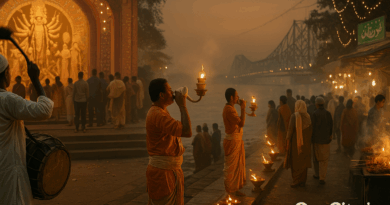
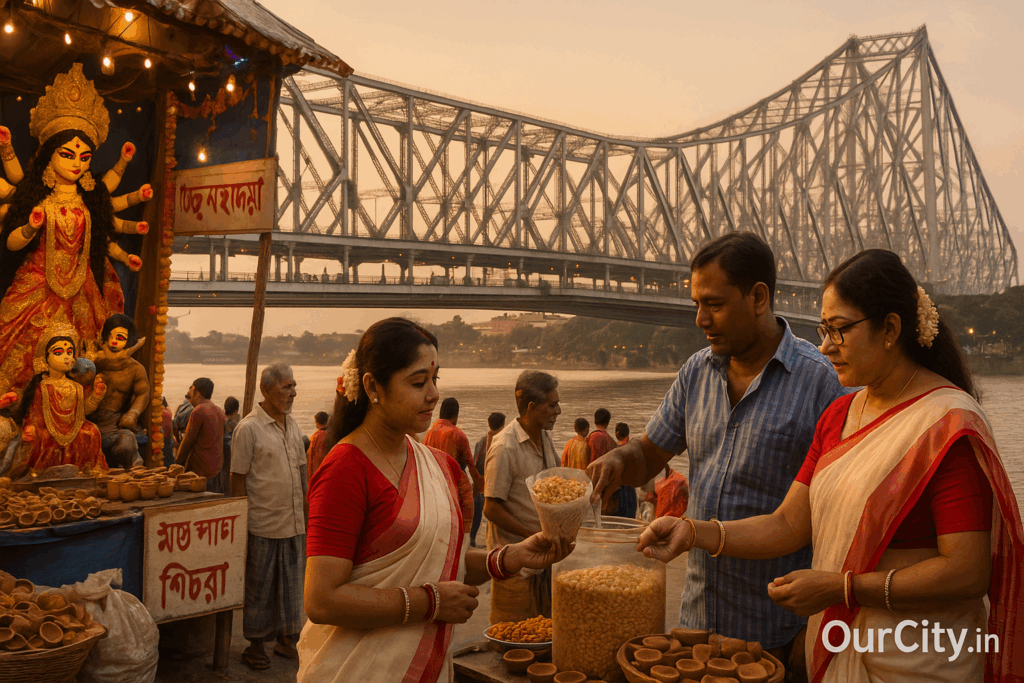
Howrah sits on the Hooghly’s west bank, facing Kolkata across the water and linked by the iconic Howrah Bridge (Rabindra Setu) and Vidyasagar Setu. It’s industrial, old-school, creative, and deeply devotional. Mornings open with conch shells and temple bells; evenings glow with aarti lamps at Belur Math and ferry lights at Ramkrishnapur Ghat. People move with purpose—office-goers near Howrah Station, families at Shibpur’s Botanic Garden, puja committees in Salkia and Liluah fine-tuning pandals. First-timers often misjudge crowd windows and dress codes, or don’t know when to ask and when to step back. This guide fixes that—so you feel local-fast, respectful, and safe.
🪔 ## Why This Culture Guide Works for Howrah
You want clear time cues (reach-early windows, avoid-surge bands), simple scripts in Bengali/Hindi/English, and real-life neighborhood hints. That’s what you’ll get—plus seasonal tweaks (heat, monsoon, winter), donation ranges, and easy ways to volunteer. We don’t list exact addresses or hard timings (they change). We give live-check nudges like “see the temple trust’s noticeboard/app” or “follow the city police advisory.”
Neighborhood name-drops you’ll see here: Shibpur, Belur, Bally, Liluah, Salkia, Howrah Maidan, Mandirtala, Dasnagar, Ramrajatala, Santragachi, Jagacha, Kadamtala, Tikiapara, Domjur, Andul, Kona, Uluberia (district side), Mourigram, Bally Khal.
Locals say: “Reach before sunrise; the river feels kinder.”
🪔 ## Festival Calendar: What Happens When (Jan–Dec)
City Highlights Month by Month
January — Poush/ Magh vibes. Swami Vivekananda Jayanti events at Belur Math (Belur). Many households observe Poush Parbon with pithe–puli sweets. Quiet church feasts linger after New Year in Howrah Maidan area.
February — Saraswati Puja in schools, para clubs across Salkia, Liluah, Ramrajatala. Yellow saris/kurta are common. Expect light traffic near school lanes late morning.
March — Dol–Holi. In Bally and Domjur, morning abir (dry colours) is gentler; afternoons get louder. Carry a spare cloth for prasad and a zip pouch for your phone.
April — Poila Boishakh (Bengali New Year) fills markets in Howrah Maidan, Dobson Road, Belur bazar. Shops do haal–khata (new ledger) pujas.
May — Rath Yatra prep starts in pockets near Howrah Maidan and Shibpur; some neighbourhoods take out smaller chariots. Heat is peak—go early.
June — Monsoon edges in. Eid-ul-Adha (date varies) brings morning namaz at community mosques in Tikiapara, Mandirtala, Santragachi. Dress modest, wish “Eid Mubarak,” and don’t block exits.
July — Ratha Yatra processions roll (dates vary), plus Guru Purnima satsangs at ashrams around Belur–Bally belt.
August — Janmashtami bhajans; some late-night aartis. Independence Day cultural programs at Sarat Sadan (Howrah Maidan) and school grounds.
September — Vishwakarma Puja in factories/workshops across Dasnagar, Jagacha, Liluah. Expect colourful kites and workplace pujas.
October — The big one: Durga Puja/Navratri; pandals across Salkia, Liluah, Shibpur, Bally, Kadamtala, Mandirtala. Sandhi Puja, Ashtami anjali, and Dashami sindoor khela draw big crowds. Check police traffic diversions.
November — Kali Puja/Diwali nights; lamps along lanes in Ramrajatala and Belur. Jagaddhatri Puja runs in pockets after Diwali. Guru Nanak Jayanti processions around local gurdwaras (Liluah belt).
December — Christmas: calm Midnight Mass at churches around Howrah Maidan and Liluah. Year-end picnics at Botanic Garden (Shibpur) and ferry rides from Bally/Belur.
Locals say: “Monsoon pandals need non-slip footwear—don’t learn the hard way.”
Where to Go & When to Arrive (Time Cues)
- Morning aarti (temples/ashrams): Arrive by 05:45–06:00; first slot stays gentler till 07:30.
- Evening aarti (ghats/ashrams): Reach 30–45 min early; avoid 18:00–20:00 surge on festival weeks.
- Friday namaz (mosques): Be around edges 15 min before sermon begins; don’t stand at doorway.
- Sunday Mass (churches): Standard slots: early morning and late morning—confirm locally.
- Durga Puja pandal peak: Saptami–Navami nights 19:00–23:00 are dense; choose 06:00–09:00 or 14:30–16:30 windows for seniors and kids.
- Ferries (Belur/Bally/Ramkrishnapur): Pre-sunset queues build in festival weeks; keep 20–30 min buffer.
Family-, Senior-, and Child-Friendly Tips
- Stick to edge lanes and barricade corners for processions. Avoid front of chariots or dhak circles.
- Use meet-up points like “under the big neem near Mandirtala police kiosk” or “ferry gate number board at Belur.” Write a contact number and tuck into a child’s pocket.
- For elders, aim post-lunch lull (14:00–17:00) or early mornings; carry a folding cane stool if needed.
- Prefer app cabs or official ferries after 21:00. Skip random lifts.
🪔 ## Sacred Spaces Etiquette (Temples • Gurdwaras • Dargahs/Mosques • Churches • Ghats)
Temples (e.g., Belur Math area): Use shoe racks; keep shoulders/knees covered. Phones on silent. During aarti, don’t push forward or raise phones above eye level. Prasad: accept with right hand onto your palm or a small leaf/dona. Abhishek timings vary—ask at the counter.
Gurdwaras (Liluah/Howrah belt): Cover head (men: handkerchief/patka; women: dupatta). Wash hands, leave shoes at the jora ghar (shoe area). Sit in pangat (community row) for langar; don’t waste food; help with seva—rotis, serving water, or cleaning.
Dargahs & Mosques (Tikiapara/Mandirtala/Santragachi): Head covering is respectful for all. Offer chadar or flowers if it’s that kind of urs/ziyarat; ask before stepping into gendered areas. During namaz, step aside; photography is sensitive—better not, or ask.
Churches (Howrah Maidan/Liluah): Enter quietly, follow stand/sit cues. Confession areas are private. For Midnight Mass, modest winter layers and closed shoes are sensible.
River ghats (Belur/Bally/Ramkrishnapur): Be calm around cremation rites; keep distance and avoid photos. Steps get slippery—watch footing. Use bins; don’t throw coins/flowers in the water.
What to Wear & Carry
- Dress: Light cottons in heat; shawl/dupatta for head cover; kurta/comfortable pants; saris/salwar for women. Covered shoulders/knees.
- Footwear: Easy to remove. Carry socks for hot floors (summer) and non-slip sandals (monsoon).
- Carry list: small scarf/handkerchief, refillable bottle, ORS sachet (Apr–Jun), wet wipes, compact umbrella (Jun–Sep), small cloth bag for offerings.
Offerings/Prasad/Chadar: Ranges & Rules
Typical Howrah-side ranges:
- Flowers: ₹20–100
- Prasad boxes (ladoos/sandesh where allowed): ₹20–60
- Oil/ghee packs: ₹50–200
- Candles/diyas: ₹10–30
- Chadar (for dargah): ₹200–600
Give with your right hand, don’t wave cash around; UPI donation boxes are common. Keep ₹10–₹50 notes/coins for swift flow.
Photography & Phone Etiquette
- Ask first. Some shrines allow courtyard photos but not inner sanctum.
- No flash during aarti, no phones over heads.
- Avoid clicking faces during sensitive rites.
- Drones are a no near processions/sacred zones unless a formal permit is publicly announced.
Ask Politely (Ready Scripts)
- “Photography allowed hai? / Bengali: Chhobi tola jabe? (ছবি তোলা যাবে?)”
- “Queue kahan se shuru hoti hai? / Bengali: Line kothay shuru? (লাইন কোথায় শুরু?)”
- “Darshan token yahin milta hai? / Bengali: Token ekhanei? (টোকেন এখানেই?)”
- “Head cover kahaan milega? / Bengali: Matha dhakar orna kothay pabo? (মাথা ঢাকার ওড়না কোথায় পাবো?)”
- “Maaf kijiye, photo allowed nahi hai to main phone band kar deta/deti hoon. / Bengali: Jodi chhobi na hoy, ami phone rakhchi. (যদি ছবি না হয়, আমি ফোন রাখছি.)”
Locals say: “Right-hand giving looks small, feels big—keep it simple.”
🪔 ## Processions, Melas & Community Events
Howrah’s para culture runs on moholla committees and factory clubs. You’ll see dhak troupes, jhanki floats, kite lines on rooftops, and kids in tiny costume parades.
Safe Viewing Spots & Exit Plans
- Choose edges of routes, a step back from the moving chariot or tazia. Corners offer better side views.
- Identify two exits: one back-lane, one main road. In Salkia and Kadamtala, lanes interlock—note landmarks.
- Ferry-side events near Belur/Bally: stay behind the yellow line; keep children on the inside.
Transport Diversions & Crowd Windows
- Durga Puja week: One-way loops around Liluah–Salkia–Howrah Maidan late evenings. Park far, walk in.
- Aarti peak: 18:00–20:00 most days; pick 30–45 min pre-peak or post-peak windows.
- Metro & ferries: The East–West Metro connects Howrah Maidan/Howrah to the Salt Lake side; ferries run Belur/Bally/Ramkrishnapur. Check the official metro app and ferry counters for live last trips.
If You Get Separated (Meet-up Scripts)
- “Main Mandirtala police kiosk ke paas ruk raha/rahi hoon.”
- Bengali: “Ami Belur ferry gate-er signboard er niche achhi. (আমি বেলুড় ফেরি গেটের সাইনবোর্ডের নিচে আছি.)”
- “Please move towards the tea stall near Sarat Sadan gate; I’m there in 5 min.”
🪔 ## Seva, Daan & Doing Your Bit
Simple Ways to Volunteer
- Shoe-rack help at temples and gurdwaras (fastest way to learn the rhythm).
- Langar service (water, rotis, cleaning pangat rows) at local gurdwaras—ask the sevadaar.
- Queue guidance at pandals; hold a rope, smile, and keep it moving.
- Post-event cleanups near Ramkrishnapur Ghat, Bally Ghat, or around Mandirtala—carry gloves.
Ask simply: “Langar kahaan serve ho raha hai? Main seva kar sakta/sakti hoon?” / Bengali: “Langar kothay cholche? Ami seva korte pari? (লঙ্গর কোথায় চলছে? আমি সেবা করতে পারি?)”
Hygiene & Clean-up Etiquette
- Segregate offerings after use (flowers to compost bins where provided).
- Don’t leave plastic at ghats or under pandal stages.
- Handwash before handling prasad.
Digital UPI vs Cash (When & How)
- UPI boxes/QR stands are common at big shrines; confirm beneficiary name on screen.
- Cash is handy for small dais, diyas, and ferries. Keep ₹10–₹100 in an outer pocket.
🪔 ## Arts, Crafts, Music & Dance of Howrah
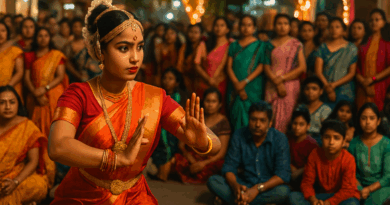
Howrah’s pride is workmanlike skill—metalwork, foundry heritage, and para clubs that sponsor music nights. You’ll hear Rabindra Sangeet, kirtan, and old-school jatra theatre in community halls. Idol craftsmanship flourishes across the river at Kumartuli (Kolkata), but many Howrah clubs commission finishing work locally in Salkia, Bally, Liluah.
What to See Live (Rehearsals, Sabhas, Baithaks)
- Evening bhajans in ashrams near Belur–Bally.
- Community jatra rehearsals in Domjur/Uluberia belts (district side) ahead of winter fairs.
- School–college sabhas at Sarat Sadan (Howrah Maidan), especially around Independence Day and Rabindra Jayanti.
Ethical Souvenir Buying (Quick Tests & GI Mentions)
- Prefer hand-finished metal diyas/utensils from small shops in Salkia/Belur markets.
- Ask the artisan: “Kaam kaun karta hai yahan?” If the maker is present, prices are fairer.
- Inspect seams, polish, and weight. Handmade pieces feel slightly irregular but sturdy.
- For textiles, check for handloom labels or cooperative tags; avoid suspiciously uniform patterns.
Locals say: “If the artisan wipes the piece with pride before handing it—buy it.”
🪔 ## Language, Greetings & Everyday Manners
Local Phrases (Transliteration + Script)
- Nomoskar (নমস্কার) / Pronam (প্রণাম) — respectful hello.
- Dhonnobad (ধন্যবাদ) — thank you.
- Dada/Didi — friendly address for older man/woman.
- Bhalo thakun (ভালো থাকুন) — stay well.
- Chhoto kore bolben, bheed achhe (ছোটো করে বলবেন, ভিড় আছে) — please speak softly, it’s crowded.
- Hindi works widely too: Namaste, Shukriya, Maaf kijiye.
Right-Hand Giving, Thresholds, Sacred Trees/Animals
- Use the right hand to give/receive prasad or donations.
- Don’t step on thresholds of sanctums or prayer halls.
- Be mindful of sacred trees (peepal, banyan) and animals (cows by temple lanes). Offer space; no feeding without permission.
What Not to Do (Short List)
- Don’t push through aarti circles or block ferry gates.
- Don’t place bags on offering plates or holy books.
- Don’t argue with volunteers; ask, wait, smile.
🪔 ## Seasonal Playbooks (Heat • Monsoon • Winter/Smog • Peak Festive)
Heat (Apr–Jun)
- Target first aarti and post-17:00 visits. Carry ORS. Floors get hot—socks help.
- Shade matters: use covered shamiana lanes in big pandals.
Monsoon (Jun–Sep; varies)
- Expect waterlogging in pockets of Kadamtala, Salkia, and near railway underpasses.
- Wear non-slip sandals; carry a small plastic cover for offerings and a spare cloth.
- Prefer covered pandals and metro–ferry combos over long walks.
Winter/Smog (Nov–Jan)
- Early mornings are crisp; carry a light shawl.
- For Midnight Mass or predawn aarti, warm layers and closed shoes feel better.
- Consider a mask (FFP2) on smoggy evenings.
Peak Festive Weeks
- Book metro cards and ferry balance in advance where possible.
- Identify quiet hours (early mornings, post-lunch lulls) for seniors, children, and sensory-sensitive friends.
- Some police advisories cap loudspeakers or fireworks—check the city police advisory on event days.
Exam & Job-Hunt Season
- Need calm? Try early slots at Belur Math lawns (outside prayer times), quieter corners of Botanic Garden, or public libraries around Howrah Maidan.
🪔 ## Quick Cheatsheets (Tables)
Festival Months vs Typical Timings
| Festival/Observance | Typical Window | Quieter Slot Tip |
|---|---|---|
| Saraswati Puja | Feb (morning push) | 13:00–15:00 school lanes |
| Dol–Holi | Mar (till afternoon) | 08:00–10:00 seniors |
| Poila Boishakh | Mid-Apr (shop pujas) | 12:00–15:00 between waves |
| Rath Yatra | Jun–Jul (dates vary) | Edge lanes, not in front |
| Eid (Fitr/Adha) | Dates vary (morning namaz) | After dispersal, don’t block gates |
| Vishwakarma | Sep (workshops) | Stand clear of machine bays |
| Durga Puja | Oct (Saptami–Dashami) | 06:00–09:00 / 14:30–16:30 |
| Kali Puja/Diwali | Oct–Nov (night) | 19:00 before surge, or late ~22:00 |
| Christmas | 24–25 Dec (Mass) | Early morning service |
Etiquette by Place of Worship
| Place | Footwear | Head Cover | Offering Notes | Phone/Photo |
| Temple | Leave at rack | Optional (shawl ok) | Flowers/prasad, right-hand giving | Silent; no flash in aarti |
| Gurdwara | Jora ghar | Mandatory | Karah prasad, langar; don’t waste food | Quiet; photos outside main hall only if allowed |
| Dargah/Mosque | Shoe area | Recommended/mandatory | Chadar/flowers; respect gendered zones | Discreet or none |
| Church | Outside door | Not needed | Candles/quiet offerings | No photos during Mass |
| Ghat | Keep on unless told | Not needed | No throwing coins/flowers | Avoid near rites |
Offering/Donation Ranges (₹)
| Item | Range |
| Flowers | 20–100 |
| Prasad box | 20–60 |
| Oil/Ghee pack | 50–200 |
| Candles/Diyas | 10–30 |
| Chadar | 200–600 |
| Temple hundi (quiet donation) | 20–200 |
Quiet-Hour Windows & Crowd Surges
| Setting | Quiet Window | Surge Band |
| Morning aarti | 05:45–07:30 | 07:30–09:00 |
| Evening aarti | 17:30–18:00, 20:15–20:45 | 18:00–20:00 |
| Pandal lanes (Oct) | 06:00–09:00, 14:30–16:30 | 19:00–23:00 |
| Ferries (festival days) | 11:00–15:00 | Pre-sunset 16:30–18:30 |
🪔 ## FAQs (Real Questions)
1) What should I wear for temple darshan in Howrah?
Light cottons, covered shoulders/knees. Carry a scarf/dupatta for head cover if needed. Easy-to-remove footwear.
2) Are phones allowed inside Belur Math or local temples?
Rules vary by area of the complex and the event. Keep on silent, avoid inner sanctum photos, and never raise your phone during aarti. Ask: “Photography allowed hai?/Chhobi tola jabe?”
3) How early should I reach for evening aarti on the river side?
Aim 30–45 minutes early. Festival weeks see a 18:00–20:00 surge; before 18:00 feels calmer.
4) Can I attend langar at a gurdwara if I’m not Sikh?
Yes. Cover your head, wash hands, sit in pangat, and don’t waste food. Offer seva if you can.
5) Is it okay to carry offerings in plastic?
Prefer cloth or paper. In monsoon, use a reusable plastic cover only to protect items, then pocket it.
6) What’s a respectful donation amount?
Small and steady works: ₹20–₹200. Use the right hand; many places have UPI boxes.
7) How to move safely in Durga Puja crowds?
Keep to edges, follow barricades, avoid 19:00–23:00 lanes. Choose 06:00–09:00 or 14:30–16:30 for seniors/kids. Identify two exits.
8) Can I take a ferry after dark?
Yes on official routes; check last-trip times at counters. Stand clear of edges; children inside the line.
9) Are drones allowed during processions?
Generally no. Unless a public permit is announced, keep drones away from sacred routes.
10) What if I get separated from family?
Use a pre-decided point: “under the ferry signboard,” “near Mandirtala police kiosk,” or “tea stall by Sarat Sadan gate.” Keep a phone number slip in a child’s pocket.
11) I’m a solo woman—any extra tips?
Use early slots, avoid dense 19:00–23:00 windows, and prefer app cabs at night. Stand near families or volunteer desks in processions.
12) Can I carry prasad across the river to Kolkata?
Yes. Pack neatly; ferries/metro usually allow small offerings. Avoid strong open flames (carry unlit diyas).
13) Where can I catch quieter cultural programs?
Try school/college halls around Howrah Maidan or small ashram bhajans near Belur–Bally.
14) Are loudspeakers capped?
On some days, yes—per police/municipal advisories. Follow on event days; volunteers will guide you.
15) What snacks are fair-priced near venues?
Street chai ₹10–20, telebhaja fritters ₹10–25, ghugni bowls ₹20–40, phuchka plates ₹30–60. Carry change.
🪔 ## Wrap-Up: You’ll Fit Right In
Howrah rewards those who come prepared and act gently—arrive early, dress simple, ask softly, and give with the right hand. Let ferries and mornings do the heavy lifting. Keep seniors and kids in the calmer windows. And when in doubt, follow the volunteers—they keep the city’s cultural engine humming.
Locals say: “If you can hear the river and the dhak together—you’re right on time.”