Gwalior Food Guide
Table of Contents
Eat Like a Local in Gwalior
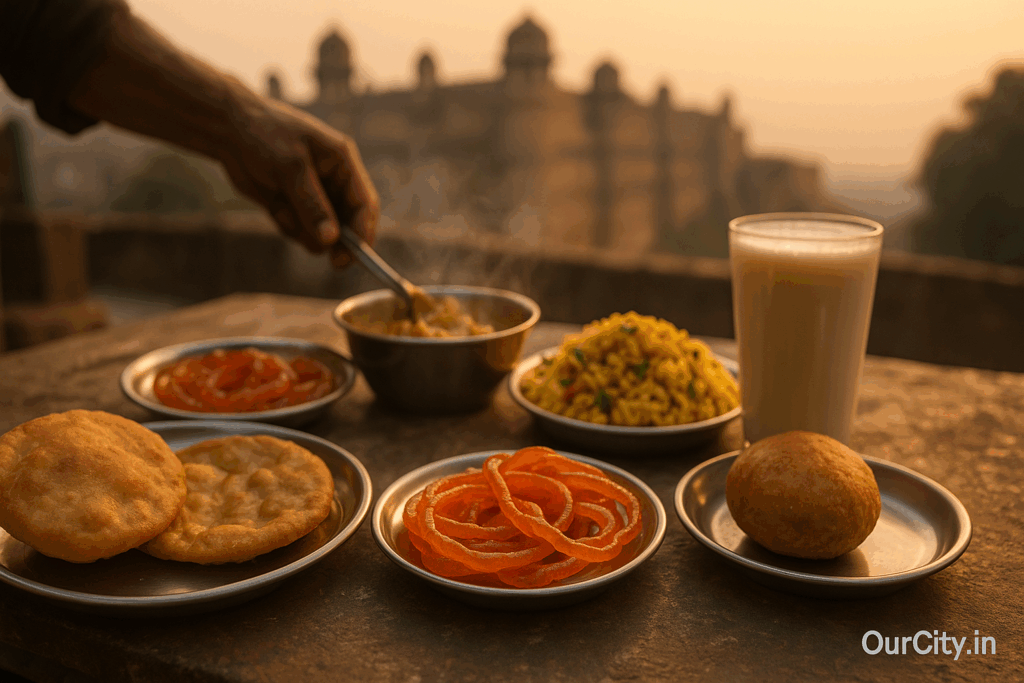
Gwalior eats with its heart. Mornings smell of poha–jalebi (पोहे–जलेबी). Evenings hum with chaat sizzles near Maharaj Bada. Winters crackle with gajak (गजक). Families still swear by dal bafla (दाल बाफला) on a slow Sunday, and college kids camp at kulhad-chai counters till the last train honks. If you’re new, it’s easy to miss the best lanes or get stuck in long queues. This guide keeps it local—where to go, what to order, what’s safe in monsoon heat, what a plate actually costs, and when to land for the good stuff.
Neighborhoods you’ll see here: Lashkar, Maharaj Bada, Sarafa Bazaar, Naya Bazar, Phoolbagh, Jayendraganj, Kampoo, Thatipur, Tansen Nagar, Darpan Colony, City Center, Gole Ka Mandir, Morar (Cantt), University Road, Bahodapur, Sirol Road, Deen Dayal Nagar, Tansen Road, Dal Bazaar, Shinde Ki Chhawani, and the Fort (Kila Gate) belt.
You’ll eat well. You’ll spend right. And you’ll do it the way Gwalior folks actually do.
🥘 Must-Try, Locally Loved
Breakfast Belts & Morning Staples
Poha–Jalebi (पोहे–जलेबी): Light poha with a squeeze of nimbu, a sprinkle of sev, maybe pyaaz if you like. Follow it with hot jalebi or imarti.
Where locals go: Maharaj Bada lanes, Naya Bazar corners, Jayendraganj–Phoolbagh stretch, and early carts around Padav (railway station side). Thatipur and University Road see college crowds by 08:00.
What to say: “Bhaiya, poha me nimbu extra, sev halka.”
Locals say… “Reach by 07:30–08:30 for fresh poha; after 10:00 it’s hit-or-miss.”
Kachori–Samosa (कचौरी–समोसा) with aloo sabzi: Crisp, flaky, with a ladle of hot, slightly tangy aloo.
Where: Lashkar back lanes, Kampoo, Darpan Colony morning carts, Gole Ka Mandir chowks.
Note: Ask for chutneys covered and ladled from clean steel containers.
Doodh–Jalebi & Malai toast: Especially in winter around Sarafa and Lashkar side streets.
Timing: 06:30–09:30 works best on weekends.
Sabudana Khichdi/Vada (साबूदाना): Fasting-friendly but loved on regular days too—request less oil.
Where: Near big temples in Lashkar, Thatipur markets, and Morar Cantt.
Mawa Bati (मावा बाटी): Think of it as a richer cousin of gulab jamun—the winter mornings version with rabdi is indulgent.
Midday Hits (Thalis, Quick Lunches)
Dal Bafla (दाल बाफला): MP classic—baked balls dunked in ghee, served with dal, kadhi, lehsun chutney, and achar.
Where: Family thali houses across Lashkar, near Tansen Road, and Bahodapur.
Local trick: “Ghee halka” (go easy), and ask for extra dal over bafla for a hearty but not heavy lunch.
Veg Thali: Seasonal sabzi, dal, roti/poori, rice, salad, and papad.
Where: Office belts—Phoolbagh, City Center, Deen Dayal Nagar—serve brisk weekday thalis.
Price sense: ₹120–220 for basic; ₹240–350 for fuller spreads.
Rajma–Chawal/Kadhi–Chawal: Quick, comforting plates near University Road and Thatipur from 12:30–15:00.
Tawa Pulao & Egg Bhurji: For students and sales folks on the go—University Road, Darpan Colony, Padav late lunches.
Evening Snacks & Chaat Trails
Aloo Tikki, Dahi Bhalla, Pani Puri (गोलगप्पे), Sev Puri:
Where: Sarafa Bazaar lights up after 17:00; Maharaj Bada lanes fill early; Thatipur, Naya Bazar, and Kampoo carry steady crowds.
How to judge: See the oil color and whether puris are fried fresh. Avoid uncovered sliced toppings in monsoon.
Bhutte ka Kees (भुट्टे का कीस): Grated corn cooked down with milk and spices—MP style, pops up seasonally.
Where: Old-city corners, Tansen Road pop-ups in corn season (Jul–Oct).
Paneer Tikka/Tawa Tikkas:
Where: Morar and Thatipur evening grills; request “char light” if you don’t want the dark char.
Litti/Chokha outposts: Migrant-run stalls along Sirol Road and Bahodapur—hearty, smoky; confirm ghee quality.
Dinner Classics & Family Favourites
North Indian Curries & Breads: Paneer do-pyaza, dal tadka, butter chicken (for non-veg families), tandoori rotis/naan.
Where: Family restaurants around City Center, Deen Dayal Nagar, and Gole Ka Mandir stretch.
Timing: 19:30–22:00 is peak; arrive by 20:00 on weekends or wait.
Biryani & Tawa Non-Veg:
Where: Old-city lanes near major mosques (check halal signage), Morar Cantt stretches, Naya Bazar night counters.
Note: Prefer places with fast turnover. Ask “fresh dum laga hai?” for biryani.
Millet Winters: Bajra roti with lehsun chutney and seasonal saag pops up Nov–Jan—find it in Lashkar homespun eateries.
Sweets, Bakeries & Seasonal Specials
Gajak (गजक) & Til-Gud (तिल-गुड़): The Morena–Gwalior belt rules winter crunch—til or peanut brittle slabs, rewri, and til-ladoos.
Where: Lashkar’s traditional mithai shops, Sarafa winter stalls.
When: Peak Dec–Feb. “Ask to taste a small piece—good gajak snaps clean.”
Rabdi–Jalebi, Kulfi–Falooda, Shrikhand: After-dinner sweets across Tansen Nagar, City Center, and Jayendraganj.
Bakery Rush: Christmas plum cakes and nankhatai lines show up in Darpan Colony and City Center from early December; book ahead.
Locals say… “Winter evenings? Rabdi–jalebi near Sarafa, then chai near Maharaj Bada. Simple and perfect.”
🍢 Street Food: Hygiene & Smart Choices
Clean Vendor Checklist
Look for: hot-holding (you can literally see steam), stainless-steel ladles and clean tongs, chutneys covered, oil that’s golden and not dark-brown, and a waste bin within arm’s reach. Vendors who wipe the counter between orders and rinse spoons are keepers. If a stall is swarmed but still tidy, that’s a good sign—fast turnover keeps food fresh.
Water & Ice Safety
Sensitive stomach? Stick to sealed bottles or ask for garam pani. Avoid ice unless the vendor confirms RO/boiled source. For sugarcane juice, choose stalls with a proper wash setup and covered glasses—otherwise skip. Carry a collapsible bottle and refill at trusted cafés.
Monsoon/Heatwave Adjustments
Monsoon (Jun–Sep): Avoid pre-cut fruits, uncovered chaats, and leafy toppings that wilt. Prefer fried-to-order—kachori, samosa, pakode, hot jalebi.
Heatwave (Apr–Jun): Hydrate, carry ORS, and time heavy meals post-sunset. Choose curd-based drinks from reputable counters; avoid milk drinks left out warm.
“If It’s Off”—Polite Return Script
“Bhaiya, taste thoda off lag raha hai. Fresh bana sakte ho? Nahi to refund kar dijiye, please.”
Say it calmly, no drama. Most vendors will remake or refund. If not, leave it, don’t finish it.
🍽️ Order Like a Local (Scripts)
Customise Spice/Oil/Onion–Garlic
-
“Bhaiya, poha me sev alag aur pyaaz optional rakhna.” (Keep sev separate; onion only if fresh.)
-
“Tawa pulao medium tikha, tel halka.” (Medium spice, light oil.)
-
“Jain bana dijiye—pyaz-lasun nahi.” (Jain prep—no onion/garlic.)
-
“Paneer tikka char halka, malai extra.” (Light char, a touch more cream.)
-
“Samosa chaat dahi zyada, imli kam.” (More curd, less tamarind.)
-
“Bhutte ka kees meetha kam, mirch halka.” (Less sweet, mild chilli.)
-
“Dal bafla ghee halka rakhna.” (Easy on ghee.)
Parcel/Takeaway Phrases
-
“Sir, parcel tight kar do—gravy alag pack karna.” (Tight parcel; gravy separate.)
-
“Kulhad hi pack kar dijiye, plastic cup nahi.” (Use kulhad, not plastic.)
-
“Roti half-cook kar dena, ghar pe phul lenge.” (Half-cook rotis; we’ll finish at home.)
-
“No plastic cutlery—napkin de dijiye.” (Skip plastic, napkin is fine.)
Cash/UPI & Touts—Polite Boundaries
-
“UPI bhej diya, sound aaya?” (Sent via UPI, did it ping?)
-
“Bas bill ke hisaab se de dijiye.” (Just as per bill.)
-
“Nahi chahiye, thank you—hum dekh lenge.” (Refusing add-ons/touts.)
-
“Change UPI se de dijiye, cash short hai.” (Return change via UPI.)
💸 What It Costs (Real ₹ Ranges)
₹ (Street): Typical Items & Prices
-
Poha plate: ₹25–50
-
Kachori/samosa: ₹15–30 per piece; with sabzi ₹40–60
-
Chaat plates: ₹50–120
-
Chai (glass/kulhad): ₹12–30
-
Jalebi/Imarti: ₹25–50 per 100 g (varies by day)
Tip: Street carts mostly accept UPI now, but small change helps in rush hours.
₹₹ (Casual): Cafes, Darshinis, Messes
-
Veg thali: ₹120–220 (weekday lunch deals cheaper)
-
Tawa pulao/veg mains (half/ full): ₹90–180 / ₹160–260
-
Egg bhurji roll/kathi: ₹80–150
-
Coffee/Cold Coffee: ₹60–150
Packaging: ₹5–20 per box is common for takeaway from small eateries.
₹₹₹ (Sit-down): Family Dining & Popular Chains
-
Curries (veg/non-veg): ₹260–480
-
Biryani (full): ₹280–450
-
Breads: ₹25–60 per roti/naan
-
Desserts: ₹80–160 per portion
Service charge: Some family restaurants levy 5–10%. If unsure, ask, or check the bill line item.
Tipping, Service Charge & Packaging Notes
Self-service? No tipping pressure. Table service? ₹20–50 for small bills; 5–7% on larger tabs if you felt looked after. Delivery apps sometimes add packing/handling—scan the fee breakdown.
🥗 Dietary Maps & Pockets
Veg/Jain/Satvik Belts
Gwalior leans veg-friendly. Lashkar, Deen Dayal Nagar, City Center host many pure-veg restaurants. In Navratri, satvik counters (no onion/garlic, buckwheat/rajgira options) pop up around major temples in Lashkar and Thatipur—ask for “satvik thali” and confirm flour types (kuttu, singhada).
Script: “Jain bana dijiye, hing bhi avoid.”
Halal & Non-Veg Clusters
Look for clear halal signage near old-city mosque belts, sections of Naya Bazar, and Morar Cantt stretches offering grills, kebabs, korma, biryani. Always confirm cut and freshness politely.
Script: “Halal certificate dikha denge? Fresh batch kab nikla?”
Seafood Freshness (Not a Coastal City)
Gwalior isn’t coastal; be choosy. Prefer reputed restaurants with fast turnover. Checks: clear eyes, firm flesh, no sharp odor. In monsoon, many locals simply skip fish and order chicken/veg instead.
Allergies: Peanut/Mustard/Sesame; Gluten/Lactose
MP cooking often uses mustard/peanut oil and sesame appears in gajak. If sensitive:
-
“Moongfali/rai oil use hua hai?” (Peanut/mustard oil used?)
-
“Til hai kya isme?” (Any sesame?)
For gluten, avoid maida-heavy snacks (bhature, some breads). For lactose, ask if malai/ghee goes into finishing.
☕ Drinks & Desserts Worth Your Time
Chai/Filter Coffee/Irani-style Counters
Kulhad chai near Maharaj Bada and University Road is the everyday ritual. Roadside filter-coffee counters exist but chai dominates. If you spot an Irani-style tea sign, go for the strong brew—ask for “chini kam” if you prefer less sweet.
Lassi, Buttermilk & Summer Coolers
Hot months call for lassi (लस्सी), chaas, nimbu pani, and jaljeera. Choose places with chilled, covered containers. Sugarcane juice only from stalls washing glasses well—if not, skip.
Mithai Icons & Festival Treats
Gajak rules winter. Boondi laddoo, rabdi, malpua, and kulfi-falooda take turns year-round. During Ganesh Chaturthi, modak trays land at big mithai shops. For Diwali, pre-book gift boxes—popular stores in Darpan Colony/City Center run out by evening.
Photo-friendly but quick: Snap fast, step aside. Don’t block counters; you’ll get smiles back.
🍱 Delivery, Tiffin & Office-Lunch Hacks
When to Order, Surge Windows
Rainy evenings and festival nights bring app surges. Lunch peaks 13:00–14:30 in City Center/Phoolbagh belts; dinner 20:00–22:00 everywhere. Pre-order office lunch by 11:30 for on-time delivery. For late snacks near Padav and University Road, plan pickup—traffic jams eat your fries.
Trial a Tiffin: One-Week Checklist
Student/PG clusters around Thatipur, University Road, Darpan Colony, and Deen Dayal Nagar run tiffins.
Checklist for a 7-day trial:
-
Variety: dal-sabzi rotation or repeat?
-
Oil/spice level consistent?
-
Packaging clean, no leaks?
-
Delivery timing steady?
-
Salad/curd on 3–4 days?
-
Weekend option?
If three answers are “no,” keep scouting.
Carry-Your-Dabba & Low-Waste Tips
Bring a small steel dabba for chaats or gravies you can’t finish. Say “cutlery mat dena.” Many cafés oblige with glass/steel if you ask nicely.
🍽️ When to Go (Timing Cues)
Beat-the-Queue Windows
-
Breakfast belts (Maharaj Bada, Jayendraganj): 07:00–09:00 best; after 09:45 poha dries out.
-
Thali houses (Phoolbagh, City Center): 12:30–13:00 lands fresh rotis before the rush.
-
Sarafa chaat: arrive 17:30–18:30 on weekends to grab a corner table.
Late-Night Food Belts
-
Padav (station side): Tea, egg bhurji, paratha counters till trains slow.
-
Naya Bazar/Sarafa: Chaat till 22:30–23:00 most nights; later on festive weeks.
-
University Road & Thatipur: Rolls, Maggi, momos till 23:00 around exam season.
Always pick well-lit stretches; buddy up for late walks.
Family/Senior-Friendly Quiet Hours
Families prefer 19:00–20:00 dinners in Deen Dayal Nagar, City Center, and Gole Ka Mandir. Senior-friendly window: 12:15–12:45 weekday lunches, quieter and easier seating.
🍽️ Accessibility, Family & Senior-Friendly Eating
-
Seating: Many old-city eateries are compact with a step or two. Family restaurants in City Center, Deen Dayal Nagar, and Gole Ka Mandir offer better chair height and aisle space.
-
Step-free hints: Look for wide-door cafés on Darpan Colony and mall-side outlets with ramps.
-
Washrooms: Smaller shops may not have customer washrooms; ask before ordering.
-
Kids: Low-spice quick wins—plain dosa, veg pulao, dal–rice. Ask for “mirch halka.”
-
Quieter hours: 16:30–18:00 chai/snack slots and 12:15–12:45 lunches. Carry a foldable seat cushion if needed.
🎉 Seasonal & Festival Food Trails (Gwalior Calendar, in Food)
(We’ll keep it food-first and practical. Dates shift; check local news/temple boards.)
-
Jan–Feb (Winter Peak): Gajak & til-goodies everywhere. Evening rabdi–jalebi walks near Sarafa.
-
Mar–Apr (Exam/Admissions): University Road snack carts go late; tiffin trials spike—book early.
-
Apr–Jun (Heat): Hydration plan—chaas, nimbu pani, and lighter noon meals. Shade-friendly breakfasts 07:00–09:00; dinner 20:30+.
-
Ramzan (varies): Iftar lanes near major mosques carry fruit chaat, sevaiyan, kebabs. Dress modestly, mind queues, greet with a smile.
-
Jul–Sep (Monsoon): Prefer fried-to-order; avoid cut fruit/leafy toppings. Traffic slows—pickup beats delivery.
-
Ganesh Chaturthi (Aug/Sep): Modak specials at big mithai shops; pre-book by afternoon.
-
Navratri (Sep/Oct): Satvik thalis near Lashkar/Thatipur temples; confirm flours and avoid onion/garlic.
-
Durga Puja (Oct): Pandal food streets add rolls, chowmein, chops—arrive early and keep the lane moving.
-
Diwali (Oct/Nov): Gift boxes, dry-fruit mithai—reserve; prices climb week-of.
-
Dec (Music Season): Cultural evenings draw tea & snack pop-ups around venues; expect sweet-stall rush.
Etiquette: Queue straight, take quick photos, don’t block serving lines, return kulhads to the tray, bin your tissues.
✅ Quick Cheatsheets (Tables)
Price Bands by Dish Type
| Dish Type | ₹ Street | ₹₹ Casual | ₹₹₹ Sit-down | Notes |
|---|---|---|---|---|
| Breakfast plate | ₹25–60 | ₹70–120 | ₹120–180 | “Refills?” ask for poha/chaas |
| Chaat/snack | ₹50–120 | ₹90–160 | ₹160–240 | Fresh-fry wins |
| Thali (veg) | ₹100–160 | ₹120–220 | ₹240–350 | Weekday cheaper |
| Fish/chicken curry + rice | ₹— | ₹180–320 | ₹280–450 | Non-coastal premium |
| Coffee/Chai | ₹12–30 | ₹40–110 | ₹110–180 | “Strong, sugar less” |
| Dessert (per piece) | ₹20–80 | ₹60–140 | ₹120–200 | Festival surge |
Meal-Time Windows by Neighborhood
| Neighborhood | Best Slot | Avoid Slot | Why |
|---|---|---|---|
| Maharaj Bada | 07:00–09:00 | 19:00–21:00 | Office & market rush |
| Sarafa Bazaar | 17:30–19:00 | 20:00–22:00 | Evening crowds |
| City Center | 12:30–13:00 | 13:00–14:30 | Lunch peak |
| Thatipur & University Road | 08:00–09:00 | 18:30–21:00 | Student peak |
| Naya Bazar | 18:00–19:00 | 20:00–22:00 | Night nibble crowd |
| Morar (Cantt) | 19:00–20:00 | 20:00–22:00 | Family dinner rush |
| Gole Ka Mandir | 12:15–12:45 | 20:00–21:30 | Quieter lunches |
| Phoolbagh–Jayendraganj | 12:30–13:00 | 18:30–20:30 | Office timings |
Hygiene Quick-Check
| Check | What to Look For | Pass/Fail Hint |
|---|---|---|
| Oil freshness | Light color, no burnt smell | Dark/viscous = skip |
| Hot holding | Steam rising, sizzle on order | Lukewarm trays = avoid |
| Water/ice | Sealed bottle/boiled water | Open tubs = avoid |
| Utensils | Stainless, clean tongs | Sticky surfaces = no |
Dietary Custom Scripts
| Need | Phrase | Gloss |
|---|---|---|
| Less oil | “Tel halka rakhiye.” | Keep oil light |
| No onion/garlic | “Jain bana dijiye.” | Jain prep |
| Medium spice | “Medium tikha.” | Moderate spice |
| Gravy separate | “Gravy alag pack kar dijiye.” | Parcel tip |
❓ Food FAQs for Gwalior
1) Safest street-food zones for first-timers?
Start with Maharaj Bada breakfast counters and Sarafa evening stalls that show clean ladles, covered chutneys, and clear oil. Watch for quick turnover.
2) Late-night areas for a snack?
Padav (station side) tea/eggs and University Road rolls run late. Stick to lit stretches; pair up if walking.
3) Pure-veg and Jain options?
High density in City Center, Deen Dayal Nagar, Lashkar. During Navratri, satvik counters near large temples go onion/garlic-free—confirm flours.
4) What about seafood?
Gwalior isn’t coastal. Choose reputed sit-downs; in monsoon many locals avoid fish. Chicken/veg is safer.
5) Water safety quick rule?
Sealed bottles or garam pani. Avoid unknown ice. For sugarcane juice, only from well-maintained presses with covered glasses.
6) How early for poha–jalebi?
Land 07:30–08:30. After 10:00, both quality and variety drop.
7) Cash vs UPI at carts?
UPI is common; network lags cause delays. Keep ₹10/20 notes for rush hours.
8) Tipping norms?
Street carts—no need. Table service—₹20–50 or ~5–7% if service felt good.
9) Family-friendly dinner windows?
19:00–20:00 is calmer in Deen Dayal Nagar, City Center, and Gole Ka Mandir.
10) Festival crowds—how to cope?
Pre-book sweets, arrive 30–45 min early for satvik thalis, split your group into order vs pickup queues.
11) Heat season meal plan?
Breakfast 07:00–09:00, avoid heavy oily lunches, drink chaas/ORS, dinner after 20:30.
12) Monsoon food edits?
Fried-to-order > assembled chaat. Skip cut fruit, uncovered leafy toppings, and iffy pavs.
13) Is service charge mandatory?
Varies. Some sit-downs add 5–10%. Ask or check bill.
14) Any student-budget hacks?
Try a one-week tiffin around Thatipur/University Road. For dining out, weekday lunch thalis in Phoolbagh/City Center are kinder on wallet.
15) Solo-female night travel to/from food streets?
Prefer main roads, app cabs from well-lit spots, and early evening hours (before 21:30). Ask vendors for the best pickup point; they know the drill.
🍽️ Wrap-Up: Eat Well, Stay Sharp
Gwalior’s food charm is simple: hot, honest plates and people who remember your order. Follow the hygiene tells, time your meals, and speak up—politely—about oil, spice, and packing. Take quick photos, don’t block the line, bin your tissues, thank your bhaiya/didi behind the counter. One last insider tip? In winter, end your night with a small slab of gajak and a kulhad of chai near Maharaj Bada. It’s the city, in a bite.