Howrah Survival Guide
Table of Contents
Howrah Life Hacks & Survival Guide
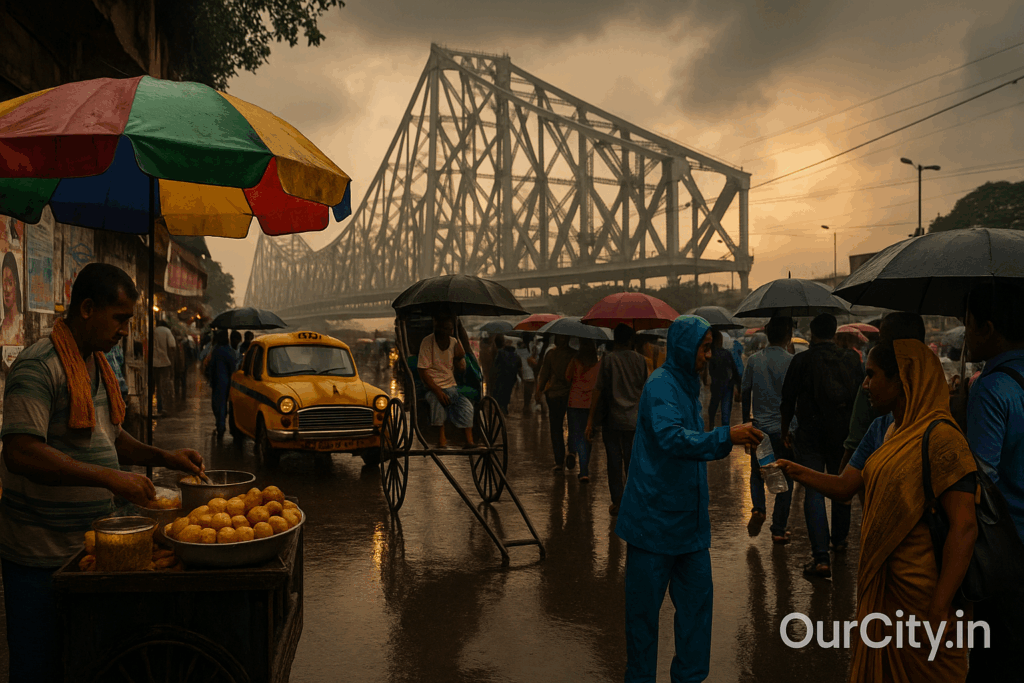
Howrah moves fast and sideways. It runs on suburban trains, ferries across the Hooghly, yellow taxis, fixed-route autos, and now metro links that cut under the river. Streets can look chaotic at 09:00, but the city has a rhythm—miss it and you’ll waste time in queues, waterlogged bends, or long detours. Newcomers often underestimate two things: the power of the Howrah–Kolkata interchange (bridges, ferry ghats, station concourses) and the monsoon’s habit of changing plans in 20 minutes. This guide keeps it grounded: short scripts, realistic price bands, and seasonal playbooks that will genuinely save your day.
🧭 Why These Survival Hacks Matter in Howrah
Day 1 you need simple: how to reach Howrah Station, which auto stand is reliable, whether the ferry will spare you a bridge jam. By Week 4 you need sharper skills: where to stand on the platform to exit faster, which lanes flood first after a 30-minute downpour, what to tell a broker about deposits, and which ghat or bridge side feels safer after 21:00.
Here’s the thing—Howrah is double-anchored: railway town + river city. Master the interchanges (Howrah Station concourse → local trains → metro/ferry → buses) and you’ll save 30–45 minutes daily. Add monsoon and smog plans, and you’ll stay healthy through the seasons. The pages ahead give you scripts, time cues, and neighbourhood specifics so you don’t learn the hard way.
Neighbourhood name-drops you’ll see across this guide: Shibpur, Salkia, Santragachi, Liluah, Belur, Bally, Kadamtala, Dasnagar, Mourigram, Ramrajatala, Andul, Domjur, Uluberia, Tikiapara, Jagacha, Foreshore Road, Kona, Bagnan, Makardaha, Ichapur.
🚇 Move Smart Every Day
Metro/Train/Bus Basics
Suburban locals (Howrah Division)
Your backbone for short and mid-range trips. Lines fan out from Howrah Junction toward Bandel, Barddhaman, Sheoraphuli, and beyond; locals are frequent during peaks. Ladies’ compartments exist—look for pink or women-only signage near either end of the rake; check coach boards before boarding. If you’re new: reach the concourse early, watch the platform indicators, and board with a plan for the exit end at your destination.
Metro (East–West line + interchanges)
The under-river section links Howrah with central Kolkata and the eastern corridor. Services extend across key hubs (Howrah Maidan / Howrah Station toward the city core and business districts). Timings and openings evolve—check the official metro app for live status and first/last trains. Expect modern stations with lifts, escalators, platform screen doors, and AFC gates that accept smart cards and tokens.
-
Tickets & Cards:
-
Smart Card: Stored-value; refundable deposit; typical top-up ₹100–₹500 to start.
-
Tokens: Single journey; lines vary, usually ₹20–₹45 for short/medium hops.
-
Tip: Keep a spare ₹100 on the card for emergency trips; queues for tokens spike at 18:30.
-
Buses (WBTC & private mini)
From Howrah Station bus terminus, routes touch most corridors: Shibpur Road, Foreshore Road, Santragachi, Liluah/Belur, Kona Expressway. Fares for short stretches are typically ₹10–₹20, longer cross-city rides ₹25–₹40. Use the state bus live-tracking app (look for the West Bengal bus tracker) to reduce waiting, and save your usual routes offline.
Ferries (Hooghly shortcuts)
On rain days or bridge jams, ferries from Howrah Ghat/Ramkrishnapur to Fairlie Place/Babu Ghat/Bagbazar can cut 20–40 minutes. Typical fares hover around ₹7–₹12. Evening breezes are pleasant; still, avoid the last possible boat if you’re unfamiliar with the destination side.
Autos & Taxis (the ground reality)
-
Autos in Howrah often run fixed routes with shared fares (₹10–₹30 most common). For a dedicated hire, expect more—ask clearly before boarding.
-
Yellow taxis operate on meter. App cabs tend to be smoother across the river and late night.
-
Airport: From Howrah, rides face tolls/parking; drivers may add official airport surcharge. Confirm “toll/parking extra” upfront.
Scripts you’ll actually use
-
“Bhaiya, meter se chaliye.”
-
“Fixed rate kitna? Receipt dena.”
-
“Mujhe Shibpur jana hai, left se nikaalna.”
-
Bengali flavour if needed: “Dada, meter-e cholben? (Will you run by meter?)” “Ramrajatala namate debo? (Will you drop me at Ramrajatala?)”
Women-only options
-
Local trains: Dedicated ladies’ coaches—safer in peaks.
-
Metro: Reserved seats and visible CCTV & RPF presence; share live location when travelling after 21:00.
First/Last trains
Most systems run roughly early morning to late evening—always check the official metro/rail app for that day’s first/last timings, especially after festivals or maintenance blocks.
Auto/Taxi Fair-Play (Scripts + Price Cues)
-
Meters: “Bhaiya, meter se chaliye” sets the tone. If refused: “Main app se book kar raha/rahi hoon.”
-
Per-km sense check (taxis): ₹20–₹30/km is a fair mental model after base fare.
-
Autos: For share routes (Howrah Maidan–Shibpur, Foreshore Road pockets, Salkia–Howrah), expect ₹10–₹20; full hire often ₹60–₹120 short intra-Howrah hops, more after 22:00.
-
Airport/bridge: “Toll/parking alag hoga?” Keep change ready (₹20–₹50) for tolls/parking slips.
-
Receipts & e-payments: “Receipt dena, UPI chalega?”
Peak Hours & Platform Positions
-
Peaks to avoid: 08:30–10:00 and 18:00–20:00.
-
Platform hacks:
-
Howrah Station locals: For faster exit to the main concourse, aim for mid-coaches which align near broader stairways.
-
Metro: Signage shows exit gates. If your exit is Gate A/B, board toward the coach end that matches that side (maps in station).
-
Ferry: Queue forms early at evening peak—arrive by 18:10 if you must cross before 19:00.
-
🌤 Weather Playbooks That Actually Work
Heatwave Kit & Day Plan (Apr–Jun)
-
Hydration rule: ORS 1 sachet per 1 L of clean water. Sip through the day; don’t chug.
-
Wear: Loose cotton/linen, light colours, cap or UV umbrella.
-
Route: Stick to shaded footpaths along Foreshore Road where trees help; use mall/office atriums as cooldown points near Howrah Maidan.
-
Warning signs: Headache, cramps, dizziness. Action: Sit in shade/AC, sip ORS, cool wrists/neck. If confusion/vomiting—see a hospital.
Heat home kit
-
2–3 ORS sachets
-
Reusable 1 L bottle
-
Electrolyte tablets
-
Wet wipes/small towel
-
Cap/UV umbrella
-
Light scarf for dust
Monsoon Kit, Routes & Food Safety (Jun–Sep)
-
Footwear: Quick-dry sandals or anti-slip floaters; keep a spare pair at work if you switch to shoes.
-
Bag: Rain cover + zip pouches for documents/phones.
-
Fogging lens hack: A tiny dab of anti-fog on glasses/helmet visor.
-
Waterlogging pockets (descriptive): Low-lying bends near Howrah Station approaches, stretches along Foreshore Road, parts of Kadamtala, Salkia, underpasses on Andul Road, and dips on Kona Expressway service lanes. If ankle-deep, don’t wade—detour 300–800 m even if it adds 10 minutes.
-
Vector control: Close windows at dusk, use coils/liquid vaporizers, clear standing water in balconies/rooftops.
Monsoon day plan
-
Check bus/ferry status by 07:00.
-
Pack sandals + sock change in a pouch.
-
Carry two plastic sleeves: one for phone, one for papers.
-
If water crosses ankle, turn back—seek ferry/metro or Kona corridor.
-
Eat fresh/hot—skip open salads/street cut fruit on heavy-rain days.
Monsoon home kit
-
Compact umbrella + poncho
-
2 zip pouches (papers/phone)
-
Spare socks & small towel
-
Antiseptic liquid for foot wash
-
Mosquito coil/liquid + screens
-
Torch + power bank
Winter/Smog Masking & Indoor Air (Nov–Jan)
-
Mask: N95/FFP2 with snug nose bridge. Replace when straps loosen or it gets damp.
-
Timing: Prefer late-afternoon walks (15:30–17:30) over early morning on poor AQI days.
-
Room: HEPA purifier if budget allows; otherwise a DIY box-fan + filter setup can help.
-
Door gap hack: A rolled towel under the door reduces dust inflow.
AQI quick actions
| AQI Band | What it Feels Like | Action |
|---|---|---|
| 0–50 | Good | Open windows; regular routine. |
| 51–100 | Moderate | Sensitive folks mask outdoors. |
| 101–200 | Poor | N95 outdoors; reduce outdoor runs. |
| 201–300 | Very Poor | N95; keep windows closed in peaks; indoor air on. |
| 301+ | Severe | Avoid outdoor exertion; purifier on high; reschedule workouts. |
🩺 Health & Emergencies Without Panic
Hospitals, Ambulance, First Aid
-
National numbers: 112 (all emergencies), 108 (ambulance). Save both.
-
Government vs private: Government hospitals handle emergencies at low cost but queues may be longer; private hospitals are faster but pricier—carry ID and insurance.
-
Documents: Keep Aadhaar, insurance e-card, and one paper copy in your bag/home folder.
First-aid mini-guides
-
Dehydration/heat exhaustion: Shade/AC, ORS sips, loosen clothing, cold compress on neck/underarms. If vomiting/confusion → hospital.
-
Minor cuts: Wash, apply antiseptic, clean dressing. Watch for infection.
-
Sprains: R.I.C.E. (Rest, Ice, Compress, Elevate).
-
Dog/cat bites: Wash thoroughly with soap; hospital for tetanus/anti-rabies—don’t self-medicate.
-
Food poisoning: Oral rehydration; see a doctor if high fever, blood in stool, or dehydration signs.
Pharmacy & Safe Self-Care
-
OTC basics: ORS, paracetamol, antacid, motion sickness tabs, adhesive bandages.
-
E-pharmacy norms: Use reputable apps; store digital prescriptions; don’t over-order antibiotics.
-
24×7: Keep one known late-night pharmacy mapped near Shibpur or Howrah Maidan; confirm hours before emergencies.
🛡️ Night & Solo Safety
Women’s Compartment/Coach Pointers
-
Local trains: Use ladies’ coaches, especially on less familiar stretches late evening.
-
Metro: Prefer well-lit coach sections near the operator cabin/CCTV. Stand where the Platform Security is visible.
App Cab vs Street Hail (When & Why)
-
After 21:00: Choose app cabs over street hails; enable “share trip” to a trusted contact.
-
Plate check: Match number plate + driver photo. If mismatch: “Main cancel kar raha/rahi hoon.”
-
Pickup points: Use Howrah Station’s designated bays, Santragachi stand, or bus-bay edges in Salkia/Shibpur where lights and people are around.
Polite Refusal Scripts & Red Flags
-
Street sellers/touts: “Nahi chahiye, thank you.” Keep walking.
-
Auto/taxi push: “Main app se book kar raha/rahi hoon.”
-
Authority check: “Police se confirm kar leta/leti hoon.”
-
Red flags: Vehicle insists on no meter, wants cash only late night without reason, or asks to pick up extra riders on a solo booking—cancel.
🏠 Housing, PGs & Utilities
Deposits, Clauses & Broker Scripts
-
Broker norms: Typically one month’s rent as fee; security deposit often 1–2 months (more for furnished setups in Shibpur, Liluah, Belur pockets).
-
Ask these:
-
“Water timings kya hai—municipal ya borewell?”
-
“Power backup hai? Inverter/UPS?”
-
“Maintenance mein kya-kya included hai?”
-
“FTTH broadband options kaunse?”
-
-
Clauses to expect: Notice period (1–2 months), painting on exit, and minor repairs up to a small cap.
-
Scripts:
-
“Deposit kitna refundable hai, aur kab?”
-
“Agreement mein water/power clauses clear likh do.”
-
Power/Water Outage Playbook
-
Power: Keep a basic inverter etiquette—don’t run high-watt appliances during cuts. Use surge protectors for routers/TV.
-
Charging plan: Top up phone/power bank daily in monsoon.
-
Water: Store two drums if your building’s supply is timed; service the RO/UV unit every 6 months.
Pest & Mosquito Control That Works
-
Kitchen: Monthly drain cleaning; baking soda + hot water flushes.
-
Balcony: No stagnant water—check AC drip trays.
-
Mosquito nets/screens, coil/liquid in early evening, full-length cottons for kids.
📄 Paperwork That Saves You Time
Tenant Verification & Receipts
-
Police verification: Many landlords expect it. Visit your local police station (Howrah City Police jurisdiction) or use the state’s online portal if available; carry ID + tenancy proof. Always ask for an acknowledgement slip.
-
Receipts: Keep rent and deposit receipts stamped/signed. Photograph and store in your document locker app.
E-Challan & Civic Apps
-
Traffic e-challan: Check dues by vehicle number and pay digitally; keep SMS/email confirmations.
-
Civic grievances: Use Howrah Municipal Corporation channels or the national Swachhata app for garbage pickup, streetlight issues, potholes. Add landmark-based descriptions (e.g., “near Ramkrishnapur Ghat”).
Driving rules that trip newcomers
-
One-ways around Howrah Station and bridge approach roads.
-
No-parking near ferry ghats and market lanes (Salkia/Kadamtala).
-
Towing is active on bridge corridors; park only in marked bays.
💸 Daily Costs & Cash-UPI Rhythm
Sample Budgets & Top-Ups
-
Simple workday (intra-Howrah)
-
Commute (auto share + bus): ₹30–₹60
-
Tea + light snack: ₹20–₹40
-
Lunch (veg thali/rolls): ₹60–₹120
-
Contingency (ferry/extra auto): ₹20–₹40
-
Total: ₹130–₹260
-
-
Cross-river office day
-
Metro/ferry + bus: ₹50–₹100
-
Tea/coffee + snack: ₹30–₹70
-
Lunch (canteen/mess): ₹80–₹150
-
Backup cab share at night: ₹60–₹120
-
Total: ₹220–₹440
-
Metro card: Start with ₹300–₹500; keep ₹100 buffer. Ferry cash: small notes ₹10–₹20 for quick movement.
Emergency Cash & ID Copies
-
Contingency rule: Keep ₹300–₹500 hidden in your bag; ₹1,000 at home in a labelled pouch.
-
Copies: Physical Aadhaar copy at home + digital scans (Aadhaar, PAN, insurance, prescriptions) in your locker app.
📱 Must-Have Apps & Offline Backups
Official Transport & Traffic Tools
-
Kolkata Metro official app for live timings, smart card top-up info, and station maps.
-
State bus live-tracking (Pathadisha-style) for WBTC routes.
-
Ride-hailing (two major players) with SOS enabled.
-
Maps with Howrah–Kolkata offline areas saved (Howrah Station, Howrah Maidan, Shibpur, Santragachi, Liluah, Belur).
ICE Contacts & Document Lockers
-
ICE widget on lock screen with 2–3 contacts.
-
Secure document locker for IDs, tenancy papers, prescriptions.
-
Note: Add a simple “medical history” note if you have allergies or regular medications.
🚗 Driving, Parking & Towing Traps
Rain Riding & Helmet Basics
-
Helmet: Look for ISI/BIS marks; fit should be snug; strap every single ride.
-
Rain: Keep extra stopping distance; potholes bloom after the first heavy shower—slow before puddles.
-
Reflective tape on backpack/helmet for late-evening rides.
No-Parking Pockets You’ll Want to Know
-
Howrah Bridge/Vidyasagar Setu approaches—strict.
-
Howrah Station frontage and feeder lanes—short grace, frequent towing.
-
Ferry ghats (Howrah/Ramkrishnapur)—signage matters; don’t risk it on festival evenings.
-
Kona Expressway service lanes—park only where marked.
Tow yard retrieval: Check Howrah City Police Traffic announcements or help desk for tow location; carry RC, licence, insurance (digital accepted in many cases). Fines are payable digitally—save the receipt.
🌊 Disaster Readiness (City-Specific)
Flood/Cyclone/Earthquake Notes
-
Flooding: Howrah’s challenge is intense cloudbursts + drainage lag. If water rises fast, move to higher floors, switch main power off at the MCB if water threatens sockets.
-
Cyclonic winds: Bring balcony items indoors, secure shutters, keep charge banks and filled water bottles. Avoid tree-lined shortcuts during gusts.
-
Seismic: Rare but possible. Drop-Cover-Hold during tremors; use stairs for evacuation, never lifts.
Go-Bag & Family Plan
-
Go-bag (2–3 kg):
-
Copies of IDs, prescriptions
-
2 ORS + 2 energy bars
-
1 L bottle + purification tabs
-
Torch + power bank + cable
-
Basic first-aid (bandages, antiseptic, paracetamol)
-
Light poncho & scarf
-
Whistle + small cash (₹500)
-
-
Family plan:
-
Meeting point near home (e.g., Belur Math gate road corner/landmark).
-
Out-of-area contact to update if local networks jam.
-
Who grabs what (documents, meds, water) drilled twice a year.
-
👥 Special Playbooks
Students & Freshers
-
Where to stay first month: Shibpur (close to IIEST), Kadamtala, Liluah, Belur offer PGs with mess options.
-
Cheap eats: Messes near Howrah Maidan, roll counters in Salkia, canteens around Shibpur.
-
Study spaces: College libraries, a couple of reading rooms in Liluah/Belur clusters; mornings at Belur Math lawns (quiet, respectful conduct).
-
Exam season: Print/scan hubs near Howrah Station footbridge side; carry 2 pen drives—one backup.
Solo Women
-
Commute: Prefer ladies’ coach on locals; app cab after 21:00; sit near RPF zones in metro.
-
Waiting spots: Howrah Maidan, Howrah Station concourses are brighter; stand near kiosks.
-
Night routes: Vidyasagar Setu corridor, Kona Expressway mainlines, Howrah Station → Shibpur via marked roads—more patrol visibility.
-
Trusted snacks: Banana, biscuits, sealed water—avoid open street cut fruit at night.
Parents with Kids
-
Stroller-friendly: Howrah Station concourse, large riverfront promenades, big parks in Shibpur/Belur.
-
Safe play hours: Heat months—17:00–19:00; smog months—15:30–17:30.
-
Festival crowds: Add child-ID wristband (name + guardian number), pre-decide a meeting pole/exit at pandals/ghats.
Elders & PWD
-
Step-free entries: Newer metro stations and major Howrah Station entries have lifts/ramps; request assistance desk.
-
Low-floor bus pockets: WBTC deploys on trunk routes—ask the conductor beforehand.
-
Hospital windows: 09:30–11:30 for OPD (lesser rush), 15:00–17:00 for follow-ups.
✅ Quick Cheatsheets (Tables)
Metro/Bus/Ferry—Typical Ranges
(Always check official apps for live fares/timings.)
| Mode | Ticket/Card | Typical Cost | Notes |
|---|---|---|---|
| Metro | Token | ₹20–₹45 | Based on distance; buy at counters/TVMs. |
| Metro | Smart Card | ₹100–₹500 top-up | Refundable deposit; faster gates. |
| Bus (WBTC) | Paper/e-ticket | ₹10–₹40 | Depends on route/length. |
| Ferry | Paper token | ₹7–₹12 | Frequent in peaks; watch last-boat timings. |
| Auto (share) | Fixed-route | ₹10–₹30 | Ask route board; pay exact. |
| Taxi (meter) | Base + per-km | ~₹20–₹30/km | Tolls/parking extra if any. |
Peak Windows & “Arrive By”
| Corridor | Morning Peak | Evening Peak | Arrive By |
|---|---|---|---|
| Howrah Station → Central Kolkata | 08:30–10:00 | 18:00–20:00 | 08:10 for faster ferry/metro queues |
| Howrah → Salt Lake/IT | 08:30–10:00 | 18:00–20:00 | 08:00 if changing lines |
| Shibpur → Maidan/Esplanade side | 08:45–09:45 | 18:00–19:30 | 08:25 to catch earlier bus slot |
Seasonal Kits
| Kit | Must-Haves |
|---|---|
| Heat | ORS ×2, 1 L bottle, cap/UV umbrella, light scarf, wet wipes |
| Monsoon | Quick-dry sandals, poncho, phone/paper pouches, towel, antiseptic, mosquito control |
| Smog | N95/FFP2, towel-under-door, DIY filter or purifier, eye drops (if advised), indoor plant for morale |
Go-Bag Checklist
| Item | Why |
|---|---|
| ID copies + prescriptions | Hospital/towing/emergency proof |
| 1 L water + tabs | Potable anywhere |
| ORS ×2 + bars | Energy/hydration |
| Torch + power bank | Outage ready |
| First-aid basics | Small cuts/fever |
| Poncho + scarf | Rain & dust |
| Whistle + ₹500 | Signal & small buys |
🕔 Commuter Cheat Codes
-
Interchange hacks:
-
Howrah Station locals → Metro/Ferry: Use the main concourse escalators closest to your line’s exit; mid-coach aligns better for faster stair access.
-
Bus to ferry: Alight one stop early to hit the ghat lane before the bottleneck.
-
-
Park-and-ride (when driving from district edges): Santragachi, Liluah, Belur, Bally, Uluberia—park near railway/bus hubs and switch to train/bus/metro.
-
Rain-day reroutes: If Foreshore Road looks slow or waterlogged, pivot to ferry + bus or Kona Expressway mainlines.
-
Sample AM patterns:
-
Belur → Howrah Maidan → Central: Local to Howrah (board near rear for concourse), metro onward.
-
Shibpur → Esplanade: Bus early (arrive by 08:15) or ferry to Babu Ghat then short bus.
-
Santragachi → Salt Lake: Train to Howrah + metro; or Kona → bypass bus if rain slows rail.
-
Locals say… “If the sky turns slate by 16:00 in monsoon, start home early.”
❓FAQs
1) Is the ferry safe in rains?
Yes, but services can pause in severe weather. Keep a bus/metro backup and arrive early in evening peaks.
2) What’s the simplest late-night option from Howrah Station?
App cab from designated bays. Share live location and check number plate.
3) Do autos run by meter in Howrah?
Mostly fixed-route share. For point-to-point, confirm fare before boarding.
4) Where does waterlogging hit first?
Low-lying bends near station approaches, stretches of Foreshore Road, parts of Kadamtala/Salkia, and Andul Road underpasses.
5) Which mask should I use for smog?
N95/FFP2 with a snug fit. Prefer late-afternoon outdoor time on poor-AQI days.
6) Cash or UPI?
UPI works almost everywhere; keep ₹100–₹200 in small notes for ferry/tea/auto share.
7) How do I avoid towing?
Don’t park on bridge approaches, station frontage, or ghat lanes. Check for painted bays or official signs.
8) What to do if I lose my phone/wallet?
Use “Find my device”, block SIM/UPI, inform local police with ID copy. Keep backup numbers on paper.
9) Are there women-only compartments?
Yes on suburban locals. Metro offers reserved seats and visible security.
10) Which side of the metro train is best for quick exit?
Check station maps; board toward the gate side shown on platform signage.
11) What time should I reach for a smooth morning at Howrah Station?
By 07:30–07:45 to beat the 08:30 crush.
12) Is Kona Expressway reliable in monsoon?
Main carriageways usually move; service lanes can puddle—merge back early.
13) Where can I get a quiet hour on weekends?
Early mornings along Belur Math vicinity (respect decorum) or parks in Shibpur.
14) How to handle pushy touts?
“Nahi chahiye, thank you.” Keep walking; find an official counter/stand.
15) Which tickets to keep handy?
Metro card with ₹100 buffer, bus e-tickets in app, ferry cash for speed.
🔚 Wrap-Up: You’ll Be Fine Here
Howrah rewards those who plan half a step ahead. Respect the river, time your interchanges, and trust the shared scripts this city runs on—meter se chaliye, arrive by 08:10, switch to ferry if the bridge stalls, ORS in the bag from April. Keep this guide bookmarked, tweak the kits to your routine, and add your own shortcuts from Shibpur, Santragachi, Belur, or Salkia. You’ll soon move like a local—and probably teach the next newcomer a trick or two.